
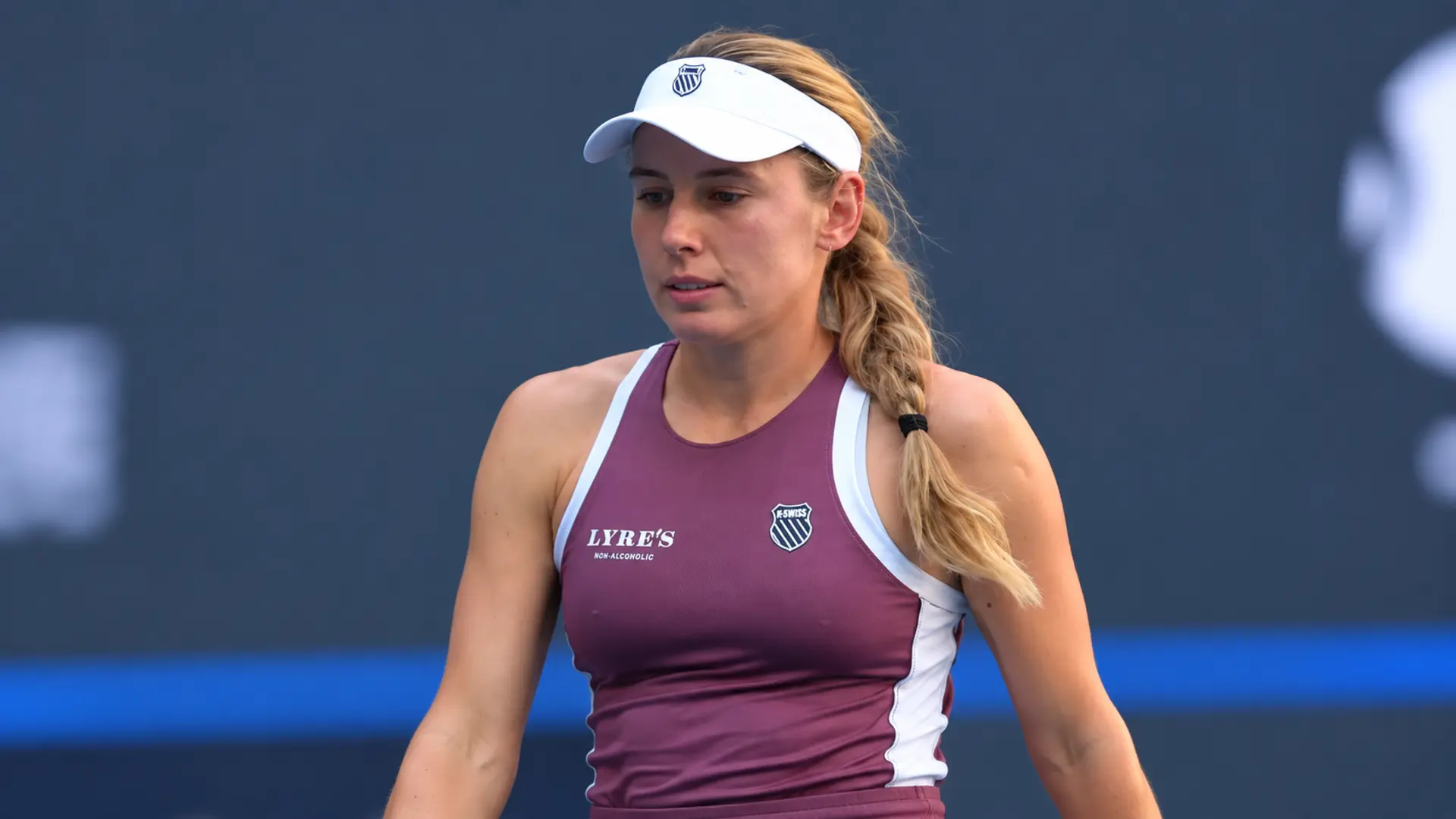
How can a player beat the world No. 1, dismantle the Wimbledon champion and still finish the season outside the Top 30? Ekaterina Alexandrova managed all three in 2026.
Nine assessments into RallyHer’s Season 2026 WTA series, another familiar name appears rather earlier than expected.
Alexandrova had finished 2025 at No. 10, the highest year-end ranking of her career. Twelve months later, she was No. 32.
The Russian turned 32 in November. She still possessed the flat, uncompromising groundstrokes that had carried her into the elite.
The trouble was how rarely she could sustain them through an entire tournament.
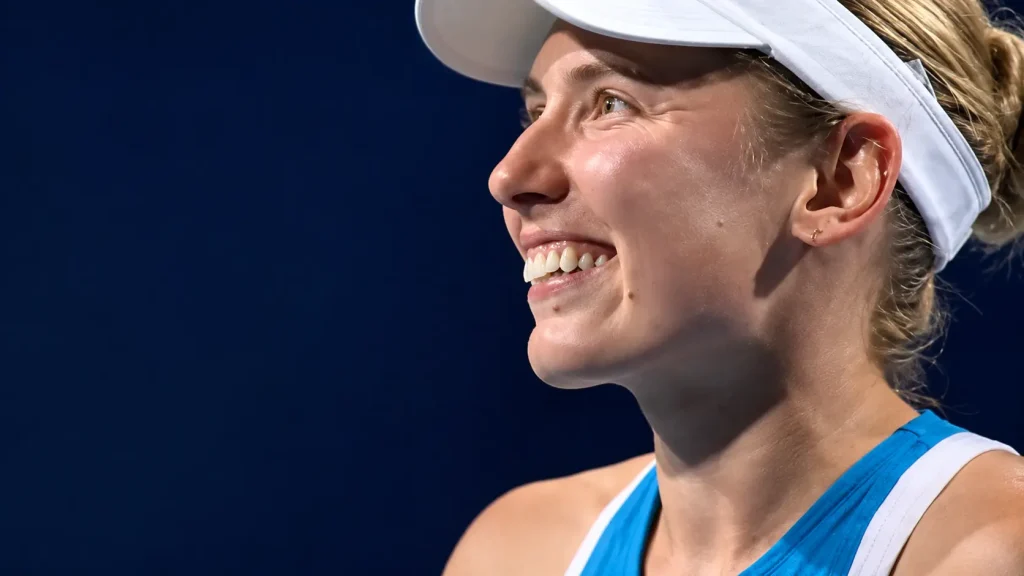
An Australian Warning, Then a Final That Slips Away
Alexandrova began in Brisbane by beating Sofia Kenin, then lost to Karolina Muchova. Jaqueline Cristian defeated her in Adelaide.
At the Australian Open, qualifier Zeynep Sonmez sent the No. 11 seed home 7-5, 4-6, 6-4.
Her second serve was an immediate concern. Alexandrova won only 28.3% of those points against Sonmez. It was a costly weakness in a match lasting more than two and a half hours.
Abu Dhabi offered a convincing response. She swept past Dayana Yastremska 6-3, 6-0 and beat Alexandra Eala in straight sets. A comeback against Hailey Baptiste carried her into the final.
There she encountered qualifier Sara Bejlek, ranked No. 101. Alexandrova lost a close first-set tiebreak and then the match, 7-6(5), 6-1. She won just 54.5% of first-serve points.
It was her first final of 2026. It would also be her last.
The contrast with 2025 was already uncomfortable. That season had brought the Linz title and three other WTA 500 finals.
Abu Dhabi suggested she could still reach a championship match, but not that the previous year’s consistency had survived.
The Sunshine Double and Clay Season Go Wrong
February ended in early defeats. Jelena Ostapenko beat her 6-4, 6-2 in Doha, and Magda Linette won in three sets in Dubai.
At Indian Wells, qualifier Talia Gibson knocked her out in her opening match.
Miami brought a win against Lilli Tagger, followed by another three-set loss to Cristian. Alexandrova had taken the second set but could not finish the job in the deciding tiebreak.
Clay made the slide harder to ignore.
At Linz, the tournament she had won in 2025, she lost her opener 6-1, 6-3 to Karolina Pliskova. A year after lifting the trophy, she was out after one match.
Stuttgart briefly promised better. She defeated Gabriela Andrea Knutson 6-2, 6-2, then ran into Linda Noskova. The Czech won 6-1, 6-1 in just 58 minutes.
Alexandrova’s double-fault rate was 11.5%, and she won only 30.4% behind her second serve. Her attacking game had almost no reliable foundation.
Laura Siegemund beat her in Rome.
Ann Li came from a set down in Strasbourg.
At Roland Garros, Camila Osorio dismissed the No. 14 seed 6-2, 6-4 in the opening round.
A year earlier, Alexandrova had reached the fourth round in Paris. In 2026, her entire clay season produced one victory and five defeats.
The numbers mattered, but so did the style of the losses. Alexandrova prefers to take time away with flat groundstrokes and early attacks. When her serve failed to create a favourable first shot, she spent too many points fighting from an uncomfortable position.
Grass Revives Her Best Tennis, Briefly
The grass season did not begin well.
Panna Udvardy upset her at ‘s-Hertogenbosch, where Alexandrova had twice been champion.
Berlin brought a win over Anastasia Potapova, whose retirement came after a 6-1 first set. World No. 1 Aryna Sabalenka then beat Alexandrova 6-4, 6-4.
At Bad Homburg, Alexandrova recovered some of her authority. She beat Li in three sets before defeating world No. 5 Mirra Andreeva 6-3, 6-4.
Her first serve landed only 47.7% of the time against Andreeva. Yet she won 74.2% of points when it did, and 58.8% behind her second serve. The first-strike game was working again.
Naomi Osaka halted the revival emphatically, 6-2, 6-2. Alexandrova won just 27.3% of second-serve points in a match lasting under an hour.
Wimbledon brought victories over Udvardy and Lanlana Tararudee. Iva Jovic then beat her 6-3, 3-6, 6-4 in the third round.
It was another step backwards. Alexandrova had reached the Wimbledon fourth round in 2025. This time, she could not get beyond the first week.
Toronto Shows What Her Return Can Still Do
A retirement against qualifier Kristina Liutova in Memphis preceded a welcome change of form in Canada.
Alexandrova beat Osorio and came from a set down against Gibson in Toronto. Then she faced Sabalenka again, this time with a deliberate tactical plan.
Rather than retreating from the Belarusian’s huge serve, Alexandrova attacked it. She stepped forward on first- and second-serve returns, taking risks on both wings. Some returns flew long; others became outright winners. Crucially, Sabalenka seldom received a comfortable service game.
Alexandrova generated 15 break-point opportunities. She took the opening tiebreak, lost the second set and then recovered from an early break down in the decider. After two hours and 29 minutes, she won 7-6(3), 4-6, 6-4.
It was her second victory over Sabalenka in successive seasons. Few players can make the world’s most imposing server feel that vulnerable on delivery.
And yet the quarterfinal exposed the other Alexandrova. She won the first set against Elina Svitolina, then lost 3-6, 6-0, 6-3. The middle set disappeared without a game won.
Her first-serve points won fell to 48%, despite landing 68.5% of first serves. Against a defender as resourceful as Svitolina, the opening strike alone was not enough to control proceedings.
The victory over No. 1 was exceptional. Turning it into a semifinal proved beyond her.
The North American Summer Turns Uneven Again
Cincinnati lasted two matches. Alexandrova escaped against Anna Blinkova in three sets, then won the opener against Bejlek. The young Czech reversed the match, winning 4-6, 6-1, 6-2.
Monterrey brought another frustration. Alexandrova had been a finalist there in 2025, but Clara Tauson beat the top seed in a three-set second-round encounter.
At the US Open, victories over McCartney Kessler and Kimberly Birrell put her into the third round. Against Marta Kostyuk, she won only 35.7% of second-serve points and lost 6-3, 6-2.
The majors told a particularly stark story. She had reached the second week of Roland Garros, Wimbledon and the US Open in 2025.
In 2026, she managed four Grand Slam singles wins in total and failed to reach a fourth round anywhere.
A player who had become a reliable presence in the later stages of majors was back to searching for a second-week appearance.
Beijing Brings a Fierce Reminder of Her Ceiling
The Asian swing began with the sort of tennis Alexandrova needed much earlier in the year.
She beat Aliaksandra Sasnovich in straight sets in Beijing, then came from a set down against Diana Shnaider. With the match slipping away, a sharply angled slice interrupted their heavy baseline exchanges. The change of pace helped her break back and regain control.
The next opponent was Noskova, who had beaten her 6-1, 6-1 on Stuttgart’s clay. This time, the reversal was extraordinary.
Alexandrova won 6-2, 6-2 in barely more than an hour. She struck more than 30 winners, attacked Noskova’s delivery and saved all four break points against her own serve.
She landed only 48.1% of first serves, but won 88% of the points behind them. Her flat forehand and backhand took time away from a player who usually dominates with first-strike tennis herself.
In Stuttgart, Noskova had controlled almost everything. In Beijing, Alexandrova did. Few pairings illustrated her season’s extremes more vividly.
The quarterfinal against Mirra Andreeva was closer. Alexandrova lost 7-6(4), 7-6(3). Both sets hinged on tiebreaks, a cruel finish to a week that had restored some of her standing.
After the Noskova victory, Alexandrova acknowledged that she could not always explain why her game clicked one week and deserted her the next. She felt Beijing’s heavier balls suited her, and that concentrating on her own shot-making had helped.
That explanation was revealing. The problem was not that she lacked ways to hurt elite opponents. It was how difficult she found it to reproduce those ways from tournament to tournament.
Asia Ends Without Another Breakthrough
Beijing’s momentum faded quickly. Leylah Fernandez beat Alexandrova in three sets in Wuhan.
In Ningbo, Alexandrova defeated Hanyu Guo and advanced when Kostyuk retired after losing the first set 6-4. Fernandez then beat her again, this time coming from a set down to win 4-6, 6-2, 6-1.
That hurt for another reason. In 2025, Alexandrova had reached the Ningbo final. Now her run stopped in the quarterfinals.
Tokyo provided one last victory, over Li. Lucky loser Kamilla Rakhimova then defeated her 6-4, 4-6, 7-6(5) in a match lasting almost three hours.
Alexandrova had climbed into the Top 10 in 2025. By the end of 2026, she was No. 32, with a 23-26 singles record and no title.
Ekaterina Alexandrova Assessment
Alexandrova remains dangerous because of the speed with which she can seize the initiative. Her right-handed, flat-hitting game depends on taking the ball early and making opponents defend before they have settled into a rally.
The forehand is a favourite finishing shot, but the backhand can be just as direct. Against Sabalenka in Toronto, her willingness to attack first serves on return was the tactical difference. She did not wait for easier balls.
Against Noskova in Beijing, the serve and return worked together. She struck more than 30 winners, won 88% behind her first delivery and repeatedly put the Czech under pressure on return.
Against Shnaider, a surprise angled slice showed she could disrupt rhythm rather than simply trade power.
The opposite version appeared too often.
Against Noskova in Stuttgart, her second-serve points won fell to 30.4%. Against Osaka at Bad Homburg, the figure was 27.3%. These were not the same tactical contest, but both showed how exposed Alexandrova becomes when opponents can attack the second delivery.
Her clay record of 1-5 was a major departure from 2025, when she reached the Roland Garros fourth round and enjoyed a productive spring. Her Grand Slam record also deteriorated: three fourth-round appearances in 2025 became two third rounds and two opening-round exits.
The ranking change reflected more than a few narrow losses. Her first title of 2025, four finals and WTA Finals appearance had established a higher standard. In 2026, Abu Dhabi was the only final and most of her best tennis came in isolated bursts.
There was genuine quality in those bursts. She defeated three Top 10 players in completed matches: Andreeva at Bad Homburg, Sabalenka in Toronto and Noskova in Beijing. Those victories prevent any suggestion that her elite level has vanished.
They also sharpen the question for 2027. At 32, Alexandrova does not need a new identity. She needs enough service reliability and week-to-week control to make her attacking tennis an asset rather than a gamble.
Final Verdict
RallyHer awarded Alexandrova a B+ for 2025. She had finished No. 10, won Linz, reached three more WTA 500 finals and made the fourth round at three Grand Slams. The challenge was to establish herself among the elite rather than merely visit it.
She could not meet that challenge in 2026. Her ranking fell to No. 32. She won no singles title, finished with more defeats than victories and reached no Grand Slam second week.
The counterargument deserves respect. Beating Sabalenka, Andreeva and Noskova is not ordinary tennis. Neither were the Toronto and Beijing quarterfinals. But the big wins were separated by too many early exits and collapses.
Letter Grade: C
GPA: 2.0
Alexandrova still knows how to take the racket out of a world No. 1’s hands. What she no longer has is the ranking that once reflected how often she could do it. Her task in 2027 is to make those spectacular afternoons an evenings less exceptional. Only then will a return towards the Top 10 become more than a memory.