
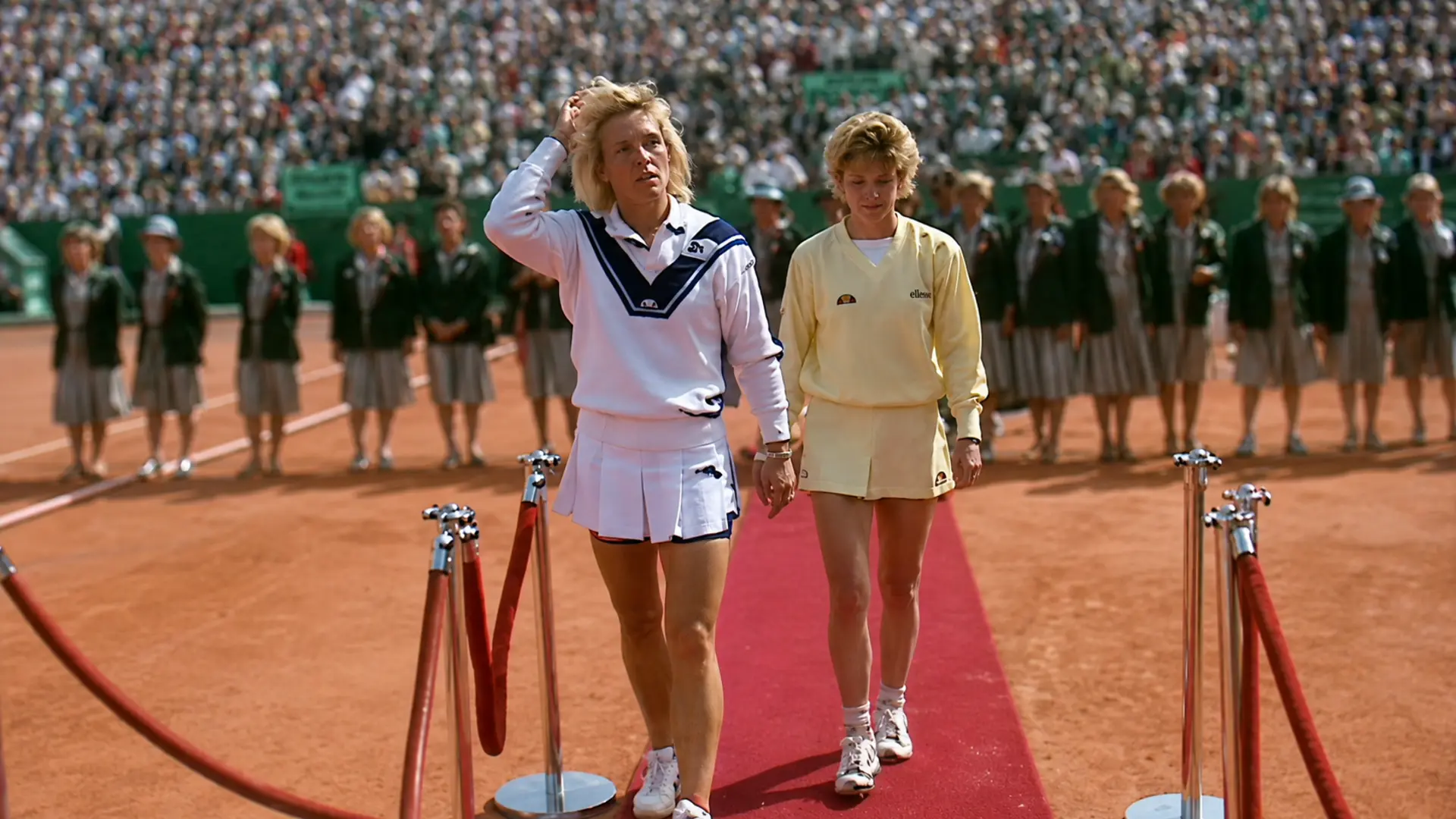
From their first meeting in 1973 to their 80th and final clash in 1988, RallyHer revisits every match between Chris Evert and Martina Navratilova — the rivalry that changed women’s tennis.
Evert vs. Navratilova Head-to-Head at a Glance
Few rivalries in tennis history lasted as long, shifted as dramatically or carried as much significance as Chris Evert against Martina Navratilova. Across 80 official singles meetings, Navratilova eventually finished with a 43–37 advantage.
However, that final number only hints at how often control of the rivalry changed over more than a decade. Indeed, Evert dominated the early years, before Navratilova gradually closed the gap, drew level and ultimately moved ahead. As a result, the final head-to-head tells only part of a rivalry defined by momentum swings, contrasting styles and repeated battles for the biggest titles in women’s tennis.
| Head-to-Head | Chris Evert | Martina Navratilova |
|---|---|---|
| Overall Wins | 37 | 43 |
| Total Matches | 80 | |
| First Meeting | March 22, 1973 | |
| Final Meeting | November 13, 1988 | |
Their rivalry stretched from 1973 to 1988, crossing generations, surfaces and some of the biggest stages in women’s tennis. Evert was the dominant player in the early years, before Navratilova transformed the balance of the rivalry and ultimately moved ahead.
Their championship encounters included repeated battles at Wimbledon and the season-ending championships. RallyHer records Navratilova defeating Evert in the 1978, 1979, 1982, 1984 and 1985 Wimbledon finals, while Evert and Navratilova also met in multiple WTA Finals championship matches.
But 43–37 is only the final score.
The story of how they arrived there is considerably more remarkable. What follows retraces the rivalry from its beginning, match by match, with the head-to-head updated after every meeting — from Chris Evert 1–0 Martina Navratilova to the final Chris Evert 37–43 Martina Navratilova.
How to Use This Complete Rivalry Guide
This guide follows the Chris Evert–Martina Navratilova rivalry match by match, in chronological order, from their first meeting in 1973 to their 80th and final official singles encounter in 1988.
The Matches 1–80 section contains every individual meeting. Each match chapter shows the running head-to-head score after that result, so readers can see exactly how the rivalry developed over time. For example, a heading such as Chris Evert 8–3 Martina Navratilova means Evert led the overall series 8–3 immediately after that match.
In addition, every entry includes the tournament, round, result and match score, with extra context for the meetings that proved especially important to the rivalry. Major finals, Grand Slam clashes, long winning streaks and decisive momentum shifts receive more detailed coverage.
Because the article contains 80 separate match chapters, the table of contents does not list every individual match. Instead, it links to the main chronological section, the major phases of the rivalry and the analysis sections that follow.
You can therefore read the guide from beginning to end as one continuous story, or use the table of contents to jump to a particular era or statistical breakdown.
Near the end of the article, the Complete Evert–Navratilova 80-Match Table also provides every result in one place, while the surrounding sections break the rivalry down by Grand Slams, surfaces, finals, winning streaks and other key records.
Above all, this is designed to show how 0–0 became 37–43 — not simply who finished ahead.
Complete Evert–Navratilova Rivalry Guide
- Evert vs. Navratilova Head-to-Head at a Glance
- How to Use This Complete Rivalry Guide
- Matches 1–80: The Evert–Navratilova Rivalry, Chronologically
- The Beginning: Evert Builds the Early Lead
- A New Phase: Navratilova Pushes Back
- Navratilova Starts to Close the Gap
- The Rivalry Enters Its Second Half
- How the Rivalry Changed Over Time
- Grand Slam Head-to-Head
- Rivalry by Surface
- Finals, Winning Streaks and Key Records
- Their Greatest Matches
- Why Evert–Navratilova Changed Women’s Tennis
- From Best Friends to Rivals — and Back Again
- Chris & Martina: The Final Set
- Complete Evert–Navratilova 80-Match Table
- FAQ: Chris Evert vs. Martina Navratilova
Matches 1–80: The Evert–Navratilova Rivalry, Chronologically
The rivalry began in 1973, years before Chris Evert and Martina Navratilova would come to define an era of women’s tennis.
What followed was a sequence of 80 official singles meetings across 15 years, with the balance between them changing dramatically along the way.
Here is how it happened, one match at a time.

The Beginning: Evert Builds the Early Lead
Chris Evert 1–0 Martina Navratilova
Their first meeting carried none of the weight that history would later attach to it.
Evert was already established among the leading players in the women’s game. Navratilova, still representing Czechoslovakia, was only 16 and several years away from becoming the dominant champion of the late 1970s and 1980s.
The scoreline did not suggest a completely routine afternoon. Navratilova’s attacking instincts and natural athleticism were already evident enough to make an impression on Evert, who later recalled seeing the potential for a far more dangerous opponent once the young Czech developed physically and gained experience.
Navratilova herself remembered being far from the athlete she would later become. She had gained weight after arriving in the United States and struggled physically as the match progressed. Evert, whose consistency and court coverage were already central to her game, eventually wore her down.
The contrast between them was already visible: Evert the disciplined baseliner, Navratilova the instinctive left-hander willing to attack and move forward. Those differences would become one of the defining features of their rivalry.
Evert went on to win the Akron tournament, defeating Olga Morozova 6–4, 6–4 in the final.
At the time, there was little reason to imagine that this first-round match in Ohio would become the opening chapter of an 80-match rivalry stretching to 1988.
There was only the first result.
Chris Evert 2–0 Martina Navratilova
Less than a month after their first encounter in Akron, Chris Evert and Martina Navratilova were already meeting again — this time with considerably more at stake.
Their second match came in the semifinals of the Women’s Masters in St. Petersburg, Florida, an outdoor green-clay tournament held from April 16–22, 1973.
Evert arrived as the top seed and one of the dominant players of the early season, while 16-year-old Navratilova had progressed far enough to earn another opportunity against the player who had beaten her in Ohio.
The result was closer than the straight-sets score might initially suggest.
Evert won 7–5, 6–3, but Navratilova pushed her through a competitive opening set before Evert established greater control in the second. It was another early indication that Navratilova could trouble her, even if she was not yet equipped to sustain that challenge for long enough to turn it into a victory.
The surface also mattered. Clay would eventually become the surface on which Evert enjoyed her clearest statistical advantage over Navratilova across the full rivalry.
Evert’s week did not end with the semifinal. She went on to win the title, defeating Evonne Goolagong in the final, and also won the doubles championship alongside her sister Jeanne Evert.
The singles victory was already her sixth title of the 1973 season and the 17th of her career, illustrating the very different stages the two teenagers occupied despite being separated by only two years.
For Navratilova, however, reaching the semifinal represented progress from their first encounter.
Chris Evert 3–0 Martina Navratilova
Their third meeting came in January 1974 at the Virginia Slims of San Francisco, an indoor event in Oakland. Evert was the top seed, while Navratilova was still trying to find the breakthrough that had eluded her in their first two encounters.
This time, she came closer.
Navratilova took the opening set in a tiebreak, the first set she had won against Evert, and for the first time in the rivalry Evert found herself playing from behind. But the response was emphatic. Evert levelled the match 6–3 and then ran away with the deciding set 6–1.
The result introduced a pattern that would recur throughout the early phase of their rivalry. Navratilova had enough variety and attacking ability to disrupt Evert, but Evert was still better at sustaining her level once a match became physical and extended into a deciding set.
Evert won 6–7, 6–3, 6–1 and moved to 3–0 in the head-to-head.
In the final Chris Evert was defeated by Billie Jean King, who collected $10,000 for the victory.
Chris Evert 4–0 Martina Navratilova
By their fourth meeting, Chris Evert and Martina Navratilova had moved from early-round encounters to their first championship match.
The setting was the 1974 Italian Open in Rome, played on outdoor clay at the Foro Italico. Evert arrived as the top seed, while Navratilova, seeded sixth, had already produced a strong run to reach the final.
For Navratilova, it was another sign of how quickly she was progressing. For Evert, it was another opportunity to reinforce a head-to-head that was still moving firmly in her direction.
Also, Evert was still only 19, while Navratilova was just 17, underscoring how early in their careers this rivalry had already begun to take shape.
The final itself was straightforward by the standards of what their rivalry would later become. Evert won 6–3, 6–3.
The victory delivered the Italian Open title to Evert and pushed the rivalry to 4–0. She had now beaten Navratilova on carpet and clay, in early rounds, a semifinal and, for the first time, a final.
The rivalry was growing in stature.
The scoreboard, however, remained one-sided.
Chris Evert 5–0 Martina Navratilova
Their fifth meeting came again at the 1975 Virginia Slims of San Francisco, with Evert and Navratilova facing each other in the semifinals on indoor carpet.
By then, Navratilova had already shown she could push Evert into longer, more complicated matches. She had taken the opening set from her in California the previous year, and the gap between them was beginning to look less absolute than the 4–0 head-to-head suggested.
This time, though, Evert kept the match under tighter control.
She won 6–4, 6–3, taking a competitive first set before pulling away in the second.
That early dominance is worth keeping in perspective.
Navratilova recalled that during this period, she considered Chris Evert her friend — her only friend.
“I admired her honesty about everything in life,” Evert says. “I respected that she was authentic and fearless. I had been brought up in a nice little Catholic family with a very strict father where little girls were seen but not heard. We were polar opposites, but I always yearned to be more like her.”
Navratilova respected Evert’s discipline: “I admired her being so together emotionally because I couldn’t control that.”
The significance of Match 5 lies partly in what came next.
Chris Evert 5–1 Martina Navratilova
The sixth meeting finally produced the breakthrough Martina Navratilova had been chasing.
At the 1975 Virginia Slims of Washington, Navratilova faced Evert in the quarterfinals on indoor carpet. Navratilova turned the rivalry in a new direction.
It did not come easily.
Evert took the opening set 6–3, putting Navratilova in the familiar position of having to find a way back against an opponent who had repeatedly denied her. Navratilova responded by taking the second 6–4 and forcing the match into a deciding set.
The third set became the closest finish they had yet produced. It went all the way to the deciding tiebreak, with Navratilova eventually prevailing 7–6(5–4). A later Washington Post account described it as a thriller settled on the ninth and final point of the sudden-death tiebreak.
The full score was 3–6, 6–4, 7–6(5–4). It was not only Navratilova’s first victory over Evert; it was also the only match in their rivalry to be decided by a final-set tiebreak.
That made Washington more than another stop on the tour. For the first time, Navratilova had proof that she could finish the job against Evert.
She did more than that. Navratilova went on to win the Washington title, defeating Kerry Melville in the final.
Chris Evert 6–1 Martina Navratilova
Martina Navratilova’s first victory over Chris Evert did not immediately change the balance of the rivalry.
Only days after the breakthrough in Washington, they met again at the 1975 Virginia Slims of Akron, back on indoor carpet in Ohio. This time Evert reasserted herself quickly, winning the quarterfinal 6–3, 6–1 and stretching her overall advantage to 6–1.
The contrast with their previous meeting was sharp. In Washington, Navratilova had recovered from a set down and survived a deciding tiebreak to earn her first win over Evert. Akron offered no such drama. Evert conceded only four games and restored the sense that, at this stage, Navratilova’s breakthrough was still an isolated result rather than a permanent shift in the rivalry.
There was another intriguing layer to the week: Evert and Navratilova were not only opponents in singles, they also played doubles together in Akron. The pair reached the final before losing to Françoise Dürr and Betty Stöve, 7–5, 7–6.
That detail captures something distinctive about the early years of the rivalry. They could be trying to eliminate each other from the singles draw and, at the same tournament, stand on the same side of the net as partners. Their friendship was still developing alongside the competition; the harder professional separation between the two would come later.
Chris Evert also made the most of the singles week. She went on to win the Akron title, beating Margaret Court 6–4, 3–6, 6–3 in the final and collecting the $15,000 winner’s prize.
Chris Evert 6–2 Martina Navratilova
Martina Navratilova’s first win over Chris Evert had come in Washington. Her second arrived almost immediately, and this one was far more emphatic.
At the 1975 Virginia Slims of Chicago, Navratilova beat Evert 6–4, 6–0 in the semifinals on indoor carpet.
The scoreline stands out. After edging the opening set 6–4, Navratilova swept through the second without dropping a game. For the first time in the rivalry, she had not merely found a way to beat Evert; she had overwhelmed her for an extended stretch.
That suggested Washington was not an isolated breakthrough. Navratilova had now beaten Evert twice in three meetings, both times on indoor carpet, and the head-to-head was beginning to acquire a different shape.
There was again a striking twist to the week. Despite facing each other in singles, Evert and Navratilova partnered in doubles and won the Chicago title together, defeating Margaret Court and Olga Morozova 6–2, 7–5 in the final.
So within the same tournament, they were both rivals and champions together — a neat snapshot of the unusual relationship that would continue to develop alongside their competition.
For the first time, two of the previous three matches belonged to Martina.
Chris Evert 7–2 Martina Navratilova
Chris Evert answered Martina Navratilova’s growing challenge quickly.
Their ninth meeting came at the 1975 Virginia Slims of Philadelphia (or the Advanta Championships of Philadelphia), played indoors at the Palestra from March 24–29. Evert entered as the No. 2 seed and Navratilova again stood between her and the final.
The semifinal was competitive, particularly in the opening set. Evert took it in a tiebreak and then closed out the second 6–4, winning 7–6(7-0), 6–4.
The result was significant after Navratilova had won two of their previous three meetings. Philadelphia halted that mini-surge and restored some distance in the head-to-head, with Evert moving ahead 7–2.
Evert remained the more reliable player when sets tightened.
Evert’s run ended one round later. Virginia Wade defeated her 7–5, 6–4 in the final to take the Philadelphia title and the $15,000 winner’s prize.
For the rivalry, though, the immediate message was clear: Evert still held a substantial advantage.
Chris Evert 8–2 Martina Navratilova
Their 10th meeting brought Chris Evert and Martina Navratilova together in one of the biggest matches they had played against each other to that point: the 1975 Virginia Slims Championships final, the season-ending championship of the women’s circuit. The event was played on indoor carpet, and Evert arrived with a 7–2 advantage in the rivalry.
Navratilova had already shown during the season that she could beat Evert, taking victories in Washington and Chicago. But when the two met for the title, Evert again proved more consistent under pressure.
She won 6–4, 6–2, taking the first set by a single break before asserting greater control in the second. The straight-sets victory gave Evert the championship and stretched her head-to-head lead to 8–2.
By this stage, their rivalry was no longer a novelty. They had now met 10 times, and this was already their second final against each other. Yet despite Navratilova’s flashes of progress, Evert had won eight of those first 10 encounters.
The balance remained firmly in her favour.
Chris Evert 9–2 Martina Navratilova
Their 11th meeting brought the rivalry back to clay — and back to a final.
At the 1975 Charleston Open (or Family Circle Cup), Evert defeated Navratilova 7–5, 6–4 to claim the title and extend her head-to-head lead to 9–2. The event was played on outdoor clay, a surface that increasingly magnified Evert’s greatest strengths: patience, depth, movement and relentless consistency.
Navratilova made the first set competitive, pushing Evert to 7–5, but she could not turn that resistance into a breakthrough. Evert took the second set 6–4 and closed out another straight-sets victory.
By this stage, the pattern was becoming hard to ignore. Navratilova had proved she could beat Evert on faster indoor courts, but on clay Evert remained a much more difficult proposition. Match 11 was their third meeting on the surface, and Evert had won all three.
The result also marked another step in Evert’s domination of the early phase of the rivalry. After losing twice in a three-match stretch earlier in 1975, she had now answered with three consecutive victories over Navratilova.
And the next meeting would make the clay-court gap look even wider.
Chris Evert 10–2 Martina Navratilova
If Charleston had shown Chris Evert’s superiority on clay, Rome made the gap look even wider.
Their 12th meeting came in the 1975 Italian Open final at the Foro Italico, where Evert overwhelmed Navratilova 6–1, 6–0 to retain the title and move 10–2 ahead in their rivalry. The tournament was played on outdoor clay, and Evert’s victory gave her a seventh singles title of the season.
This was their second successive Italian Open final and, compared with the 6–3, 6–3 contest of 1974, the scoreline was brutal.
Navratilova managed only one game.
At this stage, clay still exposed the difference between them more clearly than any other surface.
Yet the week contained one of the contradictions that makes their early rivalry so fascinating. After competing against each other for the singles title, Evert and Navratilova won the women’s doubles title together, beating Sue Barker and Glynis Coles 6–1, 6–2 in the final.
They could be ruthless opponents in singles and championship partners in doubles at the same tournament.
For the head-to-head, however, Rome reinforced Evert’s control. She had now won 10 of their first 12 meetings, including all four encounters on clay.
And there was an even bigger clay-court match waiting almost immediately.
Chris Evert 11–2 Martina Navratilova
The 13th meeting took the rivalry somewhere new: a Grand Slam final.
Chris Evert and Martina Navratilova met for the 1975 Roland Garros title in Paris, with Evert defending the championship she had won the previous year. Navratilova, still only 18, was appearing in her first major singles final. Evert was 20 and already a two-time major champion.
For once, the match began entirely on Navratilova’s terms.
She took the opening set 6–2, handing Evert the kind of start she had rarely experienced on clay. It was also the first set Navratilova had won against Evert on clay.
But the momentum did not last.
Evert reversed the match emphatically, taking the second set 6–2 before dominating the decider 6–1. The comeback gave her a 2–6, 6–2, 6–1 victory, a second consecutive Roland Garros crown and the third Grand Slam singles title of her career.
For the rivalry, the occasion was even more important than the score.
This was the first of what would eventually become 22 Grand Slam meetings between Evert and Navratilova. The championship stages that would later become synonymous with their rivalry had begun here, on the clay of Paris.
Years later, Evert would describe Roland Garros as a place where she felt she could beat anyone, and clay remained the surface on which she believed she had the extra time needed to deal with Navratilova’s attacking game.
Chris Evert 12–2 Martina Navratilova
Their 14th meeting took the rivalry to another major stage: the 1975 US Open semifinals at Forest Hills.
That year’s US Open was the first edition played on clay, a surface that strongly favored Evert’s game. She entered the tournament as the leading contender, while Navratilova was continuing a breakthrough season that had already taken her to the Roland Garros final.
The semifinal was close, but Evert again proved more secure in the decisive moments.
She won 6–4, 6–4, advancing to her first US Open final and extending her overall advantage against Navratilova to 12–2.
For Navratilova, the result carried a significance that went far beyond the scoreboard. During the 1975 US Open, she made the decision to defect from communist Czechoslovakia and seek political asylum in the United States, announcing it publicly during the tournament. The match against Evert therefore came during one of the most consequential weeks of her life.
On court, however, Evert’s grip on the rivalry remained formidable. She had now beaten Navratilova in both of their Grand Slam meetings that season — the Roland Garros final and the US Open semifinal — and had won five consecutive matches against her since Navratilova’s victory in Chicago.
Evert then completed the week by defeating Evonne Goolagong 5–7, 6–4, 6–2 in the final to win her first US Open singles title. It began a run of four consecutive championships in New York.
For all the historic change taking place around Navratilova, the competitive balance between the two remained firmly tilted toward Evert.
Chris Evert 13–2 Martina Navratilova
Their 15th meeting came only weeks after the US Open and produced one of the sharper reversals of their early rivalry.
At WTA Atlanta in 1975, Evert and Navratilova met in the final on an indoor hard court. Navratilova started superbly, taking the opening set 6–2 and putting Evert under immediate pressure.
Evert’s response was emphatic.
She reversed the match with a 6–2 second set, then swept through the decider 6–0 to complete a 2–6, 6–2, 6–0 victory. After losing the opening set, Evert conceded only two games across the final two.
That pattern had already appeared in their 1975 Roland Garros final: Navratilova could seize control early, but Evert remained extraordinarily difficult to dislodge once she found her rhythm.
The victory also completed another important stretch in Evert’s early domination of the rivalry. Since Navratilova’s win in Chicago, Evert had now beaten her seven consecutive times, pushing the overall head-to-head to 13–2.
Navratilova had demonstrated again that she could hurt Evert. What she still lacked was the ability to maintain that advantage from beginning to end.
In Atlanta, one excellent set was nowhere near enough.
Chris Evert 14–2 Martina Navratilova
The rivalry moved into 1976 with Chris Evert still holding a commanding advantage.
Their 16th meeting came at the L’Eggs World Series in Austin, Texas, on hard court. Evert won the semifinal 6–0, 6–3, one of her most decisive victories over Navratilova to that point.
The opening set was particularly stark. Navratilova failed to win a game, and although she offered more resistance in the second, Evert never allowed the match to become genuinely uncertain.
By now the head-to-head had stretched to 14–2, and Evert had won eight consecutive meetings since Navratilova’s 1975 victory in Chicago. The early rivalry was beginning to look less like a developing duel than a sustained period of Evert control.
Evert also went on to win the Austin title, defeating Evonne Goolagong in the final.
Yet this match sits right on the edge of another change in the story.
The next time they met, in Houston, Navratilova would finally interrupt Evert’s long winning run.
For now, though, the gap had never looked wider.
Chris Evert 14–3 Martina Navratilova
Martina Navratilova’s third victory over Chris Evert came in the 1976 Virginia Slims of Houston final, and unlike her first breakthrough in Washington, this one was achieved in straight sets.
Navratilova won 6–3, 6–4 to take the title and end Evert’s eight-match winning streak in their rivalry. The result cut Evert’s overall advantage to 14–3.
The significance of the win was not simply that Navratilova had beaten Evert again. It was the manner of it. She did not need a deciding set or a tiebreak, and she did not allow Evert to settle into the kind of long, attritional contest that had so often tilted their early meetings in Evert’s favour.
Houston also reinforced a pattern that was beginning to emerge. All three of Navratilova’s victories over Evert had now come away from clay, on faster courts where her left-handed serve, attacking instincts and willingness to move forward could do more damage.
Evert remained comfortably ahead in the head-to-head, but the rivalry was no longer moving in only one direction. Navratilova had now shown several different ways of beating her — surviving a deciding tiebreak in Washington, overwhelming her in Chicago and now taking a championship match in straight sets.
The next meeting would come on an even bigger stage: Wimbledon.
Chris Evert 15–3 Martina Navratilova
Their 18th meeting brought the rivalry to Wimbledon for the first time.
Evert and Navratilova met in the 1976 Wimbledon semifinals, with Evert seeded No. 1 and Navratilova No. 4. It was already one of the biggest stages they had shared, and the match finally carried the rivalry onto grass.
Evert took the opening set 6–3, but Navratilova answered in the second, winning 6–4 to force a deciding set.
The third was the closest part of the match. Evert eventually edged it 6–4, completing a 6–3, 4–6, 6–4 victory and moving into the Wimbledon final.
The result pushed her overall lead to 15–3 and reinforced just how difficult it remained for Navratilova to turn individual breakthroughs into sustained momentum against her.
Evert then went on to beat Evonne Goolagong Cawley 6–3, 4–6, 8–6 in the final, winning her second Wimbledon singles title and fifth major overall.
And again, there was an unusual postscript to the tournament.
Despite facing each other in the singles semifinals, Evert and Navratilova partnered in doubles and won the Wimbledon title together, defeating Billie Jean King and Betty Stöve 6–1, 3–6, 7–5 in the final.
So at the same Wimbledon, Evert denied Navratilova a place in the singles final — and then stood beside her as a doubles champion.
A New Phase: Navratilova Pushes Back
By 1977, Navratilova was 20 and living in the United States after defecting from Czechoslovakia during the 1975 US Open. She was still four years away from becoming an American citizen, but both her life and her tennis were entering a new phase.
Evert, meanwhile, was already one of the most recognisable women in American sport. Still only 22, she had become a central figure in the 1970s tennis boom — a world No. 1, multiple Grand Slam champion and the polished, widely marketed “Chrissie” whose style and image reached far beyond the court.
Their circumstances could hardly have been more different. Evert was the established star; Navratilova was still rebuilding both her career and her life in a new country. On court, however, the gap between them was beginning to narrow.
Chris Evert 15–4 Martina Navratilova
At the Virginia Slims of Washington, Navratilova defeated Evert 6–2, 6–3 in the final on indoor carpet. It was her second title at the event and her first singles title of the season.
The scoreline was notable not just because Navratilova won, but because of how cleanly she did it. Evert had dominated the opening years of the rivalry, but Washington produced one of Navratilova’s most convincing victories over her to that point.
The surface again suited Navratilova’s attacking game. On indoor carpet, she could shorten points, press forward and keep Evert from settling into the long baseline exchanges that had so often favored her rival.
It was also significant that the victory came in a final. Navratilova was no longer merely stealing occasional wins from Evert in earlier rounds; she was beating her with a title on the line.
Evert still held a huge overall advantage at 15–4, but the shape of the rivalry was beginning to change. Navratilova had now beaten her four times, and three of those victories had come on indoor carpet.
Navratilova’s emphatic victory in Washington did not produce an immediate shift in the rivalry.
Chris Evert 16–4 Martina Navratilova
A few weeks later, at the inaugural 1977 Virginia Slims of Seattle, Evert answered with a straight-sets win in the final, defeating Navratilova 6–2, 6–4 on indoor carpet. The tournament was staged at the Seattle Center Arena from January 31 to February 6.
The result was significant because Washington had hinted at a new phase. Navratilova had beaten Evert 6–2, 6–3 there, but Seattle showed how quickly Evert could reassert control. She dominated the opening set and kept enough distance in the second to prevent another upset.
Evert collected the $20,000 first prize and her second singles title of the season. The win also pushed her head-to-head advantage back out to 16–4.
There was another layer to the week. Evert and Navratilova also ended up on opposite sides of the doubles final, with Evert and Rosie Casals defeating Françoise Dürr and Navratilova 6–4, 3–6, 6–3.
So Seattle produced two Evert victories over Navratilova in the same tournament: one in singles, one indirectly in doubles.
Navratilova was pushing harder now, but Evert was still the player dictating the overall scoreboard.
Chris Evert 17–4 Martina Navratilova
The next stop was Los Angeles, where Evert and Navratilova met in another final at the 1977 Virginia Slims of Los Angeles. The tournament was played on indoor carpet at the Memorial Sports Arena.
This one swung sharply from one player to the other.
Evert took the opening set 6–2, only for Navratilova to answer by taking the second by the same margin. That left the title to be decided in a third set, and Evert responded decisively.
She won the decider 6–1, completing a 6–2, 2–6, 6–1 victory and extending her lead in the rivalry to 17–4.
The scoreline neatly captured where the rivalry stood in early 1977. Navratilova was increasingly capable of taking control for stretches and had already beaten Evert convincingly in Washington that season, but Evert remained better at recovering when momentum shifted.
Los Angeles was another example. Navratilova had levelled the match and seemingly reset the contest, but Evert conceded only one game in the deciding set.
It was also Evert’s second consecutive victory over Navratilova after the Washington defeat, following her straight-sets win in Seattle. The broader head-to-head was still heavily tilted toward Evert.
Chris Evert 18–4 Martina Navratilova
The 22nd meeting came in another championship match, this time at the 1977 Virginia Slims of Philadelphia.
Evert won 6–4, 4–6, 6–3 on indoor carpet, taking the final in three sets and extending her head-to-head advantage to 18–4.
The match was considerably tighter than the scorelines in Seattle and Los Angeles had suggested. Evert took the first set 6–4, but Navratilova answered with a 6–4 second and forced the final into a decider.
Once again, though, Evert was the player who finished more strongly.
She took the third set 6–3, denying Navratilova the chance to turn another competitive performance into a victory.
The numbers remained daunting for Navratilova. She had now lost three consecutive meetings since her Washington victory at the start of the season, and Evert’s overall advantage had grown to 18–4.
The gap was still enormous.
But the matches themselves were becoming less predictable than the head-to-head suggested.
Chris Evert 19–4 Martina Navratilova
Their 23rd meeting came at the 1977 L’Eggs World Series of Tennis in Tucson, Arizona, a compact four-woman event played on hard court over April 15–16. Evert beat Virginia Wade in the semifinal, while Navratilova came through the other half of the draw to set up another final between the two rivals.
Evert took the opening set 6–3, but Navratilova made the second considerably tighter. It went to a tiebreak before Evert closed out the match 7–6(5–3) and secured another title.
The victory continued Evert’s response to her defeat in Washington at the beginning of the year. She had now beaten Navratilova in Seattle, Los Angeles, Philadelphia and Tucson, four consecutive victories that pushed her overall advantage to 19–4.
Yet the second set was another reminder that Navratilova was no longer simply being swept aside. She could stay with Evert deep into sets and force her to play the important points well; what remained elusive was turning enough of those close passages into victories.
Evert’s 1977 season was developing into another formidable campaign. She ultimately finished the year with an official match record of 70–4 and 11 tournament titles.
For the rivalry, Tucson left the scoreboard looking brutally one-sided.
Twenty-three meetings had now been played.
Evert had won 19 of them.
Chris Evert 20–4 Martina Navratilova
Their 24th meeting came at the 1977 Toyota Championships, where the draw brought them together unusually early — in the Round of 32 rather than a semifinal or final. Evert won 6–4, 6–1 on hard court, extending her head-to-head lead to 20–4.
The opening set was competitive, but once Evert had secured it 6–4, she pulled decisively away. Navratilova managed only one game in the second.
That made the result another reminder of how misleading the idea of a steadily narrowing rivalry would be at this point. Navratilova had produced important wins, but Evert was still capable of shutting her down emphatically, and the overall scoreboard had now reached 20–4.
It was also the fifth consecutive Evert victory since Navratilova’s Washington success earlier in the year.
Twenty-four matches into the rivalry, Evert had won more than four out of every five meetings.
This is a very useful structural marker: 20–4 is Evert’s largest lead by total wins — a 16-match gap. From Match 25 onward, Navratilova begins the long process of reducing it.
Chris Evert 20–5 Martina Navratilova
At the 1978 Eastbourne International, Navratilova beat Evert 6–4, 4–6, 9–7 in the final on grass after surviving a match point in a contest that lasted more than two hours.
Evert had reached a commanding 20–4 lead after their first 24 meetings. Eastbourne was Navratilova’s first step in reducing that 16-match deficit.
The final itself was a battle. Navratilova took the opening set 6–4, Evert answered by taking the second 6–4, and the deciding set stretched far beyond a conventional finish before Navratilova finally edged it 9–7. She had faced match point and escaped, then completed the victory to claim her eighth singles title of the 1978 season.
The timing made the result even more significant.
Eastbourne came immediately before Wimbledon, where the two would meet again in the final. Navratilova had now beaten Evert on grass and, more importantly, had done so in a long three-set match in which she had been forced to survive the kind of pressure Evert had so often handled better during the early years of their rivalry.
Their relationship was changing off court as well. Evert has since recalled that as Navratilova became more dangerous, she felt the need to create greater emotional distance because remaining world No. 1 had become her priority.
Navratilova, for her part, has acknowledged that their friendship could sometimes soften the competitive edge she needed against Evert.
Chris Evert 20–6 Martina Navratilova
Two weeks after Eastbourne, the rivalry reached a far more consequential stage.
Evert and Navratilova met in the 1978 Wimbledon final, their first championship match against each other at the All England Club. Evert was the No. 1 seed and already a two-time Wimbledon champion. Navratilova, seeded second, was still searching for her first Grand Slam singles title.
Evert started better, taking the opening set 6–2. But Navratilova recovered in the second, winning 6–4 to force a decider.
The final set became the defining passage of the match. Navratilova held her nerve deep into the third and eventually broke through 7–5, completing a 2–6, 6–4, 7–5 victory.
It was a landmark result.
Navratilova had won her first Grand Slam singles title, and Wimbledon would eventually become the tournament most closely associated with her career. She went on to win a record nine women’s singles titles there.
For the rivalry, the timing was equally important. Navratilova had now beaten Evert in consecutive meetings — first at Eastbourne and then on the biggest grass-court stage of all.
The head-to-head still read 20–6 in Evert’s favour, but something fundamental had shifted.
For the first time, Navratilova had beaten Evert in a Grand Slam match.
For the first time, she had beaten her in a Grand Slam final.
And for the first time, she was Wimbledon champion.
Chris Evert 21–6 Martina Navratilova
After consecutive defeats at Eastbourne and Wimbledon, Chris Evert finally stopped Martina Navratilova’s momentum in Atlanta.
Their 27th meeting came in the final of the 1978 WTA Atlanta event, played on indoor carpet at the Alexander Memorial Coliseum. Evert won a wildly uneven three-setter 7–6(7–3), 0–6, 6–3.
The opening set was the key. Evert edged it in a tiebreak, only for Navratilova to respond with a complete reversal in the second, handing Evert a 6–0 set.
That bagel makes the final set more revealing. Evert had just been swept aside, but instead of allowing the match to run away from her, she reset and took the decider 6–3. It was a useful reminder that even as Navratilova’s game was rising rapidly, Evert remained exceptionally difficult to finish off once a match became a contest of nerve and adjustment.
The victory was also timely. Navratilova had beaten Evert in their previous two meetings, including the Wimbledon final that delivered her first Grand Slam singles title. Atlanta interrupted that run and gave Evert her first victory over Navratilova since the 1977 Toyota Championships.
The head-to-head moved to 21–6.
That number still looked overwhelmingly in Evert’s favour, but the rivalry was no longer behaving like a 21–6 rivalry. Navratilova had won on grass at Eastbourne and Wimbledon, and now pushed Evert through one of their strangest three-set finals.
Evert had restored order in Atlanta.
She had not restored the old certainty.
Chris Evert 22–6 Martina Navratilova
Their 28th meeting came at the 1978 Toyota Championships, held on outdoor hard courts at Mission Hills Country Club in Palm Springs, California. It was the season-ending championship of the Virginia Slims World Championship Series, and once again Evert and Navratilova reached the final.
This time, Evert was firmly in control.
She won 6–3, 6–3, denying Navratilova the chance to build on the momentum she had created earlier in the year at Eastbourne and Wimbledon.
That mattered because 1978 had already begun to look like a turning point. Navratilova had won Wimbledon for the first time and had beaten Evert in consecutive grass-court finals. But Evert’s victories in Atlanta and now Palm Springs showed that the rivalry had not yet tilted decisively in the other direction.
The Toyota Championships also carried considerable weight in their own right. Evert earned $75,000 in first-prize money for winning the title, which was her sixth singles championship of the season.
So while Navratilova’s breakthrough year had changed the tone of the rivalry, Evert finished this particular encounter with another reminder of how much ground remained to be made up.
Chris Evert 23–6 Martina Navratilova
Their final meeting of 1978 came a long way from Wimbledon, in Tokyo, where Evert and Navratilova contested the final of the inaugural Lion’s Cup.
The tournament was a compact invitational event, and the final was played on December 11, 1978. Evert prevailed 7–5, 6–2, extending her head-to-head advantage to 23–6. Contemporary reporting from El País also recorded Evert’s straight-sets victory in the Tokyo final.
The opening set was the more competitive of the two. Navratilova stayed with Evert until 5–5, but Evert took the set 7–5 and then established much firmer control in the second, conceding only two games.
It was a significant way for Evert to close a season in which the rivalry had changed considerably.
Navratilova had beaten her at Eastbourne and, most importantly, at Wimbledon to win her first Grand Slam singles title. Yet Evert responded by winning their final three meetings of 1978 — Atlanta, the Toyota Championships and Tokyo. Our chronology therefore leaves the year with Evert still holding a commanding 23–6 overall advantage.
Evert was still well ahead in the rivalry.
But 1978 had made clear that the contest was entering a different era.
Navratilova Starts to Close the Gap
Chris Evert 23–7 Martina Navratilova
The 1979 season opened with another clear sign that the rivalry was changing.
At the Virginia Slims of California in Oakland, Navratilova defeated Evert 7–5, 7–5 in the final on indoor carpet. Contemporary season records place the match on January 8, 1979.
The scoreline was tight, but Navratilova did not need a deciding set. She took both sets by the same 7–5 margin and collected another important victory over an opponent who had dominated so much of their early history.
That made Oakland significant beyond the title itself.
Evert had finished 1978 by winning their final three meetings, but Navratilova immediately answered at the start of the new season. The result suggested that the breakthroughs of 1978 — particularly Eastbourne and Wimbledon — were not isolated moments.
The head-to-head still looked heavily one-sided at 23–7, but the direction of travel was beginning to change. Evert’s lead was no longer expanding relentlessly, and Navratilova was becoming increasingly capable of beating her in finals rather than merely pushing her close.
Oakland was the first step of 1979.
There would be several more.
Chris Evert 24–7 Martina Navratilova
Martina Navratilova had opened 1979 by beating Chris Evert in Oakland. Five weeks later, Evert supplied the reply.
They met again in the final of the Avon Championships of Los Angeles, played on indoor carpet at The Forum from February 12–18. Evert, seeded second, defeated Navratilova 6–3, 6–4 to win the title and restore some distance in the head-to-head.
Unlike several of their increasingly dramatic three-set encounters, Los Angeles stayed firmly within Evert’s control. She took the opening set 6–3 and then resisted Navratilova’s stronger challenge in the second to close it out 6–4.
The victory earned Evert $30,000 in first-prize money and gave her a second singles title of the season. It was also listed as the 87th singles title of her career.
There was another familiar subplot. Evert and Navratilova also reached the doubles final on opposite sides of the net. Evert partnered Rosie Casals to defeat Navratilova and Anne Smith 6–4, 1–6, 6–3, giving Evert victories over her rival in both championship matches that week.
Oakland had suggested Navratilova might immediately begin eating into the deficit. Los Angeles showed that Evert was not about to surrender her advantage quietly.
After 31 meetings, the gap remained formidable.
Chris Evert 24–8 Martina Navratilova
Navratilova answered Evert’s Los Angeles win almost immediately.
Their 32nd meeting came in the final of the 1979 Virginia Slims of Dallas, played on indoor carpet at Moody Coliseum. Navratilova defeated Evert 6–4, 6–4 to win the title and cut the overall head-to-head deficit to 24–8.
Navratilova had now beaten Evert in two of their first three meetings of 1979, a notable shift after spending so much of the rivalry trying to make isolated victories stick.
Dallas also strengthened a pattern that had already emerged on faster indoor courts. Navratilova’s serve-and-volley instincts, first-strike tennis and willingness to close at the net were becoming increasingly effective against Evert on carpet.
The week was even more complete for Navratilova because she also won the doubles title, partnering Anne Smith to defeat Rosie Casals and Evert 7–6, 6–2 in the final.
So Evert left Dallas having lost to Navratilova in both championship matches.
That did not erase the enormous historical deficit, but it added another piece of evidence that the rivalry was beginning to behave differently.
Chris Evert 25–8 Martina Navratilova
Their 33rd meeting produced one of the great marathons of the rivalry.
Evert and Navratilova met in the 1979 Eastbourne International final on grass, just before Wimbledon. Evert won 7–5, 5–7, 13–11 in a match that stretched to roughly three hours and featured an extraordinary 91-minute deciding set.
Navratilova came agonisingly close to winning it. She held three match points in the final set, but Evert saved them all and eventually edged the decider 13–11. Contemporary coverage later singled out the match as a classic and one of the most dramatic grass-court contests the pair had played to that point.
The result was especially striking because Navratilova had beaten Evert in the Eastbourne final a year earlier and then repeated the victory at Wimbledon. This time Evert reversed the outcome, surviving the kind of pressure that had gone against her on grass in 1978.
It also pushed Evert’s head-to-head advantage to 25–8, but the scoreline tells only part of the story. By now Navratilova was no longer simply trying to prove she could compete with Evert. She was taking her deep into deciding sets on grass, creating match points and forcing every major encounter to feel genuinely uncertain.
And there was barely time to recover.
Two weeks later, they would meet again in the Wimbledon final.
Chris Evert 25–9 Martina Navratilova
The next chapter came almost immediately, and this time Martina Navratilova turned the Eastbourne disappointment into another Wimbledon triumph.
On July 6, 1979, Navratilova and Evert met in the Wimbledon final for the second consecutive year. Navratilova was the defending champion and No. 1 seed; Evert was trying to reclaim the title she had won in 1974 and 1976.
Only weeks earlier, Evert had survived three match points to beat Navratilova 13–11 in the deciding set at Eastbourne. Centre Court produced a very different contest.
Navratilova attacked relentlessly.
A contemporary Washington Post report described her using the left-handed serve and powerful volleys to keep pressing forward, refusing to be deterred by Evert’s passing shots. The strategy worked: Navratilova won 6–4, 6–4 in approximately one hour.
The result gave her a second consecutive Wimbledon singles championship, confirming that her breakthrough victory over Evert in the 1978 final had been no one-off.
It also strengthened an increasingly important distinction within their rivalry. Evert still owned a commanding overall head-to-head lead, but Wimbledon was beginning to belong to Navratilova.
For all that, the running score still looked extraordinary.
After 34 meetings, Evert remained ahead by 16 victories.
But Navratilova had now won three of their previous five meetings, including two Wimbledon finals.
Chris Evert 25–10 Martina Navratilova
Their 35th meeting came in the final of the 1979 Virginia Slims of Phoenix, played on outdoor hard courts at the Arizona Biltmore Hotel.
Navratilova won 6–1, 6–3, one of her most convincing victories over Evert to that point. The result gave her the Phoenix title and moved the head-to-head to 25–10.
The scoreline was striking. Evert had beaten Navratilova at Eastbourne earlier that summer, but since then Martina had taken Wimbledon and now produced a dominant straight-sets win in Phoenix.
This was no longer a case of Navratilova merely making the rivalry more competitive. She was beginning to beat Evert with increasing authority, and the faster surfaces were becoming especially productive for her attacking game.
Phoenix was also Navratilova’s ninth singles title of the 1979 season and the 33rd of her career.
Evert still held a large numerical advantage after 35 meetings, but the gap had started to shrink in a much more meaningful way.
Chris Evert 25–11 Martina Navratilova
The 36th meeting came late in 1979 at the Brighton International, played on indoor carpet at the Brighton Centre in England.
Navratilova won 6–3, 6–3 in the final, taking the title without dropping a set to Evert. The victory was her 10th singles title of the season and the 34th of her career.
The match was another sign that the balance between them was shifting on faster surfaces. Evert had still won the majority of their encounters, but Navratilova was now finding more consistent success indoors, where her serve, athleticism and willingness to attack could keep Evert from settling into extended baseline patterns.
By the end of 1979, the broader picture looked very different from the one that had existed only a few years earlier.
Evert still led comfortably overall, but Navratilova had now won four of their six meetings that season: Oakland, Dallas, Wimbledon and Brighton. Evert’s victories had come in Los Angeles and the Eastbourne marathon.
The deficit was still substantial.
The trend was not.
Chris Evert 25–12 Martina Navratilova
The 1980 season began with another statement from Martina Navratilova.
In the final of the Virginia Slims of Chicago, played on indoor carpet, Navratilova defeated Evert 6–4, 6–4. The victory moved the running head-to-head to 25–12 and continued the steady erosion of the huge lead Evert had built earlier in the rivalry.
The scoreline was straightforward, but its place in the broader arc was important. Navratilova had finished 1979 by beating Evert in Brighton, and now opened their 1980 meetings with another straight-sets win.
That made it consecutive victories over Evert and reinforced the pattern that had developed on faster indoor courts. Navratilova was increasingly able to use her serve, first-strike tennis and movement forward to prevent Evert from settling into the longer exchanges she preferred.
By now, the rivalry had entered a very different phase from the one that produced Evert’s 20–4 lead.
The deficit was still large.
But Navratilova was no longer trying to prove she could beat Evert.
She was beginning to do it regularly.
Chris Evert 26–12 Martina Navratilova
Wimbledon in 1980 brought another important reversal.
Evert and Navratilova met in the semifinals, with Navratilova arriving as the two-time defending champion. She had beaten Evert in the Wimbledon finals of both 1978 and 1979, and after winning their previous two meetings overall, appeared to have the momentum in the rivalry.
Navratilova strengthened that impression by taking the opening set 6–4.
Evert responded.
She levelled the match by winning the second set 6–4, then took control of the decider, winning it 6–2 to complete a 4–6, 6–4, 6–2 victory.
The result mattered for several reasons. It ended Navratilova’s two-year reign as Wimbledon champion and gave Evert her first victory over her at the All England Club since their 1976 semifinal.
It also interrupted Navratilova’s recent progress in the head-to-head. After consecutive wins in Brighton and Chicago had reduced Evert’s advantage to 25–12, Wimbledon pushed the gap back out to 26–12.
Evert did not go on to win the title. Evonne Goolagong Cawley defeated her in the final, becoming Wimbledon champion for the first time since 1971.
But within the Evert–Navratilova rivalry, Match 38 was a significant reminder.
Navratilova had become the stronger Wimbledon force over the previous two years.
Evert could still beat her there.
Chris Evert 27–12 Martina Navratilova
The rivalry returned to Brighton in October 1980, and this time Chris Evert came through another three-set final.
At the Brighton International, played on indoor carpet, Evert defeated Navratilova 6–4, 5–7, 6–3 to move 27–12 ahead in their head-to-head.
The match followed a familiar pattern from some of their better contests of this period. Evert took the opening set, Navratilova responded strongly enough to force a decider, and the final set became the test of who could impose herself when the match tightened.
This time it was Chris Evert.
She took the third 6–3, denying Navratilova a repeat of her Brighton victory from the previous year and adding another hard-fought win to a rivalry that was becoming increasingly difficult to predict from one meeting to the next.
The result also meant Evert had now won two of their three meetings in 1980: Wimbledon and Brighton, with Navratilova’s victory coming in Chicago.
That was significant because the broader momentum had appeared to be moving toward Navratilova in 1979. Evert’s 1980 response showed that the old order had not simply disappeared.
The head-to-head still belonged comfortably to Evert.
And at the Daihatsu Challenge in Brighton, so did the final set.
Chris Evert 27–13 Martina Navratilova
Their 40th meeting came at the 1980 Lion’s Cup in Tokyo, where Navratilova beat Evert 7–6, 6–2 in the semifinals on indoor carpet.
The first set was the competitive part of the match. Evert pushed it to a tiebreak, but once Navratilova secured the opener she took much firmer control, conceding only two games in the second.
The victory halted Evert’s run of two straight wins in the rivalry at Wimbledon and Brighton. Navratilova had endured a more uneven 1980 against Evert than in 1979, but Tokyo gave her a strong finish to their head-to-head meetings that season.
She also made the victory count. Navratilova went on to win the Lion’s Cup title, defeating Tracy Austin 6–4, 6–3 in the final.
After 40 meetings, Evert still held a substantial advantage at 27–13. But the rivalry had now reached its halfway point, and the second half would bear little resemblance to the first.
The Rivalry Enters Its Second Half
Chris Evert 28–13 Martina Navratilova
Match 41 produced one of the most lopsided results of the entire rivalry.
At the 1981 Amelia Island Championships (or Murjani WTA Championships), Evert defeated Navratilova 6–0, 6–0 in the final on outdoor clay. Navratilova was the defending champion, but Evert overwhelmed her without conceding a single game.
The score remains extraordinary even within an 80-match rivalry.
Evert’s clay-court strengths were on full display: control from the baseline, relentless depth and the ability to force Navratilova into one more difficult shot. On this surface, the usual advantages of Navratilova’s attacking game were largely neutralised.
The result also carried extra weight because it came immediately after the rivalry’s halfway point. After 40 meetings, Evert led 27–13. Amelia Island pushed that advantage to 28–13 and delivered one of the clearest demonstrations of her superiority on clay.
Years later, Evert herself identified this match as one of the most memorable of the rivalry. The 6–0, 6–0 score remained unique in their series and stood as one of the most emphatic victories either woman ever recorded over the other.
Navratilova would eventually answer emphatically at Amelia Island herself, beating Evert 6–2, 6–0 in the 1984 final. But in 1981, there was no ambiguity.
Evert had delivered a double bagel.
Chris Evert 28–14 Martina Navratilova
Their 42nd meeting came on one of the biggest stages of the season: the 1981 US Open semifinals.
Evert entered New York as the defending champion and top seed, having reached the final in each of the previous six editions. Navratilova, seeded fourth, was trying to reach her first US Open singles final.
The semifinal became a three-set struggle.
Navratilova took the opening set 7–5, but Evert responded by winning the second 6–4. The deciding set stayed close until Navratilova finally secured it 6–4, completing a 7–5, 4–6, 6–4 victory.
The match contained one of the rivalry’s most memorable rallies, a long exchange in which both women repeatedly turned defence into attack before Evert eventually won the point. It has since been replayed as one of the standout sequences from their long series.
More importantly, Navratilova had beaten Evert at the US Open for the first time.
The defeat also ended Evert’s extraordinary run of six consecutive US Open finals. Navratilova advanced to face Tracy Austin, though she would lose a dramatic championship match 1–6, 7–6, 7–6.
From the perspective of the rivalry, Match 42 provided another indication that the second half would not resemble the first. Only months earlier Evert had crushed Navratilova 6–0, 6–0 on clay at Amelia Island. On the hard courts of New York, Navratilova produced the answer.
The head-to-head still favoured Evert comfortably.
But another major battleground had now swung Martina’s way.
Chris Evert 28–15 Martina Navratilova
Only two months after beating Evert in the US Open semifinals, Martina Navratilova defeated her again — this time in the 1981 Lion’s Cup final in Tokyo.
Played on indoor carpet, the match was far less dramatic than their three-set battle in New York. Navratilova won 6–3, 6–2, taking the title in straight sets and cutting Evert’s overall head-to-head lead to 28–15.
The victory came on November 16, 1981, and it continued a significant change in their recent results. Navratilova had now beaten Evert in consecutive meetings for the first time since the Brighton–Chicago sequence spanning late 1979 and early 1980.
Tokyo also returned them to the faster indoor conditions that increasingly suited Navratilova’s game. Rather than allowing Evert to settle into long exchanges, she was able to apply pressure earlier in points and keep the match on her own terms.
The score reflected that control. After taking the first set 6–3, Navratilova allowed Evert only two games in the second.
It was another important marker in a rivalry that had looked overwhelmingly one-sided only a few years earlier. Navratilova was now accumulating victories rather than merely producing isolated breakthroughs.
And 1981 was not finished with them yet.
Their next meeting would come in the Australian Open final, where the rivalry would produce another three-set battle.
Chris Evert 29–15 Martina Navratilova
Less than two weeks after Navratilova’s convincing victory in Tokyo, Evert answered on Australian grass.
Their 44th meeting came in the final of the 1981 Sydney International, also known at the time as the NSW Building Society Open. The women’s tournament was staged at White City Stadium from November 23–29, with Evert seeded No. 1.
The match swung sharply.
Evert took the opening set 6–4, before Navratilova responded by winning the second 6–2. But Evert produced the stronger finish, racing through the deciding set 6–1 to complete a 6–4, 2–6, 6–1 victory.
It was an important response after Navratilova had won their previous two meetings at the US Open and in Tokyo. Sydney prevented that run from becoming three and pushed Evert’s overall advantage back out to 29–15.
The setting also added another dimension to their rivalry. This was their first meeting in Australia and only their fourth match on grass. Navratilova’s attacking game might have appeared naturally suited to the surface, but Evert showed again that she could absorb the pressure and take control once the match reached a deciding set.
The Sydney final was played on November 29, 1981, just before both women headed to Melbourne for the Australian Open.
And there was a compelling sequel waiting almost immediately.
One week later, Evert and Navratilova would meet again — this time with an Australian Open title at stake.
In Sydney, however, Evert had the final word.
Chris Evert 29–16 Martina Navratilova
One week after Evert had beaten Navratilova in Sydney, the rivalry moved to Melbourne — and this time the prize was considerably bigger.
They met in the 1981 Australian Open final at Kooyong, on grass, with Evert seeded No. 1 and Navratilova No. 3. For Evert, victory would have completed the career Grand Slam. For Navratilova, it was a chance to win the Australian Open for the first time.
Evert edged a tight opening set in a tiebreak, 7–6(7–4). Navratilova responded by taking the second 6–4, sending another major final between them into a deciding set.
Then Navratilova appeared to have broken the match open.
She surged to a 5–1 lead in the third set, only for Evert to produce a remarkable recovery. Evert fought all the way back to 5–5, transforming what had looked close to a routine finish into another test of nerve between the two rivals.
Navratilova did not buckle.
After seeing a four-game advantage disappear, she steadied herself, won the next two games and completed a 6–7(4–7), 6–4, 7–5 victory. It gave her a first Australian Open singles crown and the third Grand Slam singles title of her career.
The defeat was especially painful for Evert. She had come within one match of completing the career Grand Slam, only for Navratilova to deny her.
Chris Evert 29–17 Martina Navratilova
Their 46th meeting brought them back to Centre Court for another Wimbledon final.
On July 3, 1982, Navratilova defeated Evert 6–1, 3–6, 6–2 to win her third Wimbledon singles title. Wimbledon’s official draw confirms the score, while contemporary reporting records the final on July 3.
Navratilova began at a frightening pace. She swept through the opening set 6–1, putting Evert under immediate pressure with the aggressive grass-court tennis that had already brought her Wimbledon titles in 1978 and 1979.
Evert, however, refused to let the final disappear. She changed the rhythm of the match and took the second set 6–3, forcing another major final between the two into a deciding set.
For a brief period in the third, Evert appeared to have the momentum. She broke Navratilova’s serve in the third game, but Navratilova responded decisively. Contemporary coverage noted that she recovered her composure and swept the final five games to take the set 6–2 and reclaim the Wimbledon crown.
The victory mattered beyond another point in the head-to-head. Navratilova had now beaten Evert in three Wimbledon finals — 1978, 1979 and 1982 — and the All England Club was increasingly becoming the stage on which her attacking game held the clearest advantage.
It also continued the gradual change in their rivalry. Evert still led comfortably overall, but Navratilova had now won their last two Grand Slam finals, at the 1981 Australian Open and Wimbledon in 1982.
Chris Evert 29–18 Martina Navratilova
Their 47th meeting came at the 1982 Brighton International, where Martina Navratilova again found the formula against Chris Evert on indoor carpet.
Navratilova won the final 6–1, 6–4, taking the title in straight sets. The tournament was played at the Brighton Centre from October 25–31, and Navratilova entered as the top seed, with Evert seeded second.
The opening set was emphatic. Navratilova allowed Evert only one game, imposing herself quickly and preventing the match from developing into the kind of long, attritional contest Evert preferred.
The second set was tighter, but Navratilova still closed it out 6–4 to complete the victory.
It was another important marker in the changing rivalry. Evert still led comfortably overall, but Navratilova had now beaten her in consecutive meetings — Wimbledon and Brighton — and both victories had come in finals.
Brighton also brought Navratilova her 13th singles title of the 1982 season and the 68th of her career.
The head-to-head remained in Evert’s favour, but the gap had narrowed again.
Chris Evert 30–18 Martina Navratilova
One year after Navratilova denied Evert the Australian Open title, Evert returned the favour.
Their 48th meeting came in the 1982 Australian Open final at Kooyong, again on grass. Navratilova was the defending champion and world No. 1; Evert was still chasing the one major title missing from her résumé.
This time, Evert started better.
She took the opening set 6–3, using depth and precision to keep Navratilova from dominating at the net. Navratilova responded in the second, winning 6–2 and forcing the final into a deciding set.
Evert then regained control.
She moved ahead in the third and closed out a 6–3, 2–6, 6–3 victory to win the Australian Open for the first time.
The significance went well beyond another victory over Navratilova.
By winning in Melbourne, Evert completed the career Grand Slam, adding the Australian Open to her previous titles at Roland Garros, Wimbledon and the US Open. It was one of the major milestones of her career, and she achieved it by beating the opponent who had prevented her from doing exactly that in the 1981 final.
The result also broke Navratilova’s two-match winning streak in the rivalry and pushed Evert’s overall advantage back out to 30–18.
For Evert, there was a neat symmetry to Melbourne.
In 1981, Navratilova had stood between her and a career Grand Slam.
In 1982, Evert went through Navratilova to complete it.
Chris Evert 30–19 Martina Navratilova
Their 49th meeting came only weeks after Evert’s Australian Open triumph, but Navratilova supplied the answer at the 1982 Toyota Championships in East Rutherford, New Jersey.
Played indoors on carpet at the Byrne Meadowlands Arena, the season-ending event brought the two leading rivals together in another final. Evert struck first, taking the opening set 6–4.
Navratilova’s response was emphatic.
She swept through the second set 6–1, then maintained control in the decider to win it 6–2, completing a 4–6, 6–1, 6–2 victory.
The turnaround was striking. Evert had come into the match having just beaten Navratilova in three sets at the Australian Open to complete her career Grand Slam. At the Toyota Championships, however, Navratilova conceded only three games after losing the opening set.
The victory earned Navratilova $75,000 and gave her a remarkable 15th singles title of the 1982 season, the 70th of her career.
It also provided another indication of where the rivalry was heading. Evert still possessed a substantial advantage in the historical head-to-head, but Navratilova was increasingly able to absorb setbacks within matches and then impose a level that Evert struggled to contain.
The first set belonged to Evert.
Almost everything after it belonged to Navratilova.
Chris Evert 30–20 Martina Navratilova
Their 50th meeting came at the 1983 Virginia Slims of Dallas, and by now Martina Navratilova was beginning to apply sustained pressure to the head-to-head.
Played on indoor carpet at Moody Coliseum, the final matched the top two seeds. Navratilova entered as the defending champion and defeated Evert 6–4, 6–0 to retain the title.
The opening set was competitive. Navratilova took it 6–4, but the second was emphatic.
Evert did not win another game.
That 6–0 second set was another sign of how dramatically Navratilova’s level had risen. Earlier in the rivalry, Evert had been the player more likely to pull away once she established control. In Dallas, Navratilova was the one accelerating through the finish.
The victory gave Navratilova her fourth singles title of the 1983 season and the 74th of her career. She also completed a sweep of the Dallas titles by winning the doubles alongside Pam Shriver.
More importantly for this rivalry, the score had reached a symbolic point.
After 50 matches, Evert still led 30–20.
But Navratilova had now won 20 times, and the 10-match gap looked very different from the enormous lead Evert had once held.
Dallas would prove to be the beginning of something much more significant.
Evert would not beat Navratilova again for a long time.
Chris Evert 30–21 Martina Navratilova
If Dallas had hinted at what was coming, the 1983 Virginia Slims Championships made it unmistakable.
Evert and Navratilova met in the final at Madison Square Garden in New York, with Navratilova producing one of the most one-sided victories of their entire rivalry. She won 6–2, 6–0 in just over an hour.
The opening set already belonged firmly to Navratilova. The second became a rout.
Evert did not win a game.
That made the result especially striking because only two years earlier Evert had handed Navratilova a 6–0, 6–0 defeat on clay at Amelia Island. At Madison Square Garden, Navratilova effectively returned the favour, conceding only two games in one of her most emphatic wins over Evert. World Tennis Magazine later identified this 6–2, 6–0 final as one of Navratilova’s most lopsided victories in their 80-match series.
The head-to-head still read 30–21 in Evert’s favour, but that number was becoming increasingly deceptive.
Navratilova was no longer simply closing the gap.
She was beginning to dominate.
Chris Evert 30–22 Martina Navratilova
By the summer of 1983, Martina Navratilova was beginning to overwhelm Chris Evert with a regularity that would have seemed almost impossible during the early years of their rivalry.
Their 52nd meeting came in the final of the 1983 Virginia Slims of Los Angeles, played on outdoor hard courts at the Manhattan Country Club in Manhattan Beach, California. Navratilova won 6–1, 6–3, another emphatic straight-sets victory.
Los Angeles made it three consecutive victories over Evert that season, all in straight sets.
That run reflected the extraordinary level Navratilova was producing across the tour. She would lose only one match during the entire 1983 season, a fourth-round defeat to Kathleen Horvath at Roland Garros.
For Evert, the wider head-to-head still provided a cushion. She remained ahead 30–22 after 52 meetings.
But the nature of the rivalry had changed dramatically.
Navratilova was no longer chipping away at Evert’s advantage one victory at a time. She was stringing victories together — and increasingly doing so by margins that left little doubt about who was controlling the match.
Chris Evert 30–23 Martina Navratilova
By the time the rivalry reached Toronto in August 1983, Martina Navratilova’s surge was becoming impossible to dismiss.
Their 53rd meeting came in the final of the Canadian Open, played on outdoor hard courts at the National Tennis Centre in Toronto. Navratilova defeated Evert 6–4, 4–6, 6–1, cutting the overall head-to-head deficit to 30–23.
Unlike her crushing victories over Evert in Dallas, New York and Los Angeles earlier that year, this one required a response.
Navratilova took the opening set 6–4, but Evert fought back to claim the second by the same score and force a deciding set. The contest had been competitive through two sets; the third was not.
Navratilova pulled away 6–1.
That decisive finish continued a remarkable 1983 sequence. She had now beaten Evert in four consecutive meetings, and all four had come in finals. The head-to-head still showed Evert in front, but the cushion that once appeared enormous was disappearing quickly.
Toronto also showed that Navratilova’s growing command of the rivalry was no longer restricted to carpet or grass. She had beaten Evert on indoor carpet in Dallas and New York, on hard court in Los Angeles, and now again on outdoor hard court in Canada.
At the end of 1982, Evert had led 30–19.
Four meetings later, Evert was still stuck on 30.
Chris Evert 30–24 Martina Navratilova
Match 54 brought the rivalry to the 1983 US Open final, and this time Martina Navratilova left no doubt about who was in control.
Evert was the defending champion and already a six-time US Open winner. Navratilova, by contrast, was still chasing her first singles title in New York. She had reached the final once before, in 1981, but lost to Tracy Austin.
On September 10, 1983, Navratilova changed that emphatically.
She defeated Evert 6–1, 6–3, producing one of the most dominant Grand Slam-final performances of their rivalry. Contemporary reporting described the victory as decisive, and the official US Open history records it as Navratilova’s first women’s singles championship in New York.
The opening set was a rout. Navratilova conceded only one game, repeatedly taking time away from Evert and preventing her from establishing the baseline rhythm that had served her so well in New York over the years.
The second set offered more resistance, but not enough to alter the direction of the match. Navratilova closed it out 6–3 and finally added the US Open singles crown to her résumé.
For the rivalry, the result was part of something much bigger.
Navratilova had now beaten Evert in five consecutive meetings, all in 1983. At the end of 1982, Evert had led their head-to-head 30–19. She was still stuck on 30.
Navratilova had climbed to 24.
The historical lead remained Evert’s, but the tennis itself was increasingly Martina’s.
Chris Evert 30–25 Martina Navratilova
The 55th meeting came at the 1983 Lion’s Cup in Tokyo, and Martina Navratilova closed the season against Chris Evert in the same commanding fashion she had shown for much of the year.
Navratilova won the final 6–2, 6–2 on indoor carpet, keeping Evert under pressure throughout and allowing her little chance to establish a rhythm. A contemporary UPI report noted that Evert briefly pulled the second set back to 3–2, but Navratilova then swept the final three games to finish the match.
It was Navratilova’s sixth consecutive victory over Evert in 1983. Evert had ended 1982 leading their rivalry 30–19; by the end of Tokyo, she was still on 30 while Navratilova had surged to 25.
The head-to-head still belonged to Evert on paper.
The recent rivalry belonged overwhelmingly to Navratilova.
She had now won six straight meetings, including the US Open final and a string of increasingly one-sided championship matches. The deficit that once seemed almost impossible to erase had been reduced to five.
Chris Evert 30–26 Martina Navratilova
The 1984 season opened with another Navratilova victory — and by now the old Evert advantage was shrinking fast.
Their 56th meeting came in the final of the US Indoor Championships, played on indoor carpet in New Jersey from February 20–26. Navratilova defeated Evert 6–2, 7–6(7–4) to take the title and cut the overall head-to-head deficit to four matches.
The first set was one-sided. Navratilova took it 6–2, continuing the dominant pattern she had established against Evert through much of 1983.
The second was tighter. Evert pushed the set into a tiebreak, but Navratilova closed it out 7–4, completing another straight-sets victory.
That made it seven consecutive wins over Evert stretching back to Dallas in 1983.
And there was more to come.
Chris Evert 30–27 Martina Navratilova
By March 1984, Chris Evert’s once-commanding lead in the rivalry was disappearing at remarkable speed.
Their 57th meeting came in the final of the Virginia Slims Championships at Madison Square Garden, where Navratilova defeated Evert 6–3, 7–5, 6–1. The tournament ran from February 28 to March 4, and this edition introduced a best-of-five-sets format for the final.
Evert offered her strongest resistance in the second set, pushing Navratilova to 7–5 after losing the opener 6–3. But once Navratilova secured that set, she accelerated through the third, conceding only one game.
The victory gave Navratilova her fifth Tour Finals singles title and extended her winning streak over Evert to eight consecutive matches.
The running score was now becoming genuinely dramatic.
At the end of 1982, Evert had led 30–19. She had not added a single victory since.
Navratilova had climbed from 19 to 27.
Only three matches separated them.
And the most extraordinary part was that the gap would disappear before the summer was over.
Chris Evert 30–28 Martina Navratilova
Amelia Island in 1984 produced one of the most striking reversals in the entire rivalry.
Three years earlier, on the same Florida clay, Evert had humiliated Navratilova 6–0, 6–0. This time, Navratilova turned the tables.
In the final of the 1984 Amelia Island Championships, she defeated Evert 6–2, 6–0, breaking Evert’s long run of success on Florida clay and cutting the overall head-to-head deficit to just two matches.
Navratilova broke Evert’s serve in the opening game and never allowed her to settle. The first set went 6–2; the second was even more emphatic, with Evert failing to win a game. Contemporary reporting described Evert as unusually error-prone and Navratilova as establishing control almost immediately.
The symmetry was impossible to miss.
Amelia Island 1981: Evert 6–0, 6–0.
Amelia Island 1984: Navratilova 6–2, 6–0.
It was also Navratilova’s ninth consecutive victory over Evert, stretching back to Dallas in 1983. Evert had been sitting on 30 wins throughout the entire run; Navratilova had now climbed from 19 to 28.
And perhaps most significantly, Navratilova was now beating Evert decisively even on clay — traditionally the surface on which Evert had enjoyed her clearest advantage.
The old 30–19 cushion was almost gone.
Chris Evert 30–29 Martina Navratilova
By the time they reached Paris in June 1984, Chris Evert’s once-massive lead in the rivalry had almost vanished.
Their 59th meeting came in the Roland Garros final on June 9, 1984. Evert was the defending champion and a five-time winner in Paris, making clay the surface where she might reasonably have expected to halt Navratilova’s extraordinary run. Instead, Navratilova produced another emphatic performance.
She won 6–3, 6–1 in just 63 minutes. Contemporary accounts highlighted the full range of Navratilova’s game — powerful serving, sharp volleys, passing shots, athletic defence and even deft drop shots from the baseline. Evert never found the sustained control she had so often imposed on clay.
The victory was historic beyond the rivalry. It gave Navratilova her fourth consecutive Grand Slam singles title, meaning she simultaneously held the Wimbledon, US Open, Australian Open and Roland Garros crowns. It was a non-calendar-year Grand Slam and her second French Open singles title.
For Evert, the result was especially significant because this was supposed to be her strongest ground. Three years earlier she had beaten Navratilova 6–0, 6–0 at Amelia Island. Now Navratilova had defeated her in consecutive clay-court finals, first 6–2, 6–0 at Amelia Island and then 6–3, 6–1 at Roland Garros.
And the running score had become extraordinary.
At the end of 1982, Evert led 30–19.
Eleven consecutive Navratilova victories later, the gap had been reduced to a single match.
Chris Evert 30–30 Martina Navratilova
Their 60th meeting came in the 1984 Wimbledon final on July 7, only four weeks after Navratilova had reduced Evert’s lead to 30–29 at Roland Garros. One more victory would erase the enormous deficit she had spent years chasing.
Navratilova won 7–6(7–5), 6–2.
The opening set was the contest. Evert stayed with Navratilova deep into it and forced a tiebreak, but Navratilova edged that breaker 7–5. From there, the match moved decisively in her direction. She took the second set 6–2 to secure the championship.
The victory gave Navratilova her fifth Wimbledon singles title and third in succession. More importantly for this story, it completed one of the most extraordinary reversals in tennis rivalry history.
At one stage, Evert had led 20–4.
At the end of 1982, she still led 30–19.
Navratilova then won 11 consecutive meetings to reach 30–29 at Roland Garros. Wimbledon made it 12 straight — and for the first time since they had met in Akron in 1973, neither woman led the rivalry.
Thirty wins each.
When Evert was informed after the final that the career series had reached 30–30, her reaction reflected the scale of what had happened: an advantage accumulated over more than a decade had finally disappeared.
Their next meeting would come in the US Open final. For the first time in the rivalry, she would have the opportunity not merely to catch Evert, but to move ahead.
Chris Evert 30–31 Martina Navratilova
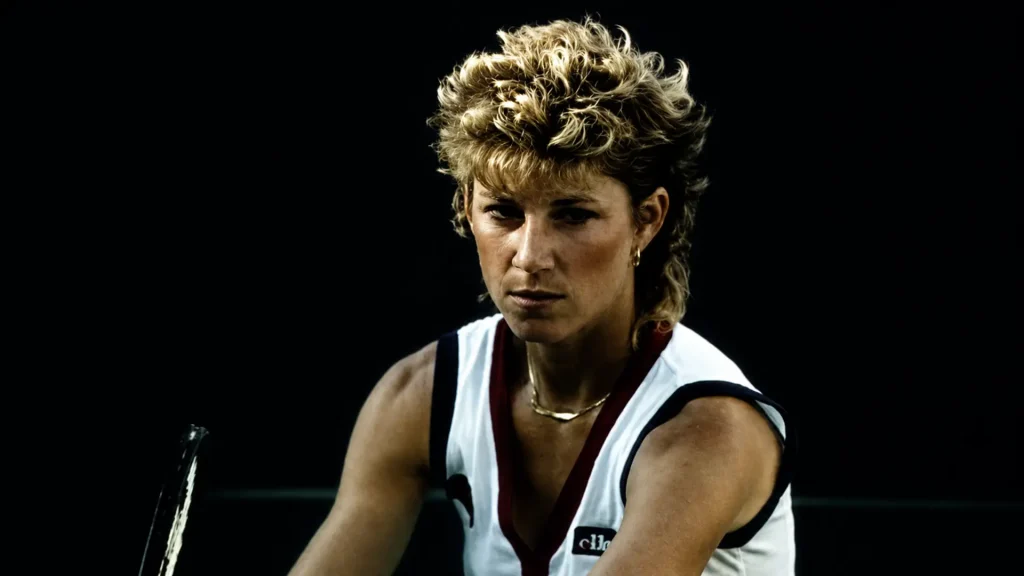
Their 61st meeting was the moment Martina Navratilova finally moved ahead.
Two months after levelling the rivalry at 30–30 at Wimbledon, Navratilova met Evert again in the 1984 US Open final. Evert took the opening set 6–4, putting herself in position to stop the run that had erased her once-massive lead.
Navratilova answered by taking the second set 6–4, and the final set followed the same pattern. She won it 6–4 to complete a 4–6, 6–4, 6–4 victory and claim her second consecutive US Open singles title.
The historical significance was enormous.
Evert had once led the rivalry 20–4. As recently as the end of 1982, she had been ahead 30–19. Navratilova then won 12 straight meetings to reach 30–30 at Wimbledon.
New York made it 13 consecutive victories.
For the first time in their rivalry, Martina Navratilova led Chris Evert overall.
Chris Evert 30–31 Martina Navratilova.
The title also gave Navratilova her sixth consecutive Grand Slam singles championship, equalling the then-record streak of Margaret Court and Maureen Connolly. By winning Roland Garros, Wimbledon and the US Open in 1984, she also became the first woman in the Open Era to win majors on clay, grass and hard court in the same season.
For this evergreen, however, the defining number is simpler:
30–31.
After 61 matches and more than a decade of chasing, Navratilova was finally in front!
Chris Evert 31–31 Martina Navratilova
After 13 consecutive defeats to Martina Navratilova, Chris Evert finally stopped the slide.
Their 62nd meeting came in the final of the 1985 Virginia Slims of Florida, played on outdoor hard courts in Key Biscayne. Evert defeated Navratilova 6–2, 6–4, ending the longest losing streak she would ever endure in their rivalry.
The significance was immediate.
Navratilova had spent 1983 and 1984 transforming the head-to-head, turning Evert’s 30–19 advantage into a 31–30 lead of her own. Evert had not beaten her since the 1982 Australian Open final.
In Florida, that run finally ended.
Evert took the opening set 6–2, then resisted Navratilova’s stronger challenge in the second to close it out 6–4. The victory gave Evert her first singles title of 1985 and, more importantly for this rivalry, brought the overall series back to level.
Thirty-one wins each.
For Evert, this was more than another tournament title. After spending nearly two years watching Navratilova dismantle her old advantage, she had finally stopped the sequence and erased Martina’s first-ever lead in the rivalry.
The scoreboard was tied again.
Chris Evert 31–32 Martina Navratilova
Evert’s victory in Florida had finally stopped Navratilova’s 13-match winning streak and pulled the rivalry level at 31–31.
The tie did not last long.
Their 63rd meeting came in the final of the inaugural 1985 Miami Open, then known as the Lipton International Players Championships. Navratilova defeated Evert 6–2, 6–4 on outdoor hard courts to move back in front in the rivalry.
The opening set belonged firmly to Navratilova. She took it 6–2, immediately re-establishing the pressure that Evert had finally managed to escape in their previous meeting.
Evert offered more resistance in the second, but Navratilova closed it out 6–4 to win the championship in straight sets.
The victory was notable for more than the head-to-head. Navratilova completed an extraordinary sweep at the tournament, winning the singles, women’s doubles and mixed doubles titles. She became the first woman in 12 years to claim all three titles at the same event, following Billie Jean King’s triple at Wimbledon in 1973.
For the rivalry, however, the key number was 31–32.
Evert had managed to catch Navratilova again in Florida.
In Miami, Martina immediately moved back ahead.
Chris Evert 31–33 Martina Navratilova
Their 64th meeting came in the final of the 1985 Virginia Slims of Dallas, where Martina Navratilova again took control on indoor carpet.
Navratilova defeated Evert 6–3, 6–4, winning the title and extending her head-to-head lead to 33–31. The tournament was played in Dallas from March 11–17, and the victory gave Navratilova her third singles title of the year.
The opening set went to Navratilova 6–3, and Evert pushed her harder in the second, but Martina closed it out 6–4 without allowing the match to reach a decider.
Dallas was becoming a particularly productive stop for Navratilova in this rivalry. She had also beaten Evert there in 1979 and again in 1983, the latter victory beginning the extraordinary 13-match run that eventually carried her past Evert in the overall series.
By 1985 the balance had shifted completely. Evert’s victory in Florida had briefly brought the head-to-head back to 31–31, but Navratilova responded by winning in Miami and now Dallas.
For the first time, she had begun to build a lead rather than merely chase one.
Chris Evert 32–33 Martina Navratilova
On June 8, 1985, Evert and Navratilova met in the Roland Garros final in Paris. Navratilova was the defending champion and world No. 1; Evert arrived having lost 15 of their previous 16 meetings.
Evert started superbly, moving ahead early before taking the opening set 6–3. Navratilova responded in the second, but Evert had a chance to finish the match when she served for the title at 6–5. Navratilova broke back and took the tiebreak 7–4, forcing a deciding set.
What followed was nearly three hours of tension on Court Philippe Chatrier.
Neither woman could create lasting separation in the third. The final eventually reached 5–5.
Evert held for 6–5 and then broke Navratilova in the 12th game to complete a 6–3, 6–7(4–7), 7–5 victory after 2 hours and 52 minutes.
The championship carried enormous significance.
It was Evert’s sixth Roland Garros singles title and her 17th Grand Slam singles crown. More importantly for this rivalry, she had beaten Navratilova in a major final for the first time since the 1982 Australian Open.
The contrast with Paris one year earlier was dramatic. Navratilova had dismantled Evert 6–3, 6–1 in the 1984 final. Twelve months later, Evert had found a way to reverse the result in one of the most demanding matches either woman played at Roland Garros.
Evert later regarded the 1985 Roland Garros final as one of the greatest and most meaningful matches of her career.
Chris Evert 32–34 Martina Navratilova
Four weeks after Chris Evert’s dramatic Roland Garros victory had pulled her to within one match of Martina Navratilova in the head-to-head, the rivalry moved back to Centre Court.
They met in the 1985 Wimbledon final on July 6, their fifth final against each other at the All England Club. Evert arrived with renewed confidence after beating Navratilova in Paris; Navratilova was chasing a fourth consecutive Wimbledon title and a sixth overall.
Evert carried that momentum into the opening set.
She won it 6–4, putting herself one set away from reclaiming the Wimbledon crown and drawing level with Navratilova at 33–33 in the rivalry.
Navratilova responded in the second.
She took it 6–3, then increasingly imposed her attacking game in the deciding set. Evert could not reproduce the finish she had found in Paris, and Navratilova pulled away 6–2 to complete a 4–6, 6–3, 6–2 victory.
The match lasted 1 hour and 47 minutes.
For Navratilova, it delivered a sixth Wimbledon singles title and a fourth in succession. More importantly within the rivalry, it restored some breathing room after Evert’s Roland Garros triumph had threatened to bring the series level again.
The contrast between Paris and London was striking.
At Roland Garros, Evert had survived nearly three hours to win 7–5 in the third.
At Wimbledon, Navratilova answered by coming from a set down and taking control of the final two sets.
Chris Evert 32–35 Martina Navratilova
Their 67th meeting came in the 1985 Australian Open final, and once again Martina Navratilova had the last word on grass.
Evert entered Melbourne as the defending champion, having won the 1982 edition to complete her career Grand Slam. Navratilova, meanwhile, was chasing a third Australian Open singles title.
Navratilova started much the stronger, taking the opening set 6–2. Evert responded in the second, winning 6–4 and forcing the championship into a deciding set.
But Navratilova regained control.
She took the third 6–2 to complete a 6–2, 4–6, 6–2 victory and win the Australian Open for the third time. It was also her 13th Grand Slam singles title.
For the rivalry, the result restored Navratilova’s three-match advantage after Evert had briefly narrowed the gap with her celebrated Roland Garros victory earlier in the year.
The 1985 major finals between them had now split neatly:
Roland Garros — Evert.
Wimbledon — Navratilova.
Australian Open — Navratilova.
Chris Evert 32–36 Martina Navratilova
Their 68th meeting came in the final of the 1986 Virginia Slims of Dallas, where Martina Navratilova delivered one of her most decisive victories over Chris Evert.
Played on indoor carpet at Moody Coliseum, the tournament ran from March 10–16. Navratilova entered as the top seed and defeated Evert 6–2, 6–1 in the championship match.
There was little ambiguity in the scoreline. Navratilova took control early, conceding only three games across the match and preventing Evert from establishing the rhythm that had made so many of their earlier encounters competitive.
By this stage, Navratilova’s advantage on faster indoor surfaces was pronounced. Dallas again allowed her to use the serve, first strike and forward movement to shorten points and keep Evert under sustained pressure.
The victory also continued Navratilova’s remarkable record against Evert at this tournament. She had beaten her in Dallas in 1979, 1983 and 1985, and now did so again in 1986.
Navratilova collected her fourth singles title of the 1986 season and the 115th of her career.
For the rivalry, Dallas pushed her advantage to four matches.
Chris Evert 33–36 Martina Navratilova
One year after their epic 1985 final, Chris Evert and Martina Navratilova returned to Roland Garros with the championship again on the line.
The 1986 final, was their third consecutive title match in Paris and, remarkably, the 14th and final Grand Slam final they would play against each other.
Navratilova began as the stronger player. She took the opening set 6–2, immediately putting Evert under pressure on the court where Chris had built so much of her reputation.
Evert responded in the second.
She found the depth and patience she needed from the baseline, began forcing Navratilova to play more difficult volleys and levelled the match by taking the set 6–3.
The deciding set initially tilted back toward Navratilova, who moved ahead 2–0.
That was as far as she got.
Evert used her clay-court movement and passing shots to regain control, and in an unusual twist she increasingly succeeded by moving forward herself. The final point was especially fitting: Evert sealed the championship with a forehand drop volley at the net.
The 2–6, 6–3, 6–3 victory gave Evert a record-extending seventh Roland Garros singles title and the 18th Grand Slam singles championship of her career. It would also prove to be her final major title.
At 31, Evert had again beaten the world No. 1 on clay. She later identified the 1985 and 1986 matches against Navratilova as among her toughest at Roland Garros.
Chris Evert 33–37 Martina Navratilova
Two months after Evert’s stirring Roland Garros victory, Martina Navratilova reasserted herself on the hard courts of California.
Their 70th career meeting came in the final of the 1986 Virginia Slims of Los Angeles at the Manhattan Country Club in Manhattan Beach. Navratilova defeated Evert 7–6(7–5), 6–3. Contemporary coverage explicitly billed it as the 70th meeting between them.
The opening set was close enough to turn on only a handful of points.
Evert stayed with Navratilova all the way to a tiebreak, but eight double faults over the course of the match proved costly. Navratilova edged the breaker 7–5 and then carried that advantage into the second set.
Once ahead, Navratilova tightened her grip.
She took the second 6–3, preventing Evert from building on the confidence of her Roland Garros victory and restoring a four-match advantage in the overall rivalry.
There was also an unusual statistical marker surrounding the meeting. By this stage, Evert and Navratilova had become so dominant and so accustomed to reaching the latter stages of tournaments that every one of their meetings since the 1981 US Open semifinal had come in a final.
That says much about what the rivalry had become.
They were no longer simply two great players who happened to meet often.
For years, the path to a title had repeatedly ended with one standing across the net from the other.
In Los Angeles, it was Navratilova who finished with the trophy.
Chris Evert 34–37 Martina Navratilova
Their 71st meeting came in the final of the 1987 Virginia Slims of Houston, and it became one of the most dramatic matches of the later rivalry.
Played on outdoor clay at the Westside Tennis Club, the final on April 26, 1987 swung sharply between them before Evert finally prevailed 3–6, 6–1, 7–6(7–4).
Navratilova started better, taking the opening set 6–3. Evert answered emphatically in the second, losing only one game and forcing the match into a deciding set.
The third went all the way to a tiebreak.
Evert took it 7–4, completing the comeback and recording her first victory over Navratilova since the 1986 Roland Garros final.
The win carried another milestone: it was Evert’s 150th career singles title.
There was also something fitting about the setting. Clay remained the surface on which Evert had always felt most capable of disrupting Navratilova’s attacking game, and Houston gave her another chance to do exactly that.
Navratilova still led the overall series.
But Evert had reduced the deficit again.
Chris Evert 34–38 Martina Navratilova
Their 72nd meeting returned the rivalry to Roland Garros, but this time there would be no Evert comeback.
On June 6, 1987, Navratilova defeated the two-time defending champion 6–2, 6–2 in the semifinals in Paris. It was their fourth consecutive meeting at Roland Garros after three straight finals from 1984 through 1986.
Evert had won the previous two Paris encounters, including the 1986 final that delivered the 18th and final major title of her career. Navratilova reversed that pattern decisively.
She took the opening set 6–2 and repeated the score in the second, allowing Evert only four games across the match.
The result was particularly striking because clay had historically offered Evert her best chance of containing Navratilova’s attacking game. Yet by 1987, even Roland Garros could no longer be regarded as reliable protection against her great rival.
It also ended Evert’s attempt to win a third consecutive French Open crown.
Navratilova advanced to the final, where a new figure in women’s tennis was waiting: Steffi Graf. Graf defeated her 6–4, 4–6, 8–6 to win her first Grand Slam singles title.
For Evert and Navratilova, meanwhile, the result pushed the rivalry another step in Martina’s direction.
Chris Evert 34–39 Martina Navratilova
Only weeks after Navratilova had beaten Evert comfortably at Roland Garros, the rivalry moved to Wimbledon for another semifinal.
This time the contest was far tighter.
Navratilova took the opening set 6–2, using the grass and her attacking game to seize control early. Evert responded strongly in the second, winning 7–5 and forcing the match into a deciding set.
The third remained close, but Navratilova eventually found the decisive break and closed out a 6–2, 5–7, 6–4 victory. Detailed match data shows how aggressively both women played: Navratilova finished with 49 winners, while Evert struck 44.
The result sent Navratilova into yet another Wimbledon final and extended her overall lead in the rivalry to 39–34.
She then defeated Steffi Graf 7–5, 6–3 in the final to win her eighth Wimbledon singles title and sixth in succession.
For Evert, Match 73 showed that even late in the rivalry she could still force Navratilova into a genuine three-set battle on Martina’s strongest stage.
But once again at Wimbledon, Navratilova finished ahead.
Chris Evert 35–39 Martina Navratilova
Their 74th meeting came in the semifinals of the 1987 Virginia Slims of Los Angeles, and Chris Evert produced one of her most decisive late-career victories over Martina Navratilova.
Played on outdoor hard courts at the Manhattan Beach Club, Evert won 6–2, 6–1. Tournament records place the semifinal on August 15, 1987.
The scoreline was striking.
Only weeks earlier, Navratilova had beaten Evert in three sets at Wimbledon. In Los Angeles, Evert reversed the pattern completely, allowing her just three games and preventing the match from developing into anything close to another prolonged battle.
It was also a reminder that, even with Navratilova now leading the rivalry overall, Evert could still produce commanding wins on a fast surface.
The victory narrowed Navratilova’s advantage to 39–35 and sent Evert into the final, where she faced Steffi Graf. Graf won 6–3, 6–4, and the title carried an additional historical consequence: she became world No. 1 for the first time.
That generational backdrop is worth noting. Evert and Navratilova were still fighting each other deep into major tournaments and leading tour events, but Graf was now moving decisively into the centre of the women’s game.
In Los Angeles, though, the old rivalry still had another Evert chapter to write.
Chris Evert 35–40 Martina Navratilova
Their 75th meeting came in the final of the 1987 Stuttgart Open, better known as the Porsche Tennis Grand Prix, on indoor carpet in Filderstadt, West Germany.
Navratilova defeated Evert 7–5, 6–1, successfully defending the title and pushing her overall lead in the rivalry to 40–35.
The opening set was competitive. Evert stayed with Navratilova through 5–5, but Martina took the next two games to secure it 7–5.
From there, the final changed completely.
Navratilova dominated the second set 6–1, turning what had begun as another close contest into a comfortable straight-sets victory.
The result was a quick answer to Evert’s emphatic 6–2, 6–1 victory over her in Los Angeles earlier that year. It also took Navratilova to a significant numerical landmark in the rivalry:
40 victories.
For the first time, either woman had reached that figure.
Navratilova also left Stuttgart with one of the tournament’s distinctive prizes — a Porsche 911 Carrera Cabriolet — after successfully defending her singles crown.
Evert had once led this rivalry 20–4 and later 30–19.
Seventy-five matches in, Navratilova was now five ahead.
Chris Evert 36–40 Martina Navratilova
Their 76th meeting came at the 1988 Australian Open, and Chris Evert produced one of her finest late-career victories.
The tournament itself marked a new era in Melbourne: it was the first Australian Open played at the new National Tennis Centre and the first staged on hard courts rather than grass. Evert and Navratilova met in the semifinals, with Navratilova seeded No. 2 and Evert No. 3.
Evert won 6–2, 7–5.
The opening set was emphatic. Evert’s passing shots and lobs repeatedly frustrated Navratilova’s attempts to move forward, and she took it 6–2. Australian Open historian Suzi Petkovski later described it as a performance in which Evert’s trademark passing game was operating at its best.
Navratilova pushed harder in the second, but Evert held her off to take it 7–5 and reach another Australian Open final.
The result was significant in several ways. Navratilova had reached the final at the previous 11 consecutive Grand Slam tournaments, but Evert ended that streak in Melbourne. It was also Evert’s first major final since Roland Garros in 1986 and, ultimately, the 34th and final Grand Slam singles final of her career.
There was a generational shift surrounding them as well. Steffi Graf was now world No. 1, which meant Evert and Navratilova were no longer occupying the top two seedings and could meet before the final. Graf went on to beat Evert 6–1, 7–6(7–3) for the title.
But Match 76 belonged to Evert.
At 33, she had beaten Navratilova in straight sets at a major and narrowed the rivalry once again.
Chris Evert 37–40 Martina Navratilova
Their 77th meeting came in the final of the 1988 Virginia Slims of Houston, and Chris Evert produced one of the most emphatic late victories of the rivalry.
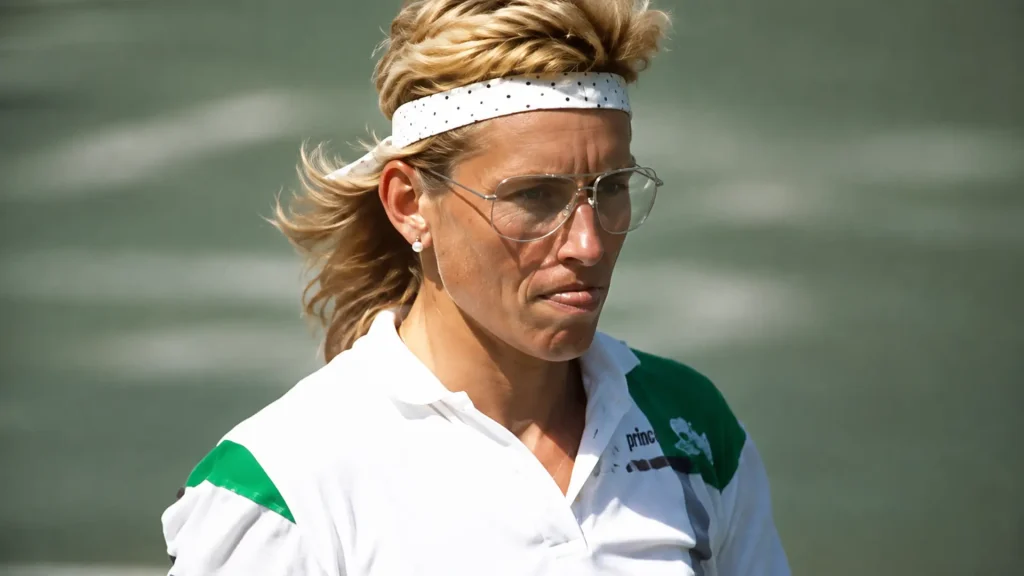
Played on outdoor clay at the Westside Tennis Club, Evert defeated Navratilova 6–0, 6–4 on April 24, 1988. As a result, she claimed the Houston title and narrowed Navratilova’s overall lead to three matches.
The opening set was extraordinary.
Evert did not lose a game.
In fact, detailed match statistics show just how complete her control was. She won 85.7% of return points in the first set, while Navratilova struggled badly on serve and committed 19 unforced errors in those six games alone.
Although Navratilova improved considerably in the second set, Evert maintained enough control to take it 6–4 and complete the straight-sets victory.
At the same time, the result carried a striking historical echo. Seven years earlier, Evert had handed Navratilova the only 6–0, 6–0 defeat of their rivalry at Amelia Island. Navratilova later answered with a 6–2, 6–0 victory there in 1984. Now, Houston in 1988 provided one final reminder of how formidable Evert could still be on clay.
Moreover, it was Evert’s 155th career singles title and her second title of the 1988 season.
More importantly for this chronology, she had now won consecutive meetings against Navratilova — at the Australian Open and in Houston.
Only three matches remained between them.
And after 77 encounters, the score had tightened once more.
Chris Evert 37–41 Martina Navratilova
Their 78th meeting came at Wimbledon in 1988, and it would be the final Grand Slam encounter of their extraordinary rivalry.
Evert and Navratilova met in the semifinals, with Navratilova seeded No. 2 and Evert No. 3. Navratilova had won six consecutive Wimbledon titles and was still the player most closely associated with Centre Court, while Evert was trying to reach another final at 33.
Navratilova started in dominant fashion, taking the opening set 6–1.
Evert responded exactly as she had so often throughout their rivalry. She steadied herself, changed the rhythm of the match and took the second set 6–4, forcing one more Wimbledon battle between them into a decider.
The third set became a fitting final major chapter.
Neither woman could pull away until the closing stages, but Navratilova eventually broke through to take it 7–5, completing a 6–1, 4–6, 7–5 victory.
The result sent Navratilova into the Wimbledon final for the seventh consecutive year and moved her overall lead over Evert to 41–37.
More importantly for this story, it closed their Grand Slam rivalry.
They had faced each other 22 times at the majors, and Navratilova finished those meetings with a 14–8 advantage. Their major encounters had stretched from the 1975 Roland Garros final to this Wimbledon semifinal 13 years later.
Navratilova’s Wimbledon run would end one match later. Steffi Graf came from a set down to beat her 5–7, 6–2, 6–1 in the final, winning her first Wimbledon singles title as the centre of women’s tennis continued shifting toward a new generation.
For Evert and Navratilova, only two meetings remained.
Their Grand Slam story was over.
Chris Evert 37–42 Martina Navratilova
Their 79th meeting came at the 1988 Stuttgart Open.
Navratilova defeated Evert 6–2, 6–3 in the final to win the title for a third consecutive year and the fifth time overall. The tournament ran from October 10–16, 1988, on indoor carpet.
The match itself was controlled by Navratilova from the start.
She took the opening set 6–2 and never allowed Evert to build the kind of sustained pressure that had brought her victories earlier that year in Australia and Houston. The second set was closer, but Navratilova still closed it out 6–3 to complete another straight-sets win.
The result ended Evert’s brief two-match winning run in their rivalry and pushed Navratilova’s overall advantage back out to five matches.
It also carried a sense of finality.
By now they had been facing each other for more than 15 years. Evert was 33, Navratilova 32, and the women’s game had moved firmly into the Steffi Graf era. Yet here they were again, still meeting in a tour final.
Navratilova’s victory gave her the 136th singles title of her career and $50,000 in prize money.
For the rivalry, only one match remained.
Chris Evert 37–43 Martina Navratilova
The 80th meeting was also the last.
On November 13, 1988, Evert and Navratilova met in the final of the Virginia Slims of Chicago at the UIC Pavilion, the same city where they had crossed paths several times during the long arc of their rivalry. Navratilova won 6–2, 6–2 on indoor carpet.
There was little suspense in the scoreline. Navratilova controlled the match from the outset, using the fast indoor conditions to keep Evert under pressure and allowing her only four games. Evert later acknowledged that on a court like this she needed to play almost perfectly to have a chance, while Navratilova’s power and attacking game proved too much.
The victory gave Navratilova her ninth Chicago singles title and her ninth tournament victory of the 1988 season.
Neither woman knew with certainty that this would be the end.
But it was.
Their first meeting had come in Akron in 1973, when Navratilova was a 16-year-old newcomer and Evert was already one of the young stars of the game. Fifteen years later, after Grand Slam finals, marathon matches, winning streaks, reversals of fortune and a head-to-head that had once stood at 20–4 for Evert, they walked off court in Chicago for the final time as opponents.
Navratilova had won their final three meetings.
More importantly, she had completed one of the most extraordinary reversals any great rivalry has produced. Evert once led 30–19. Navratilova eventually caught her at 30–30, moved ahead at the 1984 US Open and never surrendered the overall lead again.
After 80 matches, the scoreboard stopped moving.
How the Rivalry Changed Over Time
The final score, 43–37 to Martina Navratilova, disguises just how dramatically this rivalry changed direction.
For much of its early life, there was little indication that Navratilova would eventually finish ahead at all.
Chris Evert won their first five meetings and, despite Navratilova beginning to break through in 1975, continued to build an imposing advantage. By the end of their 24th encounter in 1977, Evert led 20–4 — the largest gap of the entire rivalry.
That 16-match cushion is essential to understanding what followed.
Navratilova did not overturn a close head-to-head. She had to spend years dismantling one of the most substantial leads imaginable between two all-time greats.
From 20–4 to 30–19
Navratilova’s rise became increasingly visible from 1978 onward. She beat Evert at Eastbourne and then defeated her in the 1978 Wimbledon final to win her first Grand Slam singles title.
Yet Evert continued accumulating victories of her own. Even after Navratilova had established herself as a major champion and world No. 1, the historical deficit remained enormous.
When Evert defeated Navratilova in the 1982 Australian Open final, completing her career Grand Slam, the running score stood at:
Chris Evert 30–18 Martina Navratilova.
Navratilova won their next meeting at the Toyota Championships, reducing it to 30–19.
That number became the starting point for the most extraordinary run in the entire series.
Evert Gets Stuck on 30
Beginning with the 1983 Virginia Slims of Dallas, Navratilova won every meeting between them for almost two years.
Evert remained frozen on 30 victories while Navratilova advanced:
From 30–20 to 30-28.
Then came Roland Garros.
Navratilova beat Evert 6–3, 6–1 in the 1984 final, reducing the head-to-head to 30–29. The player who had once trailed 20–4 was now one victory away from drawing level.
Wimbledon 1984: 30–30
Their 60th meeting provided the symmetry.
In the 1984 Wimbledon final, Navratilova defeated Evert 7–6(7–5), 6–2.
For the first time since their rivalry began in 1973, the head-to-head was tied:
Chris Evert 30–30 Martina Navratilova.
It had taken Navratilova 12 consecutive victories to move from 19 wins to 30 while Evert remained stranded on the same number.
The comeback was complete.
But Navratilova was not finished.
The Lead Changes Hands
Their next meeting came in the 1984 US Open final.
Evert won the first set, but Navratilova recovered to win 4–6, 6–4, 6–4.
After 61 matches, the rivalry had a new leader for the first time:
Chris Evert 30–31 Martina Navratilova.
The transformation from 20–4 to 30–31 had taken years, but the decisive stretch had been brutal: Navratilova had won 13 consecutive meetings.
Evert finally ended that streak at the 1985 Virginia Slims of Florida, winning 6–2, 6–4 and pulling the rivalry level again at 31–31.
It would be the last time the overall head-to-head was tied.
Evert Refuses to Disappear
Navratilova immediately moved back ahead in Miami and extended her advantage to 33–31 in Dallas.
But Evert still had some of the rivalry’s most important victories ahead of her.
At Roland Garros in 1985, she won their celebrated three-set final 6–3, 6–7(4–7), 7–5, narrowing the deficit to 33–32.
A year later in Paris, Evert defeated Navratilova again, 2–6, 6–3, 6–3, to win her seventh Roland Garros championship and 18th major singles title.
Even in 1988, with both women approaching the end of this rivalry, Evert continued to fight back. She beat Navratilova at the Australian Open and then defeated her 6–0, 6–4 in the Houston final.
After Match 77, Navratilova’s lead was only:
40–37.
The Final Three Belong to Martina
Houston proved to be Evert’s final victory over Navratilova.
They met three more times.
Navratilova won their final Grand Slam encounter at Wimbledon in 1988, taking the semifinal 6–1, 4–6, 7–5.
She then beat Evert 6–2, 6–3 in the Stuttgart final.
And on November 13, 1988, in Chicago, Navratilova won their 80th and final official singles meeting 6–2, 6–2.
The numbers stopped there:
Chris Evert 37–43 Martina Navratilova.
That final score makes sense only when viewed alongside everything that preceded it.
Evert went from 5–0 to 20–4, eventually reaching 30–19.
Navratilova then produced the defining reversal, winning 13 consecutive meetings to transform 19–30 into 31–30.
Evert fought back strongly enough to tie the rivalry once more at 31–31, but she would never lead again.
By the time the final ball had been struck in Chicago, a rivalry that spent its first decade overwhelmingly in Evert’s favour belonged, numerically, to Navratilova.
- From 0–0 to 20–4.
- From 30–19 to 30–30.
- From 31–31 to 37–43.
That is the head-to-head story behind the final number.
Grand Slam Head-to-Head
If the overall rivalry eventually tilted toward Martina Navratilova, the Grand Slam record did so even more clearly.
Evert and Navratilova met 22 times at the four majors, with Navratilova winning 14 and Evert 8.
Those meetings stretched from their first Grand Slam clash at Roland Garros in 1975 to their final major encounter at Wimbledon in 1988. Along the way they faced each other in 14 Grand Slam finals, an extraordinary concentration of championship matches between the same two players.
Navratilova won 10 of those 14 major finals. Evert won four.
Grand Slam Head-to-Head by Tournament
| Grand Slam | Meetings | Evert Wins | Navratilova Wins |
|---|---|---|---|
| Australian Open | 4 | 2 | 2 |
| Roland Garros | 5 | 3 | 2 |
| Wimbledon | 9 | 2 | 7 |
| US Open | 4 | 1 | 3 |
| Total | 22 | 8 | 14 |
The surface split tells much of the story.
Roland Garros: Evert 3–2
Paris was the only Grand Slam where Evert finished with a winning record against Navratilova.
Their first major meeting was the 1975 Roland Garros final, where Navratilova took the opening set before Evert recovered to win 2–6, 6–2, 6–1.
Nearly a decade later, Navratilova appeared to have reversed the balance even on Evert’s strongest surface. She defeated Evert 6–3, 6–1 in the 1984 final and briefly held a 2–1 Roland Garros advantage over her.
Evert answered with two of the most important victories of her career.
She won the celebrated 1985 final 6–3, 6–7(4–7), 7–5, then came from a set down again in 1986 to win 2–6, 6–3, 6–3.
Navratilova claimed their final Paris encounter, beating Evert 6–2, 6–2 in the 1987 semifinals.
The final Roland Garros score:
Chris Evert 3–2 Martina Navratilova.
Wimbledon: Navratilova 7–2
Nowhere was the contrast greater than at Wimbledon.
They met nine times at the All England Club, more than at any other Grand Slam, and Navratilova won seven.
Evert won their first Wimbledon meeting, a three-set semifinal in 1976, and beat Navratilova again in the 1980 semifinals.
Those were her only two victories.
Navratilova won all five Wimbledon finals they played against each other:
- 1978: 2–6, 6–4, 7–5
- 1979: 6–4, 6–4
- 1982: 6–1, 3–6, 6–2
- 1984: 7–6(7–5), 6–2
- 1985: 4–6, 6–3, 6–2
She also beat Evert in the 1987 and 1988 semifinals.
For a rivalry often framed as a clash between Evert’s baseline precision and Navratilova’s attacking instincts, Wimbledon provided the clearest statistical expression of the difference. Grass allowed Navratilova’s serve-and-volley game to exert maximum pressure, and over time Evert found fewer answers.
Their Wimbledon head-to-head finished:
Chris Evert 2–7 Martina Navratilova.
US Open: Navratilova 3–1
Their four US Open meetings charted another reversal.
Evert won the first, defeating Navratilova 6–4, 6–4 in the 1975 semifinals on clay before going on to win the title.
She would never beat Navratilova at the US Open again.
Navratilova won their 1981 semifinal 7–5, 4–6, 6–4, then defeated Evert in consecutive finals in 1983 and 1984.
The 1983 final was emphatic: 6–1, 6–3, giving Navratilova her first US Open singles title.
A year later the stakes were even greater. Navratilova recovered from losing the opening set to win 4–6, 6–4, 6–4 — the victory that moved her ahead in the overall rivalry for the first time, 31–30.
Their US Open record ended:
Chris Evert 1–3 Martina Navratilova.
Australian Open: 2–2
Australia was the only major where the rivalry finished perfectly level.
Navratilova won their first Australian Open meeting, the dramatic 1981 final, 6–7(4–7), 6–4, 7–5.
Evert reversed the result in the 1982 final, winning 6–3, 2–6, 6–3 to capture her first Australian Open title and complete the career Grand Slam.
Navratilova won another three-set final in 1985, while Evert took their final Australian meeting in the 1988 semifinals 6–2, 7–5.
That left the Australian Open head-to-head:
Chris Evert 2–2 Martina Navratilova.
The Grand Slam Finals: Navratilova 10–4
The most revealing number may be the record when a major championship itself was at stake.
Evert and Navratilova contested 14 Grand Slam finals against each other.
Navratilova won 10.
Evert won four.
Evert’s four major-final victories came at:
Roland Garros 1975
Australian Open 1982
Roland Garros 1985
Roland Garros 1986
Navratilova won all five of their Wimbledon finals, both of their US Open finals, two of their three Australian Open finals and the 1984 Roland Garros final.
That distribution also underlines how central clay was to Evert’s resistance. Three of her four Grand Slam-final victories over Navratilova came at Roland Garros.
From Paris in 1975 to Wimbledon in 1988
Their Grand Slam rivalry lasted 13 years.
It began with Evert coming from behind to beat an 18-year-old Navratilova in the 1975 Roland Garros final.
It ended with Navratilova winning a three-set 1988 Wimbledon semifinal, 6–1, 4–6, 7–5.
Between those two matches came 20 more major encounters, 14 championship finals and some of the defining matches of both careers.
The complete Grand Slam score therefore reads:
Martina Navratilova 14–8 Chris Evert.
But even that figure contains two very different stories.
On the clay of Roland Garros, Evert finished ahead.
At Wimbledon, Navratilova dominated.
And when the two greatest rivals of their era met with a Grand Slam trophy directly on the line, Navratilova ultimately held the decisive advantage: 10 finals to four.
Rivalry by Surface
The contrast between Chris Evert and Martina Navratilova was never only about personality or playing style. Surface mattered enormously.
Across their 80 official singles meetings, the rivalry changed character depending on what lay beneath their feet. Evert held a commanding advantage on clay. Navratilova dominated on carpet and grass. Hard courts produced the most balanced split of all.
Evert–Navratilova Head-to-Head by Surface
| Surface | Evert Wins | Navratilova Wins | Total Meetings |
|---|---|---|---|
| Clay | 11 | 3 | 14 |
| Grass | 5 | 10 | 15 |
| Carpet | 13 | 22 | 35 |
| Hard | 8 | 8 | 16 |
| Total | 37 | 43 | 80 |
For the hard-court total, indoor hard-court matches are included with hard courts.
The breakdown helps explain how a rivalry that once leaned so heavily toward Evert eventually swung toward Navratilova.
Clay: Evert 11–3
Clay was Evert’s territory.
She won 11 of their 14 meetings on the surface, by far her strongest record against Navratilova.
That advantage appeared early. Evert won their first clay-court meeting in the 1973 Eckerd Open semifinals and followed it with victories in the 1974 Italian Open final, Charleston in 1975, another Italian Open final and the 1975 Roland Garros championship match.
By the end of that first Paris final, Evert was already 5–0 against Navratilova on clay.
Her most devastating clay-court victory came at Amelia Island in 1981, when she won 6–0, 6–0 — the only double bagel in their 80-match rivalry.
Navratilova eventually found answers even here. Her breakthrough on clay came dramatically in 1984, when she beat Evert 6–2, 6–0 at Amelia Island and then 6–3, 6–1 in the Roland Garros final.
Those results showed how complete Navratilova’s transformation had become. She was no longer merely beating Evert on the faster courts that naturally suited her attacking game; she could now overwhelm her on Evert’s favourite surface.
But Evert responded.
She won their memorable 1985 Roland Garros final 6–3, 6–7(4–7), 7–5, beat Navratilova again in the 1986 Paris final and added another clay-court victory in Houston in 1987.
Their final clay meeting came in Houston in 1988, where Evert won 6–0, 6–4.
The clay-court verdict was decisive:
Chris Evert 11–3 Martina Navratilova.
Grass: Navratilova 10–5
If clay belonged to Evert, grass tilted strongly toward Navratilova.
They met 15 times on grass, with Navratilova winning 10.
The surface became one of the central battlegrounds of their rivalry because it rewarded the parts of Navratilova’s game that caused Evert the most difficulty: the left-handed serve, quick approaches, athletic movement around the net and the ability to shorten points.
Evert actually won their first grass-court meeting, beating Navratilova in the 1976 Wimbledon semifinals.
The balance changed quickly.
Navratilova defeated Evert in consecutive grass-court finals at Eastbourne and Wimbledon in 1978, with the Wimbledon victory giving her the first Grand Slam singles title of her career.
A year later, Evert won their extraordinary Eastbourne final 7–5, 5–7, 13–11, only for Navratilova to beat her again at Wimbledon.
That pattern increasingly defined the surface.
Navratilova won five Wimbledon finals against Evert and ultimately finished their Wimbledon rivalry 7–2.
Evert still produced important grass-court victories. She knocked Navratilova out of Wimbledon in the 1980 semifinals, won the 1981 Sydney final and defeated her in the 1982 Australian Open final on grass to complete the career Grand Slam.
But overall, grass belonged to Martina.
Chris Evert 5–10 Martina Navratilova.
Carpet: Navratilova 22–13
No surface hosted more Evert–Navratilova matches than carpet.
They played 35 times on it — almost 44 per cent of their entire rivalry.
Navratilova won 22, Evert 13.
Indoor carpet was a major part of the women’s tour during their era, and the conditions increasingly rewarded Navratilova’s aggressive game. Her serve had greater effect, points developed quickly and she could close toward the net before Evert established the long baseline exchanges she preferred.
Yet the carpet rivalry did not begin in Navratilova’s favour.
Evert won their first meeting in Akron in 1973 and took several early indoor encounters as she built her enormous overall advantage.
Navratilova’s first career victory over Evert came on carpet in Washington in 1975, 3–6, 6–4, 7–6(5–4).
Her second came on the same surface soon afterwards in Chicago, 6–4, 6–0.
Those results foreshadowed what would eventually become Navratilova’s strongest numerical surface in the rivalry.
The difference became especially pronounced during her great run of 1983 and 1984. Dallas, the Virginia Slims Championships, the Lion’s Cup, the US Indoor Championships and another Virginia Slims Championships final all went to Navratilova as she dismantled Evert’s historical lead.
Their final meeting in Chicago in 1988 was also played on carpet.
Navratilova won 6–2, 6–2, taking the last match of the rivalry and leaving the final carpet record at:
Chris Evert 13–22 Martina Navratilova.
Hard Courts: 8–8
Hard courts produced the most balanced surface rivalry of all.
Across 16 meetings, they finished level:
Chris Evert 8–8 Martina Navratilova.
That total includes the two indoor hard-court matches in their chronology.
The symmetry is fitting because hard courts sat somewhere between their traditional strengths. They offered Evert enough time to construct points from the baseline while still giving Navratilova sufficient pace to attack.
Both women recorded major victories over the other on the surface.
Navratilova beat Evert in the 1981 US Open semifinals, the 1983 Canadian Open final and the US Open finals of 1983 and 1984.
That 1984 victory carried enormous importance: it was the match that moved Navratilova ahead in the overall rivalry for the first time, 31–30.
Evert produced major hard-court responses of her own.
She ended Navratilova’s 13-match winning streak at the 1985 Virginia Slims of Florida, pulling the overall rivalry level at 31–31.
And in their final Australian Open encounter in 1988, Evert won 6–2, 7–5 on the new hard courts in Melbourne.
After all the swings elsewhere, the hard-court score finished perfectly even.
The Surfaces Explain the Rivalry
The final overall head-to-head was:
Martina Navratilova 43–37 Chris Evert.
But the surface breakdown reveals two very different areas of dominance.
On clay, Evert won nearly four times as many matches as Navratilova:
11–3.
On grass and carpet combined, Navratilova led:
32–18.
Hard courts split evenly:
8–8.
That helps explain both the early and later phases of the rivalry.
Evert’s consistency, movement and ability to construct points gave her a pronounced advantage on slower clay.
Navratilova’s serve, athleticism and attacking game became increasingly difficult for Evert to contain as the surface quickened.
And on hard courts — the middle ground between those two extremes — virtually nothing separated them.
The final 43–37 score therefore was not produced by one player simply being better everywhere.
It was built surface by surface.
Finals, Winning Streaks and Key Records
Eighty matches are remarkable enough. The circumstances in which Chris Evert and Martina Navratilova kept meeting make the rivalry even more extraordinary.
Of their 80 official singles encounters, 60 were finals.
That means three quarters of the entire rivalry was played with a tournament championship directly at stake.
An Extraordinary 60 Finals
Evert and Navratilova faced each other in:
- 60 finals
- 12 semifinals
- 3 quarterfinals
- 2 Round-of-32 matches
- 1 Round-of-16 match
The remaining two meetings in the chronology were also earlier-round encounters.
Navratilova held the advantage when they met for titles, winning 36 of the 60 finals, while Evert won 24.
| Finals Head-to-Head | Wins |
|---|---|
| Martina Navratilova | 36 |
| Chris Evert | 24 |
| Total Finals | 60 |
Their first final against each other came at the 1974 Italian Open, where Evert won 6–3, 6–3.
Their last was the 80th and final match of the rivalry in Chicago in 1988, won by Navratilova 6–2, 6–2.
The rivalry therefore evolved from early-round meetings between two young players into something very different: for much of their careers, when both entered the same tournament, they increasingly expected the other to be waiting near the end.
Fourteen Grand Slam Finals
Within those 60 championship matches were 14 Grand Slam finals.
Navratilova won 10 of them. Evert won four.
Their major finals stretched from Roland Garros in 1975 to Roland Garros in 1986 and included championship matches at all four Grand Slam tournaments.
Navratilova’s greatest advantage came at Wimbledon, where she won all five finals they contested against each other.
Evert’s resistance was centred on Roland Garros, where she won three of their four championship matches.
Navratilova’s 13-Match Winning Streak
The most important streak in the rivalry began with Match 49.
Navratilova defeated Evert 4–6, 6–1, 6–2 at the 1982 Toyota Championships.
Then she kept winning.
Dallas.
The Virginia Slims Championships.
Los Angeles.
Toronto.
The US Open.
Tokyo.
The US Indoor Championships.
Another Virginia Slims Championships final.
Amelia Island.
Roland Garros.
Wimbledon.
The US Open again.
By the time the run ended, Navratilova had won 13 consecutive matches against Evert — Matches 49 through 61.
During that sequence the head-to-head changed from:
Evert 30–18 Navratilova
to:
Evert 30–31 Navratilova.
Evert did not add a single victory while Navratilova accumulated 13.
It was the run that ultimately overturned the rivalry.
Evert’s Longest Winning Streak: Eight
Evert’s longest uninterrupted run came much earlier.
After Navratilova defeated her in Chicago in 1975 to make the head-to-head 6–2, Evert won their next eight meetings, from Match 9 through Match 16.
The sequence carried Evert from 7–2 to 14–2 and included victories at the Virginia Slims Championships, Charleston, Rome, Roland Garros, the US Open and Atlanta.
Navratilova finally stopped the streak by winning the 1976 Virginia Slims of Houston final 6–3, 6–4.
Evert also opened the rivalry with five consecutive victories and later produced another five-match streak from Matches 20 through 24.
The Biggest Lead: Evert by 16
The widest gap in the entire rivalry came after Match 24.
Evert defeated Navratilova 6–4, 6–1 at the 1977 Toyota Championships to move ahead:
20–4.
A lead of 16 victories.
Navratilova would spend the next seven years eliminating it.
Remarkably, Evert later reached 30–19, still 11 matches ahead, before Navratilova’s 13-match winning streak finally carried her past.
Navratilova’s largest advantage came at the very end.
After winning their final three meetings in 1988, she completed the rivalry ahead by six:
43–37.
The Rivalry Was Tied Twice
After the opening match, the head-to-head did not return to level until their 60th meeting.
Navratilova’s victory in the 1984 Wimbledon final made it:
30–30.
She then moved ahead 31–30 at the US Open.
Evert responded in Florida in 1985 to produce the second and final tie:
31–31.
Navratilova won their next meeting in Miami and never surrendered the overall lead again.
The Double-Bagel Match
Across 80 meetings, only once did either woman fail to win a single game.
Evert defeated Navratilova:
6–0, 6–0
in the 1981 Amelia Island Championships final.
Three years later, on the same clay, Navratilova delivered an emphatic reply, beating Evert 6–2, 6–0.
Evert produced another bagel late in the rivalry, defeating Navratilova 6–0, 6–4 in Houston in 1988 — her final victory over Martina.
The 13–11 Eastbourne Decider
Not all of their memorable scores were one-sided.
The 1979 Eastbourne final produced the longest deciding set in their official rivalry.
Evert eventually defeated Navratilova:
7–5, 5–7, 13–11.
It remains one of the most striking scorelines among their 80 meetings and came only weeks before Navratilova reversed the result by beating Evert in the Wimbledon final.
Their First and Last Victories
Evert won Match 1 in Akron in 1973:
7–6(5–4), 6–3.
Her 37th and final victory over Navratilova came more than 15 years later in Houston:
6–0, 6–4.
Navratilova’s first win arrived in Washington in 1975, their sixth meeting:
3–6, 6–4, 7–6(5–4).
Her 43rd and final victory came in Chicago in 1988:
6–2, 6–2.
Evert–Navratilova: Key Rivalry Records
| Record | Mark |
|---|---|
| Total Matches | 80 |
| Final H2H | Navratilova 43–37 |
| Finals Played | 60 |
| Finals H2H | Navratilova 36–24 |
| Grand Slam Meetings | 22 |
| Grand Slam H2H | Navratilova 14–8 |
| Grand Slam Finals | 14 |
| Grand Slam Finals H2H | Navratilova 10–4 |
| Longest Navratilova Winning Streak | 13 matches |
| Longest Evert Winning Streak | 8 matches |
| Largest Evert Lead | 20–4 (+16) |
| Largest Navratilova Lead | 43–37 (+6) |
| First Tie After 0–0 | 30–30 |
| Final Tie | 31–31 |
| Only 6–0, 6–0 Match | Evert, Amelia Island 1981 |
| Final Meeting | Chicago 1988 |
The statistics underline what made this rivalry so unusual.
Evert built the greater early lead.
Navratilova produced the greater winning streak.
Evert dominated clay.
Navratilova increasingly controlled the finals and the biggest stages.
And across 80 meetings, 60 times they faced each other with a trophy waiting for the winner.
Few numbers explain the scale of Evert–Navratilova better than that.
Their Greatest Matches
Choosing the greatest matches from an 80-match rivalry is inevitably subjective.
Evert and Navratilova produced championship matches on every surface, fought through deciding sets at every major and repeatedly turned apparently settled contests back in the other direction. Some matches mattered because of their quality. Others because of what they changed.
The following stand out for a combination of drama, historical importance and what they revealed about the rivalry.
1979 Eastbourne Final: Evert 7–5, 5–7, 13–11
If one match captures the physical and mental endurance of Evert–Navratilova, Eastbourne in 1979 belongs near the top.
The final stretched deep into a third set before Evert finally won 13–11. Navratilova held match points and still could not finish her off.
The setting mattered too. This was grass, increasingly Navratilova’s territory, and came just before Wimbledon. Evert’s ability to survive such a long deciding set against an opponent whose attacking game was becoming more dangerous made the victory especially impressive.
What happened next only adds to its place in the story: Navratilova recovered from the defeat and beat Evert in straight sets in the Wimbledon final weeks later.
Eastbourne was a marathon.
Wimbledon was the answer.
1981 Australian Open Final: Navratilova 6–7(4–7), 6–4, 7–5
The 1981 Australian Open final contained one of the great momentum swings of their rivalry.
Evert took the opening set in a tiebreak before Navratilova levelled the match.
Then Martina moved ahead 5–1 in the deciding set.
Evert refused to disappear.
She fought all the way back to 5–5, seemingly turning a nearly lost championship into another remarkable escape.
Navratilova steadied herself and won the next two games to take the title 7–5 in the third.
The victory gave Navratilova her first Australian Open crown and denied Evert the career Grand Slam. Evert would have to wait another year to complete it.
The drama lay not only in the comeback but in Navratilova’s response to it. Seeing a 5–1 lead disappear against Evert was exactly the kind of moment that could once have broken her concentration.
This time it did not.
1982 Australian Open Final: Evert 6–3, 2–6, 6–3
Twelve months later came the rematch.
Navratilova had denied Evert the career Grand Slam in 1981. In 1982, Evert had another opportunity — against the same opponent.
Again the match went three sets.
Evert took the first 6–3, Navratilova answered 6–2, and the championship came down to a deciding set.
This time Evert prevailed 6–3.
The victory completed her career Grand Slam and reversed the result of the previous year’s final. Few matches in the rivalry produced such neat historical symmetry.
1984 US Open Final: Navratilova 4–6, 6–4, 6–4
The significance of the 1984 US Open final can be expressed in one number:
31–30.
Evert entered the match with the overall rivalry tied at 30–30 after Navratilova had finally caught her at Wimbledon.
Evert then won the opening set.
Navratilova responded with two 6–4 sets to win the US Open title and, for the first time in more than a decade of matches, take the outright lead in their head-to-head. The US Open itself has described the contest as one widely regarded among their finest.
The setting amplified everything. It was played during the celebrated Super Saturday programme at Flushing Meadows, one of the most famous days in US Open history.
Evert had once led the rivalry 20–4 and later 30–19.
After this match, Navratilova led 31–30.
There may be no single result that better illustrates the reversal at the heart of their story.
1985 Roland Garros Final: Evert 6–3, 6–7(4–7), 7–5
For Evert herself, this was the one.
Asked years later to identify her favourite match against Navratilova, she chose the 1985 Roland Garros final.
It is easy to understand why.
Navratilova had dominated the rivalry through 1983 and 1984, winning 13 consecutive meetings before Evert finally stopped the run in Florida in early 1985.
Paris offered a much bigger test.
Evert won the opening set and served for the championship in the second, only for Navratilova to break back and take the tiebreak.
The third became a struggle worthy of the rivalry.
At 5–5, neither woman had been able to create separation. Evert held for 6–5 and then broke Navratilova to win 7–5 in the third.
The result gave Evert another Roland Garros title and remains regarded as one of the great finals played in Paris.
It also proved that the years of Navratilova’s dominance had not removed Evert’s ability to beat her in the biggest matches.
1986 Roland Garros Final: Evert 2–6, 6–3, 6–3
A year later they returned to the same court for another final.
Navratilova won the opening set 6–2 and then moved ahead early in the third after Evert had levelled the match.
Evert responded by taking control and completing a 2–6, 6–3, 6–3 victory.
The match gave her a seventh Roland Garros singles title and the 18th and final Grand Slam singles championship of her career.
It was also their final Grand Slam final against each other.
That alone gives Match 69 a special place in the rivalry.
1978 Wimbledon Final: Navratilova 2–6, 6–4, 7–5
Historically, this may be the most important of their early matches.
Navratilova entered the 1978 Wimbledon final still seeking her first Grand Slam singles title.
Evert won the opening set 6–2.
Navratilova recovered.
She took the second 6–4 and then edged the deciding set 7–5, claiming her first major singles championship. Wimbledon records the match at 102 minutes.
For Navratilova, it was the beginning of a relationship with Wimbledon unlike any other in women’s tennis.
For the rivalry, it was confirmation that the player who had spent years chasing Evert was becoming capable of beating her when the stakes were highest.
Evert later named the 1978 Wimbledon loss as one of the matches against Navratilova she would most like another chance to play.
1987 Wimbledon Semifinal: Navratilova 6–2, 5–7, 6–4
By 1987, the rivalry was supposedly approaching its final act.
Their Wimbledon semifinal suggested otherwise.
Navratilova took the first set, Evert forced a third, and the deciding set remained tight until Martina finally won 6–4.
Wimbledon’s own historical account later described this encounter in exceptionally glowing terms, effectively presenting it as a match worthy of preserving as an example of elite women’s tennis from the era.
It was their 73rd meeting.
They still had seven to go.
Which Was the Greatest Evert–Navratilova Match?
There is no single uncontested answer.
- For historical significance, the 1978 Wimbledon final has an enormous claim: Navratilova’s first Grand Slam title and the beginning of her Wimbledon supremacy.
- For endurance, Eastbourne 1979 is difficult to beat.
- For the transformation of the rivalry, the 1984 US Open final may be the defining match — the afternoon when Navratilova finally moved ahead.
- For pure emotional weight from Evert’s perspective, the 1985 Roland Garros final stands apart. Evert herself later selected it as her favourite match against Navratilova.
- And for symmetry, the back-to-back Australian Open finals of 1981 and 1982 tell an extraordinary two-year story: Navratilova first denying Evert the career Grand Slam, then Evert beating her one year later to complete it.
Perhaps that is the point.
A rivalry of 80 matches does not need one definitive classic.
It produced an entire collection of them.
Why Evert–Navratilova Changed Women’s Tennis
Chris Evert and Martina Navratilova did more than produce one of tennis’s longest and most celebrated rivalries. Together, they helped change what elite women’s tennis looked like, how it was played and how seriously its leading athletes were treated.
Their 80 matches stretched across 15 years, from 1973 to 1988, but the significance of the rivalry cannot be measured by the head-to-head alone.
They arrived with radically different games, different personalities and different paths into the sport. Over time, each forced the other to evolve. In doing so, they helped push the women’s game into a new era.
Two Opposite Ways to Win
Few great rivalries have offered such an obvious tactical contrast.
Evert built her game around control.
Her two-handed backhand, exceptional anticipation, precision from the baseline and ability to absorb pressure made her extraordinarily difficult to break down. She could construct points patiently, move opponents into uncomfortable positions and make seemingly routine consistency feel suffocating.
Navratilova approached tennis from the opposite direction.
Her left-handed serve opened the court. Her first instinct was to move forward. She attacked behind the serve, closed the net relentlessly and used her athleticism and volleying skills to shorten points before opponents could settle into baseline patterns.
It was not simply Evert against Navratilova.
It was baseline against net, patience against pressure, passing shot against volley.
And because they played each other 80 times, neither could afford to remain static.
They Forced Each Other to Improve
One of the defining qualities of the rivalry was adaptation.
Evert dominated its early years, building leads of 20–4 and eventually 30–19. Her consistency and mental control initially presented Navratilova with a problem she could not solve often enough.
Navratilova’s response was not merely tactical.
She transformed herself physically.
As her conditioning, strength and preparation improved, she became capable of sustaining an attacking game at a level Evert had rarely faced. The serve became more dangerous, her movement sharper and the pressure at the net more relentless.
The results changed with her.
Navratilova eventually won 13 consecutive meetings and turned a 30–18 deficit into a 31–30 lead.
But Evert adapted too.
Facing an opponent who was increasingly taking time away from her forced Evert to become more aggressive. She had to improve her serve, take the ball earlier, develop ways of disrupting Navratilova’s approaches and become even more precise with her passing shots.
The rivalry therefore became a kind of continuous experiment.
Every improvement created another problem for the opponent to solve.
Navratilova Raised the Standard of Athletic Preparation
Navratilova’s physical transformation had consequences far beyond this rivalry.
At a time when professional tennis training was far less sophisticated than it is today, she placed growing emphasis on conditioning, strength, diet and recovery.
That approach helped redefine expectations for elite women’s tennis.
The sport was no longer simply about possessing beautiful strokes or competitive instinct. The best players increasingly had to treat themselves as year-round professional athletes.
Navratilova’s success made the argument on court.
Her movement and strength enabled her to attack repeatedly without sacrificing endurance. She could play demanding singles matches while also maintaining an extraordinary doubles career.
Future generations would take that level of physical preparation for granted.
During the Evert–Navratilova era, it was part of the sport’s evolution.
Evert Redefined Baseline Tennis
Evert’s influence was just as significant.
The two-handed backhand existed before her, but few players had demonstrated so convincingly how devastating a weapon it could become at the highest level.
Her success helped normalise a style that would eventually become fundamental to modern women’s tennis.
She also demonstrated that baseline tennis did not have to be defensive.
Evert controlled territory through placement, depth and anticipation. Her passing shots turned Navratilova’s greatest strength — attacking the net — into a constant risk.
That duel helped elevate the standard of both disciplines.
Navratilova had to volley better because Evert passed so well.
Evert had to pass better because Navratilova attacked so relentlessly.
Their Rivalry Worked on Every Surface
Another reason the rivalry mattered was its extraordinary range.
- They did not repeatedly meet under one narrow set of conditions.
- They played on clay, grass, hard courts and indoor carpet.
- They met at all four Grand Slam tournaments.
- They contested tour finals in America, Europe, Australia and elsewhere across the international circuit.
The surface changed the tactical balance.
Clay enhanced Evert’s ability to defend, construct points and pass.
Grass magnified Navratilova’s serve-and-volley strengths.
Indoor carpet rewarded aggression and quick reactions.
Hard courts produced the most balanced contest between them.
That variety forced both women to demonstrate complete careers rather than specialised ones.
They Made the Women’s Final a Main Event
There was also a larger cultural impact.
When Evert and Navratilova reached the final of the same tournament, the matchup itself became an event.
It happened repeatedly.
Sixty of their 80 meetings were finals.
Fourteen were Grand Slam finals.
For television audiences, promoters and spectators, their rivalry provided something invaluable: continuity.
People knew the characters.
They understood the contrast.
They remembered what had happened the previous time.
A Wimbledon final between Evert and Navratilova was not an isolated sporting event. It was another chapter in a story audiences had been following for years.
That kind of recognisable long-term narrative helped women’s tennis command attention on its own terms.
The Rivalry Arrived During a Transformative Era
Their careers also coincided with one of the most important periods in the development of professional women’s tennis.
The women’s tour was expanding, prize money was growing and leading players were fighting for greater recognition and opportunity.
Evert and Navratilova became two of the most visible athletes produced by that transformation.
Their repeated appearances in major finals helped provide the women’s game with recognisable stars at precisely the moment it was building a larger international audience.
They were not responsible for that progress alone. Billie Jean King and the players who established the professional women’s circuit had already fought crucial battles.
But Evert and Navratilova inherited that platform and showed what the emerging tour could become.
Week after week, year after year, two of the world’s best athletes kept meeting for its biggest prizes.
Their Differences Made the Story Bigger
The fascination also extended beyond tactics.
Evert became associated with calmness, control and an almost impenetrable competitive composure.
Navratilova was more openly emotional and expressive, and her personal journey — leaving Czechoslovakia and rebuilding her life and career in the United States — gave her story an entirely different dimension.
Public perceptions of both women were often simplified.
The deeper reality was more complicated, as it usually is.
But the contrast gave audiences an immediate way into the rivalry.
You did not need to understand every tactical detail to recognise that these were two very different champions trying to solve each other.
Rivals Without Becoming Enemies
Perhaps the most enduring part of their influence is that the rivalry never required personal hatred to feel important.
They desperately wanted to beat each other.
Their careers were measured against one another.
Major championships, No. 1 rankings and historical standing repeatedly came down to matches between them.
Yet competition gradually coexisted with friendship.
That distinction matters.
Evert and Navratilova demonstrated that one opponent could simultaneously be your greatest professional obstacle and one of the people who understood your life better than almost anyone else.
Few people could comprehend what it meant to compete under that level of scrutiny.
Each could.
They Created the Blueprint for the Modern Tennis Rivalry
Modern tennis rivalries are expected to contain certain ingredients.
Contrasting styles.
Repeated Grand Slam meetings.
Long-running statistical debates.
Changes in momentum.
Periods of dominance followed by counterattacks.
Constant tactical adaptation.
Mutual influence.
Evert and Navratilova supplied all of them.
Their rivalry began with Evert overwhelmingly ahead, developed into Navratilova’s pursuit, turned into a period of extraordinary dominance by Martina and still contained significant late victories for Chris.
Neither woman’s career can be completely explained without the other.
Evert’s greatness gave Navratilova a standard to chase.
Navratilova’s transformation forced Evert to keep changing.
Together, they pushed the ceiling higher.
That is why the significance of 43–37 extends far beyond the number itself.
Chris Evert and Martina Navratilova did not simply spend 15 years trying to defeat one another.
They spent 15 years forcing each other — and women’s tennis — to become better.
From Best Friends to Rivals — and Back Again
Long before Chris Evert and Martina Navratilova became the two defining rivals of their generation, they were remarkably close.
They were teenagers and young women travelling the same professional circuit at a time when the women’s tour was far more intimate than it is today. They practised together, ate together, travelled together and even played doubles as partners.
For the young Navratilova in particular, Evert became an important figure.
After leaving Czechoslovakia and beginning a new life in the United States, Navratilova was navigating circumstances far beyond tennis. Evert was already an established American star, but the difference in their status did not prevent a genuine friendship developing between them.
Navratilova has recalled how difficult it was not to like Evert. Evert, for her part, has spoken about the closeness they shared before the rivalry reached its most competitive stage.
For a while, they were not simply friendly rivals.
They were among each other’s closest friends.
When Friendship Became a Competitive Problem
That closeness could not continue unchanged once Navratilova became capable of challenging Evert for the biggest titles in tennis.
The problem was unusually personal.
How do you spend the day with someone, practise with her, eat with her and confide in her — and then walk onto court needing to destroy her chances of winning Wimbledon?
As the balance of power began to shift, their relationship changed with it.
The friendship cooled significantly as Navratilova became more professionally focused and increasingly determined to overcome Evert. Accounts revisited in Chris & Martina: The Final Set describe a period in which personal and competitive tensions pushed the two women apart.

Navratilova’s relationship with basketball star Nancy Lieberman was part of that transformation. Lieberman encouraged a much harder competitive approach, and Navratilova increasingly surrounded herself with people who believed she needed greater emotional separation from Evert if she was going to beat her consistently.
For Evert, the change was painful.
The woman who had been one of her closest companions on tour was becoming not only her greatest professional threat but emotionally more distant.
This was the period when friendship and rivalry could no longer comfortably occupy the same space.
The Rivalry Becomes Ruthless
The timing was significant.
Navratilova was simultaneously transforming herself physically and competitively.
She became fitter, stronger and increasingly disciplined. Her tennis became more aggressive. Her confidence grew.
And the results against Evert changed dramatically.
The player who had once trailed their head-to-head 20–4 eventually caught Evert, then passed her.
Navratilova later acknowledged that the relationship between friendship and competition was complicated. Being emotionally close to Evert made competing against her harder, not easier.
For a period, therefore, something had to give.
It was the friendship.
They continued to respect one another and continued sharing the same tour, but the intimacy of their younger years had been interrupted.
The story of Evert and Navratilova was no longer simply two friends who happened to play each other.
They had become full-scale rivals.
Slowly, the Friendship Returned
What makes their story unusual is what happened afterwards.
The separation was not permanent.
As both women matured, they gradually became closer again. The rivalry itself began to look different once they understood what they had created together.
Evert has spoken about recognising that their matches had become something larger than either player individually. Crowds wanted Evert against Navratilova. Television wanted it. Tournament organisers wanted it. The women’s game benefited from it.
They were competing for the same trophies, but they were also building something together.
That realisation helped restore a relationship that intense competition had strained.
By the later stages of their careers, the hostility of the most competitive years had softened.
The friendship had survived.
Nobody Else Could Understand Their Lives Quite Like the Other
Retirement removed the most obvious obstacle.
There was no longer a Wimbledon trophy waiting for one of them at the other’s expense.
What remained was more than a decade of shared experience.
Few people could understand what it meant to be Chris Evert during those years.
Martina Navratilova could.
And few could truly understand Navratilova’s experience of competing at that level, living under constant public scrutiny and having almost every achievement compared with Evert’s.
Chris Evert could.
That shared history became the foundation of the friendship they carried into later life.
Cancer Brought Them Even Closer
Decades after their last official match, the relationship entered another extraordinary chapter.
Both women faced cancer.
Evert was diagnosed with ovarian cancer, while Navratilova later underwent treatment for breast and throat cancers. Their shared experience of serious illness deepened a bond that had already survived five decades of change.
They called each other.
They offered advice.
Navratilova and her wife sent Evert food while she was undergoing treatment. Evert sent Navratilova jewellery. Both have described a level of trust that comes from knowing the other person understands how they respond when circumstances become frightening.
The stakes were no longer break points or Grand Slam trophies.
They were confronting something far more serious together.
The Friendship Is More Powerful Because It Broke
That is why describing Evert and Navratilova simply as lifelong friends misses part of what makes the relationship extraordinary.
They were close when they were young.
Competition pulled them apart.
For a period, the emotional distance became real because both understood that friendship could complicate the ruthless mindset required to beat the other.
Then, gradually, they found their way back.
The new Netflix documentary places that complicated relationship at the centre of their shared story, looking not only at decades of dominance but at a friendship that endured through rivalry, separation, reconciliation and ultimately illness.
Their relationship therefore followed almost the same arc as their tennis. It changed, became difficult, and survived.
And long after the scoreboard stopped at 43–37, the person who had once been the greatest obstacle in each woman’s career became one of the people she trusted most.
Best friends. Rivals. Estranged competitors. Friends again.
Chris & Martina: The Final Set
More than five decades after their rivalry began, Chris Evert and Martina Navratilova returned to it together.
The Netflix documentary Chris & Martina: The Final Set premiered at the Tribeca Film Festival in New York on June 10, 2026, before arriving on Netflix on June 26, 2026. Directed by two-time Emmy Award winner Rebecca Gitlitz, the film revisits not only the 80 matches and 60 finals, but the far more complicated relationship that developed around them.
Netflix describes it as a documentary about their decades-long dominance of women’s tennis and a friendship strong enough to endure cancer. That is accurate, but the film reaches further than a conventional sports retrospective. It is as interested in what happened between the matches as in what happened during them.
Revisiting a Rivalry From the Same Side of the Screen
One of the documentary’s most effective ideas is also one of its simplest.
Evert and Navratilova sit together and watch footage of their old matches.
They revisit points they had not studied for decades, remember break points and tactical choices they had forgotten and explain what was happening emotionally beneath the body language visible on screen. Gitlitz said neither woman had spent much time rewatching those encounters, making the process something of a rediscovery for both.
That changes the perspective completely.
For most of their careers, every Evert–Navratilova match was told from opposite sides of the net.
In The Final Set, they finally analyse those moments sitting next to each other.
The Documentary Does Not Pretend They Were Always Friends
Crucially, the film does not flatten their relationship into a simple story of two lifelong friends.
They were close early in their careers. They travelled in the same small tennis world and became doubles partners, winning two Grand Slam doubles titles together.
Then the relationship changed.
Evert acknowledges in the film that friendship was easier when she was the superior player. Navratilova, meanwhile, came to see Evert as the opponent she had to overcome if she wanted to reach No. 1.
The documentary also reveals a particularly telling detail: Evert ended their doubles partnership because she believed Navratilova was becoming too familiar with her game.
That moment says a great deal about where the relationship was heading.
The friend was becoming the threat.
From Friendship to Distance
As Navratilova transformed her body, training and competitive mentality, the emotional distance increased too.
The film traces the relationship from friendly to icy and eventually cordial again.
Navratilova’s rise required a harder edge. She has described Evert as the person she needed to beat to become No. 1, while the people around her encouraged her to stop treating her greatest rival like a friend when they stepped onto court.
That shift coincided with the great reversal in their rivalry.
Evert had dominated the early years.
Navratilova eventually caught her.
Then she passed her.
The film therefore connects the emotional separation with the competitive transformation rather than treating them as unrelated developments.
It Also Revisits What Navratilova Was Fighting Away From the Court
The contrast between the two players was never purely tactical.
Evert was marketed as the polished American star and became one of the most recognisable women in sport.
Navratilova had defected from communist Czechoslovakia in 1975, leaving family and homeland behind. She later faced intense scrutiny over her sexuality and did not enjoy the same commercial treatment or public affection that Evert often received. Gitlitz deliberately places those sacrifices alongside the tennis itself.
That context gives the old matches another dimension.
Navratilova was not simply chasing Evert’s ranking.
She was trying to establish herself in a country where the woman across the net often represented the more easily marketable image of women’s tennis.
The 1978 Wimbledon Final Becomes a Turning Point Again
Among the matches revisited is the 1978 Wimbledon final, where Navratilova defeated Evert 2–6, 6–4, 7–5 to win her first Grand Slam singles title.
The documentary returns to a memorable moment when an Evert forehand struck Navratilova in the head at the net. The two smiled, and Evert gave her a friendly gesture afterwards.
Watching it decades later, the scene acquires another meaning.
Former Washington Post writer Sally Jenkins argues in the film that Evert’s reaction reflected how unthreatened she still felt. Evert herself, watching alongside Navratilova, agrees that Martina became a different player after that match.
Navratilova won Wimbledon.
And the rivalry began moving toward a different balance of power.
Cancer Gives The Final Set Its Second Story
The film’s title ultimately refers to more than tennis.
Both women have faced cancer, and the documentary follows parts of those experiences directly.
Viewers see medical appointments and treatment, including scenes filmed at Memorial Sloan Kettering in New York and the Cleveland Clinic in Florida. The competitive footage of their younger selves is deliberately placed beside images of the two women confronting illness decades later.
The parallel could easily have become sentimental.
Instead, it reinforces something already visible throughout their careers: both women approach difficulty with the same stubbornness that once defined their tennis.
Gitlitz has said the project grew partly from seeing how cancer had changed their perspective and created an opportunity for greater honesty about their lives and relationship.
A Friendship Reconsidered With Time
Perhaps the documentary’s most valuable contribution is that Evert and Navratilova are old enough to reconsider things they could not fully understand while living through them.
- They can talk about jealousy.
- They can talk about loneliness.
- They can talk about what it cost to become No. 1.
- They can acknowledge that their friendship broke down.
- And they can recognise how much they eventually came to mean to one another.
Rebecca Gitlitz described filming some of those conversations as both difficult and beautiful because the women were able to hear aspects of the other’s experience in ways they perhaps could not when both were trapped inside the intensity of being No. 1.
That may be the documentary’s most revealing achievement.
It allows two women who spent years trying to understand each other’s tennis finally to understand more of each other’s lives.
Why The Final Set Matters to the Evert–Navratilova Story
There has never been a shortage of Evert–Navratilova material.
The matches were televised.
The statistics have been documented.
Their contrasting personalities have been written about for half a century.
But The Final Set adds something archive footage alone cannot provide: Evert and Navratilova interpreting that history together.
The documentary includes previously unseen footage and rare interviews, but its greatest asset is the distance of time.
- They know how the story ends now.
- They know the final head-to-head was 43–37.
- They know which championships mattered most.
- They know the friendship survived after temporarily breaking apart.
And they know that the woman they once regarded as the greatest obstacle between themselves and sporting immortality eventually became one of the people they relied upon most.
That is why Chris & Martina: The Final Set works so naturally as the final modern chapter of this rivalry.
The first 80 chapters were written from opposite sides of a tennis court.
This one is told with Chris Evert and Martina Navratilova sitting side by side.
Complete Evert–Navratilova 80-Match Table
The complete chronology below shows every tournament, surface, round, result and the running head-to-head after each match.
| No. | Year | Tournament | Round | Winner | Score |
|---|---|---|---|---|---|
| 1 | 1973 | Virginia Slims of Akron | R16 | Chris Evert | 7–6(5–4), 6–3 |
| 2 | 1973 | Eckerd Open | SF | Chris Evert | 7–5, 6–3 |
| 3 | 1974 | Virginia Slims of California | R32 | Chris Evert | 6–7, 6–3, 6–1 |
| 4 | 1974 | Italian Open | F | Chris Evert | 6–3, 6–3 |
| 5 | 1975 | Virginia Slims of California | SF | Chris Evert | 6–4, 6–3 |
| 6 | 1975 | Virginia Slims of Washington | QF | Martina Navratilova | 3–6, 6–4, 7–6(5–4) |
| 7 | 1975 | Virginia Slims of Akron | QF | Chris Evert | 6–3, 6–1 |
| 8 | 1975 | Virginia Slims of Chicago | SF | Martina Navratilova | 6–4, 6–0 |
| 9 | 1975 | Virginia Slims of Philadelphia | SF | Chris Evert | 7–6, 6–4 |
| 10 | 1975 | Virginia Slims Championships | F | Chris Evert | 6–4, 6–2 |
| 11 | 1975 | Charleston Open | F | Chris Evert | 7–5, 6–4 |
| 12 | 1975 | Italian Open | F | Chris Evert | 6–1, 6–0 |
| 13 | 1975 | Roland Garros | F | Chris Evert | 2–6, 6–2, 6–1 |
| 14 | 1975 | US Open | SF | Chris Evert | 6–4, 6–4 |
| 15 | 1975 | WTA Atlanta | F | Chris Evert | 2–6, 6–2, 6–0 |
| 16 | 1976 | L’Eggs World Series | SF | Chris Evert | 6–0, 6–3 |
| 17 | 1976 | Virginia Slims of Houston | F | Martina Navratilova | 6–3, 6–4 |
| 18 | 1976 | Wimbledon | SF | Chris Evert | 6–3, 4–6, 6–4 |
| 19 | 1977 | Virginia Slims of Washington | F | Martina Navratilova | 6–2, 6–3 |
| 20 | 1977 | Virginia Slims of Seattle | F | Chris Evert | 6–2, 6–4 |
| 21 | 1977 | Virginia Slims of Los Angeles | F | Chris Evert | 6–2, 2–6, 6–1 |
| 22 | 1977 | Virginia Slims of Philadelphia | F | Chris Evert | 6–4, 4–6, 6–3 |
| 23 | 1977 | L’Eggs World Series | F | Chris Evert | 6–3, 7–6(5–3) |
| 24 | 1977 | Toyota Championships | R32 | Chris Evert | 6–4, 6–1 |
| 25 | 1978 | Eastbourne International | F | Martina Navratilova | 6–4, 4–6, 9–7 |
| 26 | 1978 | Wimbledon | F | Martina Navratilova | 2–6, 6–4, 7–5 |
| 27 | 1978 | WTA Atlanta | F | Chris Evert | 7–6(7–3), 0–6, 6–3 |
| 28 | 1978 | Toyota Championships | F | Chris Evert | 6–3, 6–3 |
| 29 | 1978 | Lion’s Cup | F | Chris Evert | 7–5, 6–2 |
| 30 | 1979 | Virginia Slims of California | F | Martina Navratilova | 7–5, 7–5 |
| 31 | 1979 | Virginia Slims of Los Angeles | F | Chris Evert | 6–3, 6–4 |
| 32 | 1979 | Virginia Slims of Dallas | F | Martina Navratilova | 6–4, 6–4 |
| 33 | 1979 | Eastbourne International | F | Chris Evert | 7–5, 5–7, 13–11 |
| 34 | 1979 | Wimbledon | F | Martina Navratilova | 6–4, 6–4 |
| 35 | 1979 | Virginia Slims of Phoenix | F | Martina Navratilova | 6–1, 6–3 |
| 36 | 1979 | Brighton International | F | Martina Navratilova | 6–3, 6–3 |
| 37 | 1980 | Virginia Slims of Chicago | F | Martina Navratilova | 6–4, 6–4 |
| 38 | 1980 | Wimbledon | SF | Chris Evert | 4–6, 6–4, 6–2 |
| 39 | 1980 | Brighton International | F | Chris Evert | 6–4, 5–7, 6–3 |
| 40 | 1980 | Lion’s Cup | SF | Martina Navratilova | 7–6, 6–2 |
| 41 | 1981 | Amelia Island Championships | F | Chris Evert | 6–0, 6–0 |
| 42 | 1981 | US Open | SF | Martina Navratilova | 7–5, 4–6, 6–4 |
| 43 | 1981 | Lion’s Cup | F | Martina Navratilova | 6–3, 6–2 |
| 44 | 1981 | Sydney International | F | Chris Evert | 6–4, 2–6, 6–1 |
| 45 | 1981 | Australian Open | F | Martina Navratilova | 6–7(4–7), 6–4, 7–5 |
| 46 | 1982 | Wimbledon | F | Martina Navratilova | 6–1, 3–6, 6–2 |
| 47 | 1982 | Brighton International | F | Martina Navratilova | 6–1, 6–4 |
| 48 | 1982 | Australian Open | F | Chris Evert | 6–3, 2–6, 6–3 |
| 49 | 1982 | Toyota Championships | F | Martina Navratilova | 4–6, 6–1, 6–2 |
| 50 | 1983 | Virginia Slims of Dallas | F | Martina Navratilova | 6–4, 6–0 |
| 51 | 1983 | Virginia Slims Championships | F | Martina Navratilova | 6–2, 6–0 |
| 52 | 1983 | Virginia Slims of Los Angeles | F | Martina Navratilova | 6–1, 6–3 |
| 53 | 1983 | Canadian Open | F | Martina Navratilova | 6–4, 4–6, 6–1 |
| 54 | 1983 | US Open | F | Martina Navratilova | 6–1, 6–3 |
| 55 | 1983 | Lion’s Cup | F | Martina Navratilova | 6–2, 6–2 |
| 56 | 1984 | US Indoor Championships | F | Martina Navratilova | 6–2, 7–6(7–4) |
| 57 | 1984 | Virginia Slims Championships | F | Martina Navratilova | 6–3, 7–5, 6–1 |
| 58 | 1984 | Amelia Island Championships | F | Martina Navratilova | 6–2, 6–0 |
| 59 | 1984 | Roland Garros | F | Martina Navratilova | 6–3, 6–1 |
| 60 | 1984 | Wimbledon | F | Martina Navratilova | 7–6(7–5), 6–2 |
| 61 | 1984 | US Open | F | Martina Navratilova | 4–6, 6–4, 6–4 |
| 62 | 1985 | Virginia Slims of Florida | F | Chris Evert | 6–2, 6–4 |
| 63 | 1985 | Miami Open | F | Martina Navratilova | 6–2, 6–4 |
| 64 | 1985 | Virginia Slims of Dallas | F | Martina Navratilova | 6–3, 6–4 |
| 65 | 1985 | Roland Garros | F | Chris Evert | 6–3, 6–7(4–7), 7–5 |
| 66 | 1985 | Wimbledon | F | Martina Navratilova | 4–6, 6–3, 6–2 |
| 67 | 1985 | Australian Open | F | Martina Navratilova | 6–2, 4–6, 6–2 |
| 68 | 1986 | Virginia Slims of Dallas | F | Martina Navratilova | 6–2, 6–1 |
| 69 | 1986 | Roland Garros | F | Chris Evert | 2–6, 6–3, 6–3 |
| 70 | 1986 | Virginia Slims of Los Angeles | F | Martina Navratilova | 7–6(7–5), 6–3 |
| 71 | 1987 | Virginia Slims of Houston | F | Chris Evert | 3–6, 6–1, 7–6(7–4) |
| 72 | 1987 | Roland Garros | SF | Martina Navratilova | 6–2, 6–2 |
| 73 | 1987 | Wimbledon | SF | Martina Navratilova | 6–2, 5–7, 6–4 |
| 74 | 1987 | Virginia Slims of Los Angeles | SF | Chris Evert | 6–2, 6–1 |
| 75 | 1987 | Stuttgart Open | F | Martina Navratilova | 7–5, 6–1 |
| 76 | 1988 | Australian Open | SF | Chris Evert | 6–2, 7–5 |
| 77 | 1988 | Virginia Slims of Houston | F | Chris Evert | 6–0, 6–4 |
| 78 | 1988 | Wimbledon | SF | Martina Navratilova | 6–1, 4–6, 7–5 |
| 79 | 1988 | Stuttgart Open | F | Martina Navratilova | 6–2, 6–3 |
| 80 | 1988 | Virginia Slims of Chicago | F | Martina Navratilova | 6–2, 6–2 |
FAQ: Chris Evert vs. Martina Navratilova
Who Won the Chris Evert vs. Martina Navratilova Rivalry?
Martina Navratilova finished with the winning head-to-head record.
Across 80 official singles meetings, Navratilova won 43 and Evert won 37.
Their first match came in Akron in 1973, while their final meeting was the 1988 Virginia Slims of Chicago final, which Navratilova won 6–2, 6–2.
How Many Times Did Chris Evert and Martina Navratilova Play?
Chris Evert and Martina Navratilova played 80 official singles matches between 1973 and 1988.
Few rivalries in elite tennis history have combined that volume of meetings with so many matches played for major titles and tournament championships.
What Was the Final Evert–Navratilova Head-to-Head?
The final head-to-head was:
Martina Navratilova 43–37 Chris Evert.
Evert dominated the early years and at one point led 20–4. Navratilova gradually closed the gap, drew level at 30–30 in the 1984 Wimbledon final and moved ahead for the first time after winning the 1984 US Open final.
What Was Chris Evert’s Biggest Lead Over Martina Navratilova?
Evert’s largest advantage was 20–4, a lead of 16 matches.
She reached that mark after defeating Navratilova at the 1977 Toyota Championships.
Evert later led 30–19 before Navratilova’s extraordinary run transformed the rivalry.
When Did Martina Navratilova First Lead Chris Evert in Their Head-to-Head?
Navratilova moved ahead for the first time after their 61st meeting, the 1984 US Open final.
She defeated Evert 4–6, 6–4, 6–4, changing the overall score from 30–30 to:
Navratilova 31–30 Evert.
Evert tied the rivalry again at 31–31 in Florida in 1985, but she never regained the outright lead.
What Was the Longest Winning Streak in the Evert–Navratilova Rivalry?
Navratilova produced the longest streak, winning 13 consecutive matches against Evert from late 1982 through the 1984 US Open.
During that run, the head-to-head changed from Evert leading 30–18 to Navratilova leading 31–30.
Evert’s longest winning streak against Navratilova was eight matches.
How Many Finals Did Evert and Navratilova Play Against Each Other?
They met in 60 finals.
Navratilova won 36 of those championship matches, while Evert won 24.
That means three quarters of their 80-match rivalry took place with a tournament title directly at stake.
How Many Grand Slam Matches Did Evert and Navratilova Play?
They met 22 times at Grand Slam tournaments.
Navratilova held the advantage:
Martina Navratilova 14–8 Chris Evert.
Their major rivalry stretched from the 1975 Roland Garros final to the 1988 Wimbledon semifinals.
How Many Grand Slam Finals Did Evert and Navratilova Play?
Evert and Navratilova contested 14 Grand Slam singles finals against each other.
Navratilova won 10 and Evert won four.
Their major finals included championship matches at the Australian Open, Roland Garros, Wimbledon and the US Open.
Who Had the Better Record at Wimbledon?
Navratilova dominated their Wimbledon rivalry.
They met nine times at the All England Club, with Navratilova winning 7–2.
Most significantly, she won all five Wimbledon finals they played against each other.
Who Had the Better Record at Roland Garros?
Evert finished ahead at Roland Garros.
She won three of their five meetings in Paris, giving her a 3–2 advantage over Navratilova.
Evert also won three of their four Roland Garros finals, including the celebrated 1985 championship match.
What Was Their Head-to-Head on Clay?
Evert dominated the clay-court rivalry.
She won 11 of their 14 clay-court meetings, while Navratilova won three.
The surface produced some of Evert’s most memorable victories, including the only 6–0, 6–0 result in their rivalry at Amelia Island in 1981.
What Was Their Head-to-Head on Grass?
Navratilova led 10–5 on grass.
Her advantage was driven heavily by her success at Wimbledon, where her serve-and-volley game proved especially difficult for Evert to contain.
What Was Their Head-to-Head on Hard Courts?
Their hard-court rivalry finished perfectly level:
8–8.
It was the most evenly balanced surface in their 80-match series.
What Was Their Head-to-Head on Carpet?
Navratilova led 22–13 on carpet.
They played 35 times on the surface, more than on any other, reflecting how prominent indoor carpet events were on the women’s tour during their era.
Did Chris Evert Ever Beat Martina Navratilova 6–0, 6–0?
Yes.
Evert defeated Navratilova 6–0, 6–0 in the final of the 1981 Amelia Island Championships.
It was the only double-bagel result in their 80 official singles meetings.
What Was Chris Evert’s Final Victory Over Martina Navratilova?
Evert’s final win over Navratilova came at the 1988 Virginia Slims of Houston.
Evert won the clay-court final 6–0, 6–4, reducing Navratilova’s overall lead to 40–37.
Navratilova then won their final three matches.
What Was the Final Evert–Navratilova Match?
Their 80th and final official singles meeting came in the 1988 Virginia Slims of Chicago final.
Navratilova won 6–2, 6–2, completing the rivalry with a final record of 43–37.
Which Evert–Navratilova Match Was the Greatest?
There is no universally accepted answer.
Strong candidates include the 1978 Wimbledon final, where Navratilova won her first Grand Slam singles title; the marathon 1979 Eastbourne final, won by Evert 13–11 in the third; the 1984 US Open final, where Navratilova took the overall head-to-head lead for the first time; and the 1985 Roland Garros final, which Evert won 7–5 in the deciding set.
Were Chris Evert and Martina Navratilova Friends?
Yes, but their relationship was complicated.
They became extremely close when they were young, travelling, practising and even playing doubles together. As the rivalry intensified and Navratilova became Evert’s greatest threat, the friendship cooled and there was a period of genuine distance between them.
They later rebuilt the relationship and became close friends again after the most intense competitive years had passed.
Did Chris Evert and Martina Navratilova Play Doubles Together?
Yes.
Despite becoming legendary singles rivals, Evert and Navratilova also played doubles together during the early part of their careers.
That fact underlines how close they once were before their singles rivalry became increasingly difficult to separate from their friendship.
What Is Chris & Martina: The Final Set?
Chris & Martina: The Final Set is a 2026 Netflix documentary examining the careers, rivalry and relationship of Chris Evert and Martina Navratilova.
Rather than concentrating only on their results, the film revisits their friendship, the period when competition drove them apart, their eventual reconciliation and the serious health challenges both women faced later in life.
Which Other Player Won the Most Grand Slam Singles Titles During the Evert–Navratilova Rivalry?
Steffi Graf.
If we define the Evert–Navratilova rivalry as the period from their first meeting in 1973 through their final meeting in 1988, Graf won five Grand Slam singles titles during that span — more than any woman other than Chris Evert or Martina Navratilova.
Graf won her first major at Roland Garros in 1987. Then, in 1988, she completed one of the greatest seasons in tennis history by winning all four Grand Slam singles titles — the Australian Open, Roland Garros, Wimbledon and the US Open — as part of her Calendar Golden Slam.
That gave Graf five majors before Evert and Navratilova played their 80th and final match in November 1988.
And Graf was only beginning.
As the Evert–Navratilova era closed, Graf effectively took over the women’s game, winning another 17 Grand Slam singles titles after 1988 to finish her career with 22 majors.
That generational handover makes the statistic even more striking. For most of their 15-year rivalry, Evert and Navratilova dominated the major championships between them. It took the emergence of another player who would become one of the greatest in tennis history to finally shift the centre of the sport toward a new generation.
Why Is the Evert–Navratilova Rivalry Considered So Important?
It was one of the rare sporting rivalries in which two all-time greats reached their peak at the same time and remained there long enough to define an era together.
Evert and Navratilova played 80 times, contested 60 finals, met 22 times at Grand Slam tournaments and faced each other in 14 major finals.
They were not champions from different generations. They were great simultaneously.
For more than a decade, each repeatedly stood between the other and the biggest prizes in tennis. Both finished with 18 Grand Slam singles titles, both spent years at No. 1, and both produced periods of dominance that could have defined an era on their own.
Instead, they had to share one.
Because they met so often and with so much at stake, each was forced to evolve simply to keep pace with the other. Evert’s baseline precision was constantly tested by Navratilova’s attacking serve-and-volley game, while Navratilova had to improve physically and tactically to overcome the enormous early lead Evert built.
Many great sporting rivals overlap for only a few peak seasons. Evert and Navratilova competed at elite level against each other for 15 years, across every surface and for the sport’s biggest titles.
That is why there is a compelling case for Evert–Navratilova as the greatest rivalry in the history of sport.
Who Was Better: Chris Evert or Martina Navratilova?
There is no single statistic that settles that debate.
Navratilova won the direct rivalry 43–37 and held advantages in their Grand Slam meetings and Grand Slam finals.
Evert dominated on clay, built the enormous early lead and remained competitive enough to take the rivalry deep into their final years.
Both finished with 18 Grand Slam singles titles, and each shaped the other’s career.
The more revealing conclusion may be that neither player’s greatness can be fully understood without the other.