
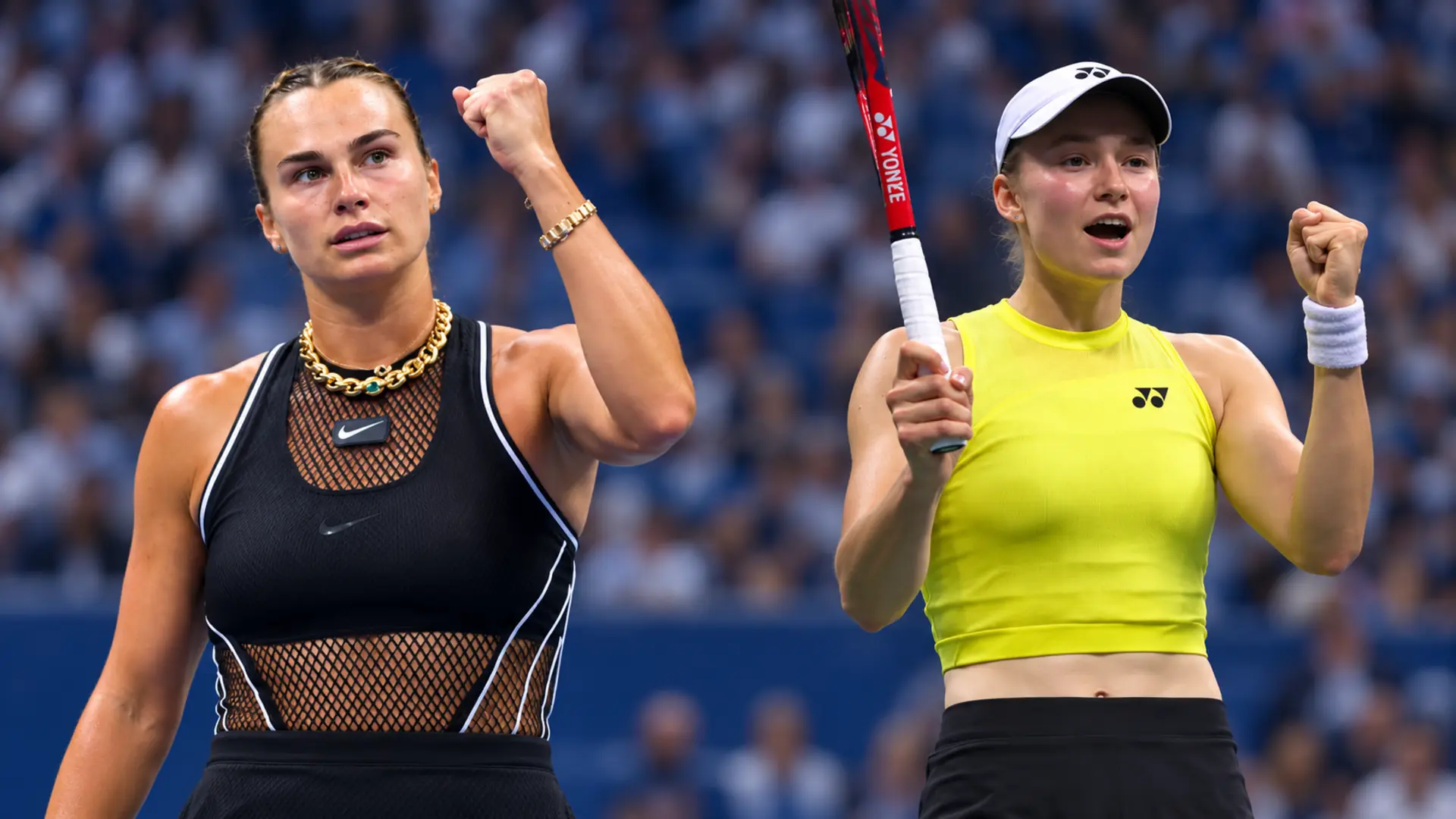
Aryna Sabalenka — US Open 2026 Final Press Conference After Loss to Elena Rybakina
Aryna Sabalenka did not search for excuses after losing the US Open final.
She had felt the crowd behind her. She had fought her way back into the match. She had taken the second set and given herself another chance to extend her hold over New York.
But when it was over, her assessment of Elena Rybakina was strikingly simple.
“She was simply a better player today than me.”
Sabalenka had just lost 6-4, 5-7, 6-2 to the woman who will replace her at World No. 1, ending her attempt to win a third consecutive US Open title.
And while the defeat clearly hurt, Sabalenka sounded more accepting than evasive.
Rybakina had served better, struck cleaner and, for long stretches, controlled the matchup in exactly the areas where Sabalenka normally expects to dominate.
Sabalenka Felt Arthur Ashe Behind Her
There had been one thing Sabalenka particularly enjoyed.
The support.
At one stage she joked that she almost felt American inside Arthur Ashe Stadium.
“Actually, at some point I felt like, ‘Oh, my God, I feel American over there,’” Sabalenka said.
She wanted to give the crowd more.
She could not.
The frustration was visible throughout the final. Sabalenka sent a ball out of the stadium early in the match, received a code violation and repeatedly showed her irritation as Rybakina denied her the rhythm she wanted.
The numbers explained some of it.
Sabalenka finished with more unforced errors than winners, while Rybakina produced 36 winners, 12 aces and only 24 unforced errors.
More revealingly, Sabalenka created only three break points in the entire match.
All three came during the period in which she dragged herself back into the contest late in the second set.
For most of the final, Rybakina gave her very little access.
‘She Served Incredible’
Sabalenka’s post-match verdict matched what had unfolded on court.
“I’m obviously not really happy with the level I played today, but she served incredible,” she said.
Then came the line that probably summed up the final best.
“She was simply a better player today than me.”
There was no attempt to turn the defeat into something more complicated than it had been.
Sabalenka had competed.
Rybakina had played better.
“I was just out there competing, trying to do my best with what I had there today.”
Sabalenka did not play a poor final from beginning to end. Her second-set recovery was excellent, and when she finally began freeing up the forehand and pushing Rybakina backwards, the match briefly looked as if it might turn.
But Rybakina regained control in the third.
And once she did, Sabalenka never found another sustained answer.
Navratilova Had Identified the Backhand Early
Martina Navratilova had been pointing to the decisive pattern almost from the start of the match.
Rybakina’s backhand is the money shot.
That was where so much of the damage originated.
Sabalenka is normally comfortable engaging in heavy backhand exchanges because very few players can take that wing away from her.
Rybakina did.
She repeatedly absorbed the pace, redirected it and found clean acceleration without appearing rushed.
The final statistics support the eye test.
Rybakina finished with 13 backhand winners, more than from any other groundstroke, while Sabalenka had 10.
Rybakina’s backhand held its shape under pressure.
Sabalenka’s game did not always do the same.
Bartoli Asks About the Final Ace
The last point provided a fitting end.
Rybakina served an ace through the middle to seal the championship.
Marion Bartoli, one of the comparatively few pundits who had picked Rybakina to win the final, later asked why she had not gone for her preferred wide serve.
Rybakina explained that she had deliberately mixed up the delivery throughout the match.
She admitted she normally liked the wide serve more.
But on championship point, she went down the middle.
Ace.
US Open champion.
It was an appropriately unpredictable finish from a player whose serving patterns had kept Sabalenka uncomfortable for much of the night.
Evert Sees a Different Rybakina
Chris Evert noticed something else after the match.
Not the serve.
Not the backhand.
The emotion.
Reacting on social media after watching Rybakina at the ESPN desk, Evert wrote that she appeared “so happy and over the moon” and showed considerably more emotion and joy than in many of her previous victories.
Evert’s broader point was that Rybakina appeared to be coming into her own.
That felt particularly appropriate after New York.
Rybakina has never needed theatrical celebration to prove how much winning means to her. But this title seemed to draw something more visible from her.
She smiled more.
She engaged with the crowd more.
And by the time the trophy presentation arrived, the mood around the new champion had changed considerably from the moments immediately after match point.
New York Finally Changes for Rybakina
Rybakina herself acknowledged that the US Open had not always felt like a natural home for her tennis.
“For some reason, New York wasn’t my best place for tennis for the past years, but definitely now it changed,” she said.
That may be the most revealing line of all.
The US Open had really been the outlier.
Now it is part of her résumé.
Wimbledon champion.
Australian Open champion.
US Open champion.
World No. 1.
New York no longer sits outside the story.
Sabalenka Is Already Looking Ahead
Sabalenka, meanwhile, is not treating the loss as a reason to redraw everything.
Her 99 consecutive weeks at No. 1 will end tomorrow when Rybakina officially takes over, giving Sabalenka 107 career weeks at the top.
When told that figure, she found a way to laugh.
“Let’s see if Elena can beat me in that.”
Then came the qualification.
If Rybakina keeps playing at this level, Sabalenka admitted, she may have a problem.
That is probably the right place to leave their rivalry.
Sabalenka still leads the overall head-to-head 10-8.
Rybakina, however, now holds a 5-2 advantage in title matches between them.
And the biggest recent trophies have increasingly gone her way.
One Rivalry Has Changed Shape
Sabalenka’s season has contained enough painful final losses for this one to sting for some time.
But her reaction suggested she understood exactly what had happened.
She had not been cheated by the occasion.
She had not been denied by luck.
She had been beaten by an opponent who executed better.
That is also why Rybakina’s victory felt so convincing.
Navratilova saw the backhand controlling the match.
Bartoli saw the serving intelligence at the finish.
Evert saw a champion allowing herself to enjoy the moment more openly.
Sabalenka saw the simplest version of all.
Rybakina was better.
And after years in which New York had never quite brought out her best, Rybakina finally found the tournament that had been missing.