
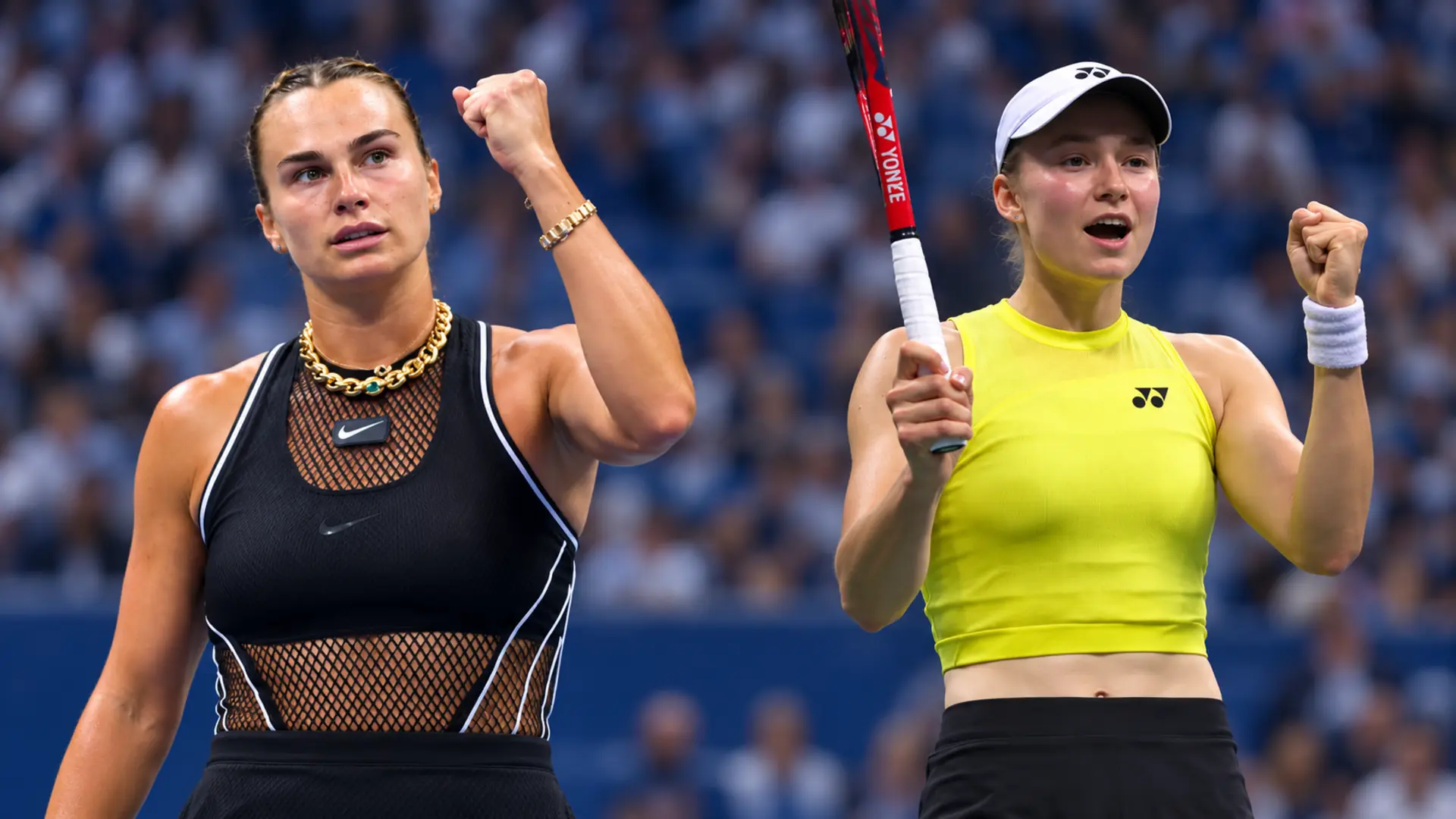
Elena Rybakina vs. Aryna Sabalenka — US Open 2026 Final Analysis
Andrea Petkovic began by trying to defend Aryna Sabalenka. A few minutes later, Boris Becker had changed her mind.
The two former players used their post-US Open podcast to dissect the aftermath of Elena Rybakina’s 6-4, 5-7, 6-2 victory over Sabalenka in the women’s final, and the discussion quickly moved beyond the tennis itself. Rybakina had denied Sabalenka a third consecutive US Open title while completing her own rise to world No. 1.
For Becker, however, the images after match point deserved attention too. Sabalenka’s frustration, including smashing her racket and retreating toward her team, drew cameras away from the new champion.
Petkovic initially allowed more room for the emotions of losing a Grand Slam final. By the end of the exchange, she accepted Becker’s central point: the immediate aftermath of a major final belongs to the player who has just won it.
Petkovic Changes Her Mind on Sabalenka
Becker raised the subject directly.
He stressed that he likes Sabalenka and her tennis, but argued that being one of the sport’s biggest stars also carries responsibilities when things go wrong. In his view, character is particularly visible in defeat.
Petkovic was initially more forgiving. She pointed to the difficulty of controlling emotions after a major final and began explaining how Sabalenka had appeared tense from the opening stages of the match.
But Becker kept returning to what happened after the match.
That distinction eventually persuaded her.
“Those ten to fifteen minutes after the match belong to the winner,” Petkovic said.
Her point was not that Sabalenka could not be devastated. It was about when and where those emotions should take over.
Petkovic noted that once Sabalenka began breaking her racket and moving toward her box, the television cameras naturally followed her. At the same time, Rybakina was supposed to be having the defining celebration of her tournament.
The loser, Petkovic concluded, should not become the main story during those first minutes.
Becker put it more sharply. Once the match is over, he argued, the losing player is still effectively on television and still part of the ceremony. There will be time to let the frustration out in the locker room, away from the presentation and the champion’s moment.
Petkovic eventually conceded the argument with a simple admission:
“You convinced me.”
She added that it was an area Sabalenka still needed to work on.
Becker Wants More Attention on What Rybakina Did
The conversation then swung back toward Rybakina, and that was where Becker’s frustration became broader.
Rybakina had not simply beaten Sabalenka in another big final. She had arrived in New York with questions surrounding her preparation, secured the world No. 1 ranking during the tournament, came from a set down to defeat Coco Gauff 3-6, 6-4, 6-4 in the semifinals, and then beat Sabalenka in three sets for the title.
Yet Becker felt the immediate discussion was drifting toward Sabalenka’s behavior and what Sabalenka had done wrong.
He wanted the emphasis moved back to the player who had actually won.
His description of Rybakina’s run was concise:
“A monster performance.”
Becker pointed to the succession of elite opponents Rybakina had beaten and argued that performances of that level deserved greater appreciation in their own right.
It was also consistent with a question he had raised earlier in the discussion: why does Rybakina remain comparatively under the radar despite producing results associated with the biggest stars in the sport?
Petkovic Sees Something Exceptional in Rybakina’s Mental Strength
Petkovic’s admiration centered on something less visible than Rybakina’s serve or first-strike tennis.
After Rybakina had accumulated enough points to guarantee her ascent to world No. 1, Petkovic expected the possibility of an emotional drop.
Reaching the top ranking is a career goal in itself. Once that milestone is secured, even an elite player can experience a release of tension.
Rybakina instead kept going.
She survived Gauff in a three-set semifinal and then defeated the outgoing No. 1 in another three-set match in the final. The US Open confirmed that Rybakina would replace Sabalenka after the Belarusian’s 99-week run at No. 1.
“Sabalenka lost the match because she couldn’t withstand the pressure. And because Rybakina is simply one of the mentally strongest players we have right now — that’s just not enough against her.”
That assessment also formed part of her explanation for Sabalenka’s difficulties in the final. Frustration alone was never going to make Rybakina disappear. Sabalenka still had an opponent across the net who continued to absorb the occasion without giving much away emotionally.
Rybakina eventually pulled clear 6-2 in the deciding set.
The Contrast Became the Story
There was an obvious irony in Becker and Petkovic’s discussion.
Rybakina’s understated personality was one of the reasons they believed she sometimes receives less attention than her achievements warrant. Yet after the biggest victory of her US Open, the more visibly emotional player again threatened to command the conversation.
That was ultimately why Petkovic came around to Becker’s position.
It was not an argument that Sabalenka should stop feeling disappointment or become emotionless. Nor did either dismiss what it takes to lose a Grand Slam final after coming so close to another major title.
Their point concerned ownership of the moment.
For those first minutes after the final, Rybakina had earned it.
And after beating Gauff and Sabalenka in consecutive three-set matches, winning her first US Open and climbing to world No. 1, Becker thought the sport could spend a little more time talking about exactly how she did it.