
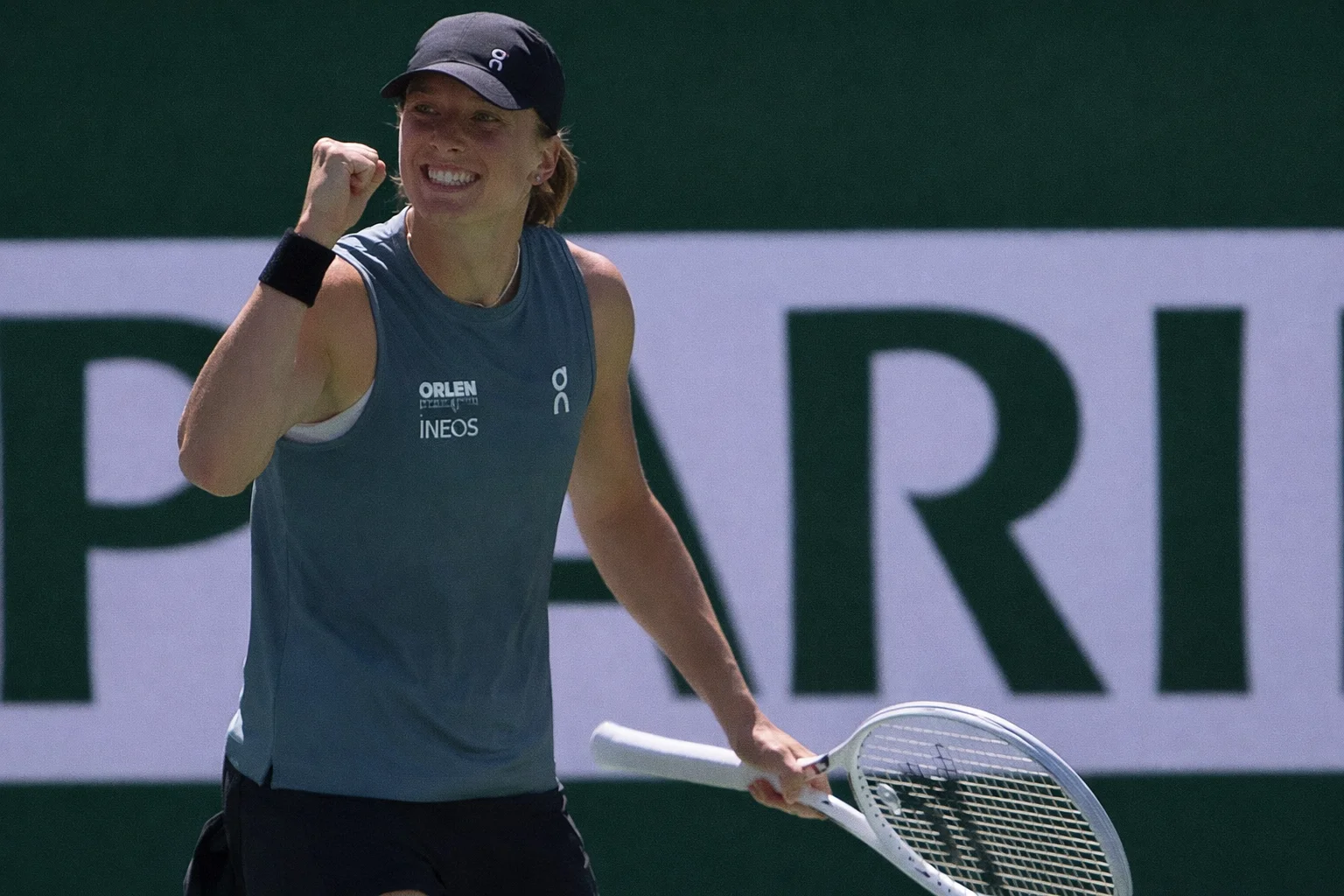
For nine games in a row, this didn’t look like a contest at all.
Iga Swiatek bageled Sara Bejlek in the first set, then raced out to 3-0 in the second. Nine straight games. Not a hint of the slump she carried into Toronto. Then Bejlek did what qualifying runs tend to produce: she found a way back in.
Bejlek Claws Back to 3-2, and Swiatek’s Serve Gets Tested
Two straight games changed the tone completely.
Bejlek broke Swiatek’s serve, held her own, and suddenly a laugher had a pulse. The scoreline read 3-2 in games. Swiatek’s dominant start was still standing, but only just. Whatever momentum Bejlek had built over her three-set opening round win in Toronto, she was finally bringing it to bear.
Then Swiatek stepped up to serve at 3-2, and the match turned into something else entirely.
Thirteen Deuces, Nine Break Points, One Enormous Hold
The game lasted 21 minutes. It reached deuce 13 times. Bejlek carved out nine separate break points across those 32 points, and every single time, Swiatek found something to close the door.
The numbers from that one game are almost hard to believe on their own. Bejlek won 16 points in it. That’s 5 points more as she managed across the entire first set, when Swiatek was routing her 6-0.
One game matched more than an entire set’s worth of resistance, and Swiatek still walked away holding serve.
The story of the longest WTA game of tennis in 2026
| Point | Bejlek | Swiatek | Situation |
|---|---|---|---|
| 1 | 15 | 0 | |
| 2 | 30 | 0 | |
| 3 | 30 | 15 | |
| 4 | 40 | 15 | Break point 1 |
| 5 | 40 | 30 | Break point 2 |
| 6 | 40 | 40 | Deuce |
| 7 | Advantage | 40 | Break point 3 |
| 8 | 40 | 40 | Deuce |
| 9 | Advantage | 40 | Break point 4 |
| 10 | 40 | 40 | Deuce |
| 11 | 40 | Advantage | Swiatek advantage |
| 12 | 40 | 40 | Deuce |
| 13 | Advantage | 40 | Break point 5 |
| 14 | 40 | 40 | Deuce |
| 15 | 40 | Advantage | Swiatek advantage |
| 16 | 40 | 40 | Deuce |
| 17 | Advantage | 40 | Break point 6 |
| 18 | 40 | 40 | Deuce |
| 19 | 40 | Advantage | Swiatek advantage |
| 20 | 40 | 40 | Deuce |
| 21 | Advantage | 40 | Break point 7 |
| 22 | 40 | 40 | Deuce |
| 23 | Advantage | 40 | Break point 8 |
| 24 | 40 | 40 | Deuce |
| 25 | Advantage | 40 | Break point 9 ! |
| 26 | 40 | 40 | Deuce |
| 27 | 40 | Advantage | Swiatek advantage |
| 28 | 40 | 40 | Deuce |
| 29 | 40 | Advantage | Swiatek advantage |
| 30 | 40 | 40 | Deuce |
| 31 | 40 | Advantage | Swiatek advantage |
| 32 | 40 | Win | Swiatek holds serve for a 6-0, 4-2 lead |
It was, by any measure, one of the longest service games you’ll see on the WTA Tour this season. Marathons like this are rare enough that when Maria Sharapova reportedly played a 34-point game against Venus Williams at Wimbledon in 2007, it’s still the reference point people reach for almost two decades later.
Swiatek’s effort in Toronto now belongs in that same conversation.
The Hold That Mattered
Bejlek held serve in the very next game to close to 4-3, proof that the marathon hadn’t broken her spirit either. But the damage, in a psychological sense, was already done.
Swiatek held again for 5-3, then closed out the match by breaking Bejlek’s serve one final time. Final score: 6-0, 6-3.
A dominant opening set, a wobble that let Bejlek climb all the way back to one game behind, and a single extraordinary hold that stopped the comeback from becoming something more dangerous.
A Genuine Answer, for One Round at Least
Swiatek arrived in Toronto carrying her roughest patch in years: early Slam exits, no titles, a ranking slide to No. 8. One second-round win doesn’t erase any of that on its own.
But a 32-point survival act, in exactly the moment a resurgent opponent threatened to swing the whole match, is the kind of result that tends to matter more than the scoreline suggests. Bejlek made her fight for every inch of it. Swiatek still found a way through.
Round three awaits. For now, the rot has, at minimum, been paused.