The European Commission wants the Russian flag gone from every sports event in the European Union.
On November 23, Commission President Ursula von der Leyen presented the EU’s 22nd sanctions package against Russia. For the first time, it reaches into sport.
For tennis, the headline sounds dramatic. In practice, the sport has lived with most of these rules since 2022.
What Brussels Is Proposing
Under the plan, Russian teams and athletes could not compete under the Russian flag at any sports event in the EU.
The plan would also ban official Russian state symbols at those events.
“Sports events cannot be a forum for propaganda activities,” von der Leyen said.
The package also targets money. It would restrict Russian sponsorship of European sports and cultural organisations.
The ban would not touch athletes who compete as neutrals, without flag, anthem or emblem.
As presented, the plan names Russia. It does not mention Belarus, home of Aryna Sabalenka.
Why Tennis Is Already There
Tennis drew this line almost four years ago.
After Russia’s invasion of Ukraine in February 2022, the ITF suspended the Russian and Belarusian federations. Their players kept competing on the tours, but as individuals, with no flag beside their names.
The ITF has not moved since.
In May, it confirmed the suspensions after the IOC eased its own restrictions.
In October, the ITF’s annual meeting in Almaty rejected resolutions to lift them. Russia and Belarus remain out of the Billie Jean King Cup and the Davis Cup.
What It Means for Andreeva and Co.
For Russian WTA players, the daily routine will not change.
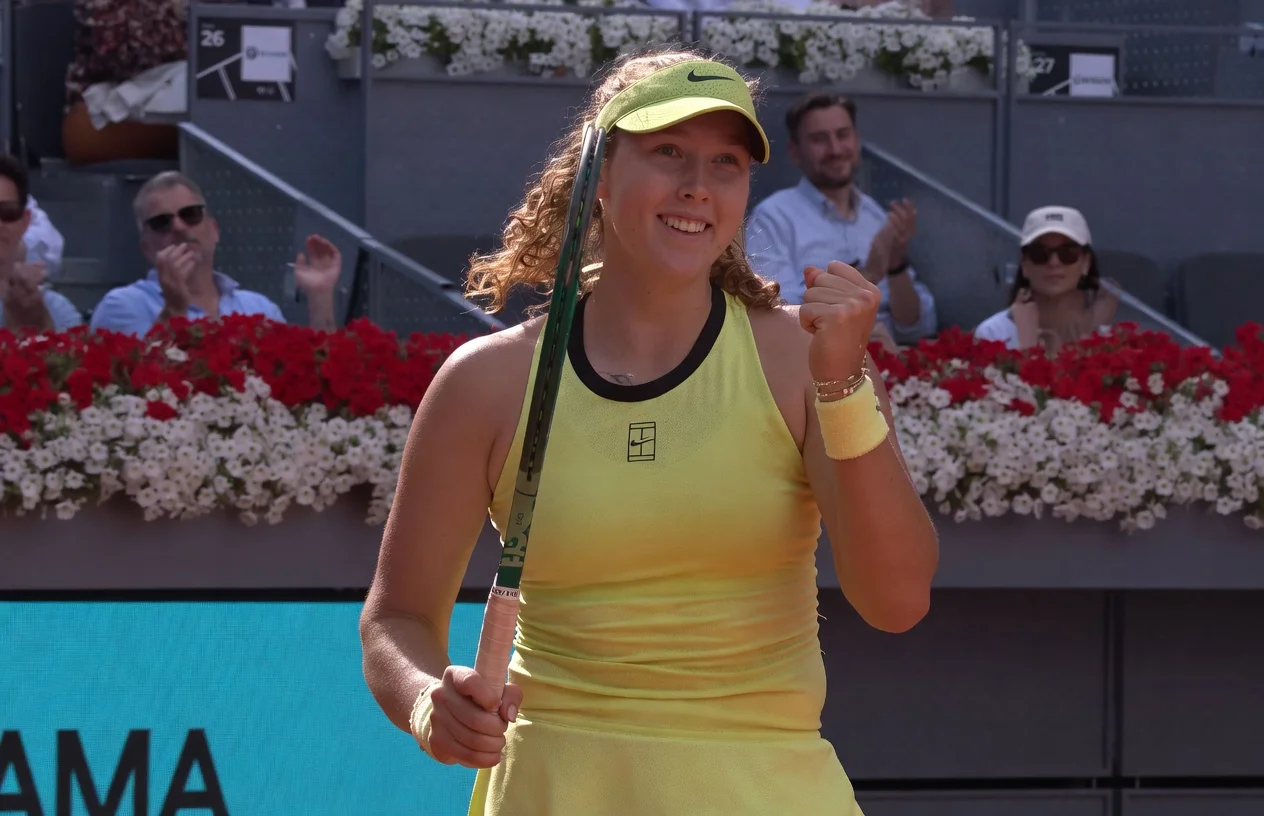
Mirra Andreeva won Roland Garros and Linz this year without a flag next to her name. Diana Shnaider, Ekaterina Alexandrova and Anna Kalinskaya play the same way.
The proposal would matter if tennis ever changed course. Other sports have already moved, with table tennis restoring the Russian flag this summer.
If the EU rules pass, a flag that returned elsewhere would still stay off courts in Paris, Madrid, Rome, Stuttgart and every other EU event.
The symbols ban raises practical questions too. It is not yet clear how organisers would apply it in the stands.
Not Law Yet
The package still needs the unanimous approval of all 27 member states. Several EU diplomats told Politico they hope to seal a deal before the year is out.
Unanimity has proved difficult to achieve before. In July, member states softened a proposed visa ban on Russian former soldiers after objections from France and Italy.
Supporters of the sporting restrictions argue that flags and national anthems are never politically neutral. Others within European sport maintain that sport and culture should remain spaces for dialogue, even in times of conflict.
Perhaps Europe, of all places, should be particularly mindful of the value of keeping those channels open. After all, both world wars began on European soil.
The Bottom Line for Tennis
On this issue, tennis set its rules long before Brussels did.
Tennis established its own rules in March 2022, allowing Russian and Belarusian players to continue competing as individuals without their national flags.
Nearly five years later, as other international sporting federations begin relaxing their restrictions, the European Commission is moving in the opposite direction, extending its proposed sanctions against Russia into the sporting arena.
For tennis, the immediate consequences may be limited. The longer-term question is how much freedom the sport will retain to determine its own participation rules if political institutions increasingly impose restrictions of their own.