
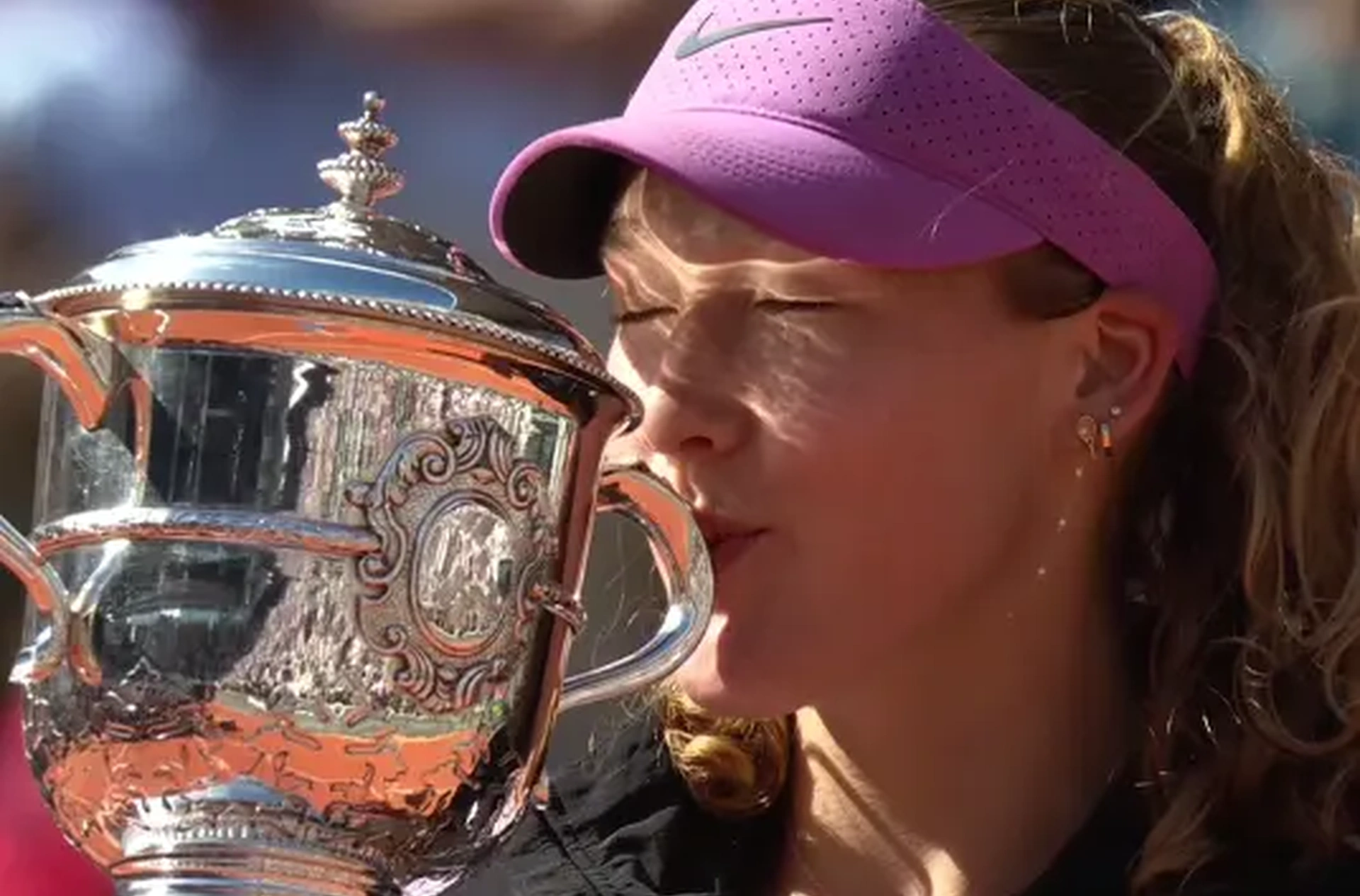
For five games, Maja Chwalińska still had the magic.
After nine matches, three weeks, qualifying courts, impossible wins, hotel worries, slices, moonballs, drop shots and one of the great modern Grand Slam stories, the Pole was still there in the French Open final, still making Mirra Andreeva think, still making the ball arrive in awkward shapes.
Then the engine began to sputter.
It was not dramatic at first. More like something slowly losing power. The legs were a fraction late. The hands were less certain. The wind, already playing games with both players, seemed to tug harder at the player who had spent the longest time in Paris.
Chwalinska had fought like hell for three weeks. At 3-2 in the first set, after all that tennis, the cost finally started to show.
Andreeva saw it.
The 19-year-old Russian won 6-3, 6-2 to claim her first Grand Slam title, becoming the Roland Garros champion 12 years after Maria Sharapova beat Simona Halep in that 2014 three-set final. That one was a thriller. This one became clearer, cleaner and, in the end, easier.
Not because Chwalinska failed the occasion.
Because Andreeva grew into it.
Chwalinska Still Had Paris Guessing Early
The first set began exactly the way a Chwalinska final needed to begin: awkwardly.
Andreeva broke in the opening game after a long fight, but Chwalinska broke straight back. Andreeva broke again for 2-1. Chwalinska broke again for 2-2. There was no settled rhythm, no neat opening stretch, no easy passage into the match for the favourite.
That suited the Pole.
Her whole tournament had been built on denying opponents a clean read. She had turned Zheng, Mertens, Sakkari, Parry, Kalinskaya and Shnaider into players searching for answers in real time. In the early games of the final, she briefly did the same to Andreeva.
At 2-2, Chwalinska finally held to love for 3-2. It was the first hold of the match, and for a moment it felt like the fairytale had found one more shape.
The drop shots were still there. The soft hands were still there. The little changes of pace still asked questions.
Then Andreeva began answering them with more authority.
The Match Turned From 3-2
At 3-2 Chwalinska, the final was still alive in the most delicious way.
Then Andreeva held for 3-3. It was her first hold of the match, secured with a big ace, and it changed the feel of the afternoon. She had been dragged into the Pole’s strange rhythm. Now she had found her own.
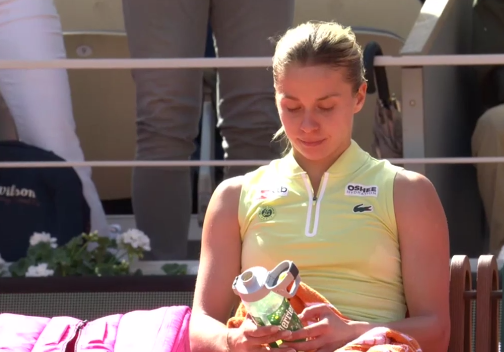
The next game gave Andreeva another break for 4-3. Chwalinska kept making her uncomfortable, but the Russian was starting to read the serve better, step in earlier and get the first serious strike in too often.
At 5-3, Andreeva broke again.
Four games in a row. First set, 6-3.
That was the first real break in the Chwalinska spell. The Pole had made the match strange. Andreeva had made it manageable. By then, she knew she had it on her racquet.
Shnaider vs Chwalinska – Set Two Stats
| Statistic | Shnaider | Chwalinska |
|---|---|---|
| Dominance Ratio | 0.72 | 1.38 |
| Winners | 11 | 11 |
| Unforced Errors | 14 | 5 |
| Serve Rating | 250 | 285 |
| Aces | 0 | 0 |
| Double Faults | 0 | 1 |
| 1st Serve % | 88% (23/26) | 74% (20/27) |
| 1st Serve Points Won | 52% (12/23) | 75% (15/20) |
| 2nd Serve Points Won | 50% (2/4) | 57% (4/7) |
| Break Points Saved | 0% (0/2) | 0% (0/1) |
| Service Games | 60% (3/5) | 80% (4/5) |
| Ace % | 0% | 0% |
| Double Fault % | 0% | 3.7% |
| Return Rating | 188 | 238 |
| 1st Return Points Won | 25% (5/20) | 48% (11/23) |
| 2nd Return Points Won | 43% (3/7) | 50% (2/4) |
| Break Points Won | 100% (1/1) | 100% (2/2) |
| Return Games | 20% (1/5) | 40% (2/5) |
| Pressure Points | 33% (1/3) | 67% (2/3) |
| Service Points | 54% (14/26) | 67% (18/27) |
| Return Points | 33% (9/27) | 46% (12/26) |
| Net Points | 29% (2/7) | 75% (3/4) |
| Total Points | 43% (23/53) | 57% (30/53) |
| Set 1 Duration | 0h43m | |
The Second Set Became Andreeva’s Title Run
Andreeva carried the surge straight into the second set.
She broke for 1-0, held for 2-0, then came through a crucial game at 0-3 on Chwalinska’s serve after the Pole had break chances. That game felt like the last route back into the final. Chwalinska had 40-0 and a chance to pull the score closer. Andreeva refused to let it become a turning point.
From there, the title came rushing toward her.
She moved to 4-0, then 5-0, and the numbers behind the run became brutal. Andreeva won nine consecutive games from 2-3 in the first set to 5-0 in the second. A final that had begun full of little tricks and unstable service games suddenly looked like a champion taking command.
Chwalinska did not disappear completely.
She held for 1-5, then broke for 2-5 as Andreeva showed the first real nerves while trying to serve out a Grand Slam title. The crowd had one last flicker of the impossible story. The Pole, even exhausted, was still too proud and too clever to hand over the moment politely.
But Andreeva did not let the wobble grow.
She broke again for 6-2, finishing the match with a series of backhand winners and throwing herself into the first major title of her career.
Chwalinska vs Andreeva – Set Two Stats
| Statistic | Chwalinska | Andreeva |
|---|---|---|
| Dominance Ratio | 0.60 | 1.67 |
| Winners | 2 | 11 |
| Unforced Errors | 15 | 14 |
| Serve Rating | 140 | 278 |
| Aces | 0 | 0 |
| Double Faults | 0 | 0 |
| 1st Serve % | 68% (15/22) | 93% (25/27) |
| 1st Serve Points Won | 47% (7/15) | 60% (15/25) |
| 2nd Serve Points Won | 0% (0/7) | 50% (1/2) |
| Break Points Saved | 40% (2/5) | 80% (4/5) |
| Service Games | 25% (1/4) | 75% (3/4) |
| Ace % | 0% | 0% |
| Double Fault % | 0% | 0% |
| Return Rating | 135 | 288 |
| 1st Return Points Won | 40% (10/25) | 53% (8/15) |
| 2nd Return Points Won | 50% (1/2) | 100% (7/7) |
| Break Points Won | 20% (1/5) | 60% (3/5) |
| Return Games | 25% (1/4) | 75% (3/4) |
| Pressure Points | 31% (4/13) | 69% (9/13) |
| Service Points | 32% (7/22) | 59% (16/27) |
| Return Points | 41% (11/27) | 68% (15/22) |
| Total Points | 37% (18/49) | 63% (31/49) |
| Set 2 Duration | 0h40m | |
The Stats Show Where the Fairytale Ran Out
Chwalińska’s tennis had revived natural flair throughout the tournament, but the final exposed the one area where Andreeva could press again and again.
The serve.
Chwalińska won only 46 percent of points behind her first serve and just 18 percent behind her second. That gave Andreeva too many looks, too many first strikes, too many chances to move from return into control.
Andreeva won 82 percent of Chwalińska’s second-serve points. That is almost impossible to survive in a Grand Slam final.
The Russian finished with 25 winners to Chwalińska’s 10. She won 62 of the 103 points, taking 60 percent overall. She broke seven times from 12 chances and won 12 of the 17 games.
The dominance ratio told the same story: 1.47 for Andreeva, 0.68 for Chwalińska.
The Pole still created beauty. She still produced little moments that made the court feel more interesting. But once the physical and mental bill arrived, Andreeva had the heavier legs, the cleaner mind and the greater depth.
Twelve Years After Sharapova, Russia Has Another Roland Garros Champion
Sharapova’s 2014 title over Halep was a long, dramatic, three-set battle, the sort of final that seemed to swing on will as much as tennis.
Andreeva’s first title had a different shape.
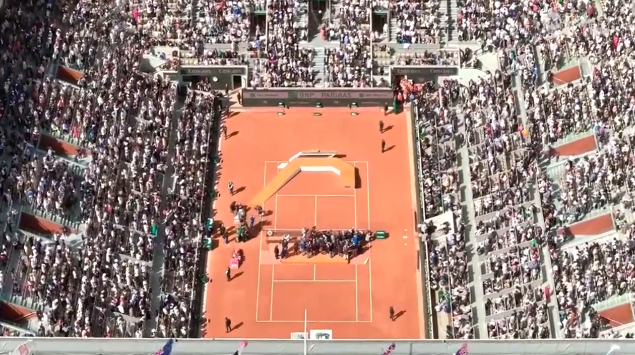
There was tension early. There was wind. There were breaks everywhere. There was one last push from Chwalinska late in the second set. But once Andreeva settled, the match was won.
She has always had the talent. The movement, the backhand, the instinctive court sense, the ability to change a rally before the other player has realised it is changing. What she showed in Paris was something more valuable: the ability to stay inside the match when it gets messy.
She did not assume the final belonged to her. She worked it out with forehand slices and backhand slices, using both to win the points that steadied the match.
That was the difference.
Chwalinska Leaves Paris as More Than a Runner-Up
Chwalinska lost the final. That is the official line.
She had already won before the final began.
The title was the only thing left to chase.
By the end, the exhaustion had arrived. After all those matches, all those emotions, all those practical worries and all those impossible afternoons, there was simply not enough left to keep Andreeva out.
But Chwalinska did not leave Paris as a curiosity.
She left as a Grand Slam finalist, a top-level story, and about €1.4 million richer — roughly $1.64 million or £1.21 million — almost tripling her entire career earnings in three weeks of tennis.
Andreeva Starts a New Chapter
Andreeva will leave Paris with the trophy, the ranking rise, and the feeling that something has clicked into place.
A first Grand Slam title at 19 can change the way a career is discussed. She is no longer only the teenager with a huge future. She is already a major champion.
The kid in her is still there. Open, unfiltered, almost disarming. What you see is what you get.
But the champion is there now too.
She handled the wind. She handled the fairytale. She handled the nerves when the finish line came close. Then she hit the backhand that ended it.
Twelve years after Sharapova, another Russian has won Roland Garros.
Her name is Mirra Andreeva.
And Paris may have just watched the beginning of a new arrangement.