
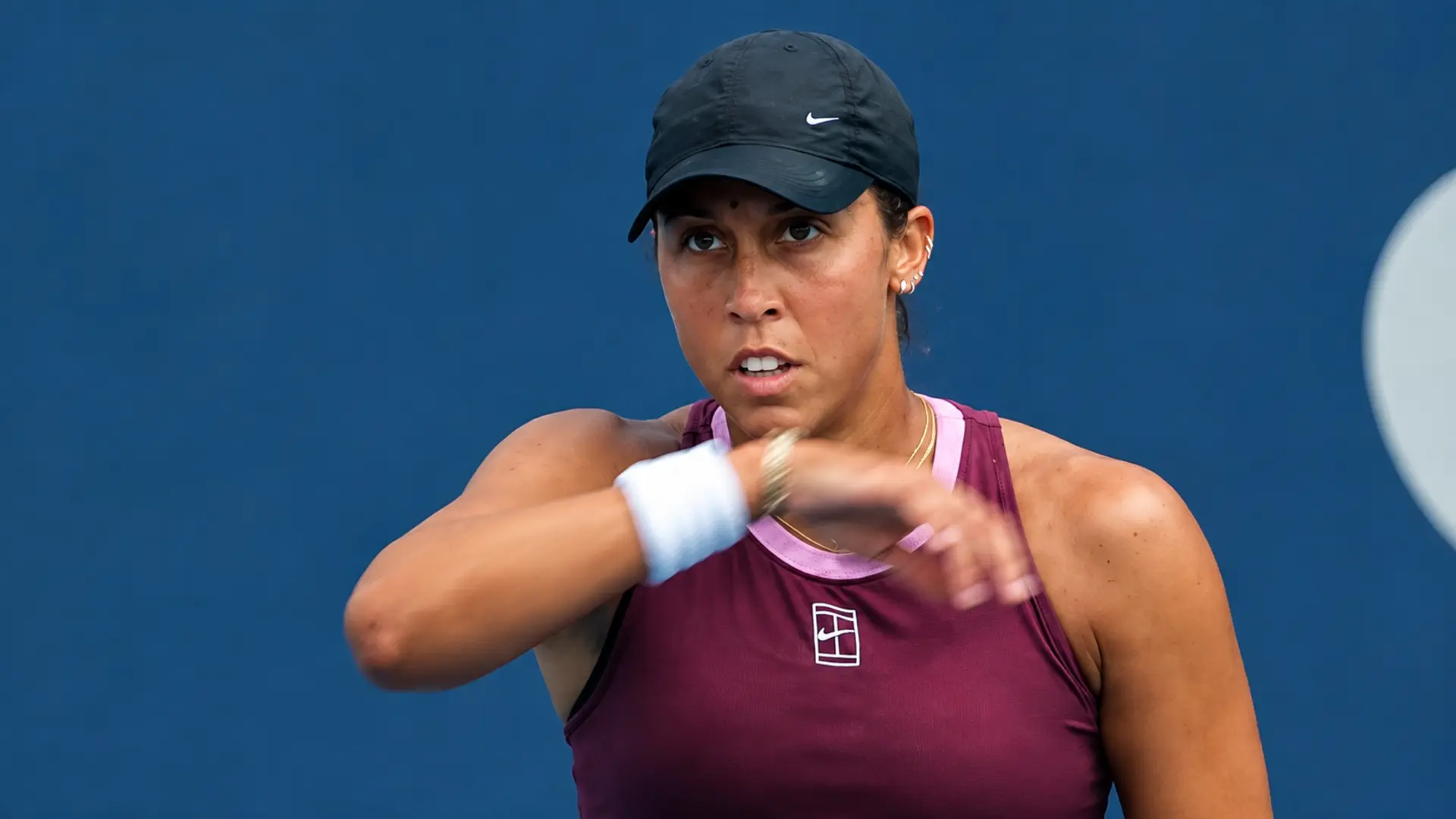
Madison Keys — US Open 2026 Third-Round Press Conference After Losing to Qinwen Zheng
Madison Keys had already supplied the brutal visual evidence.
A 5-0 lead in the deciding set had disappeared against Qinwen Zheng.
What followed in the press room was more revealing than any tactical explanation could have been.
“I just got really scared. Felt like I couldn’t swing.”
That was Keys’ own diagnosis.
Not that Zheng suddenly became unplayable. Not that the conditions turned against her. Not that one unlucky point changed everything.
Fear entered the match.
And once it did, the tennis became secondary.
Keys Says the Problem Is Bigger Than One Collapse
The most important part of Keys’ press conference came when the discussion moved away from the third set.
This had not started at 5-0.
“I just feel like I’ve kind of been struggling for a while now,” Keys said.
That changes the meaning of the defeat.
The collapse against Zheng was dramatic, but Keys did not describe it as an isolated failure. She spoke instead about a longer period in which she had managed to keep competing while feeling considerably worse internally than perhaps appeared from the outside.
That distinction matters.
Elite players can continue winning matches while carrying problems that are not yet obvious in the results.
Keys sounded as though she had reached the point where playing through them was no longer enough.
“It Felt Like a Much Bigger Deal Than Just Playing a Tennis Match”
Keys was especially candid when asked what had changed late in the match.
Her answer stripped away the usual technical language.
“I felt like I couldn’t play tennis anymore.”
Then came the sentence that perhaps explained the collapse more clearly than anything else:
“It just felt like it was a much bigger deal than just playing a tennis match all of a sudden.”
That is the point at which the scoreboard becomes psychological.
At 5-0, Keys had been playing freely enough for Zheng herself to believe the American was simply producing exceptional tennis.
As the lead began to shrink, the significance of finishing the match appears to have grown with every game.
The task stopped being merely to hit the next ball.
It became about everything the result represented.
Zheng Improved, but Keys Did Not Hide From Her Own Drop
There was no attempt to take anything away from Zheng.
Asked directly whether the turnaround came from Zheng raising her level or Keys dropping hers, she answered plainly:
“I think my level dropped and she started to play better.”
It was a useful piece of honesty because both explanations are often treated as mutually exclusive after a dramatic comeback.
They are not.
Zheng had to produce the tennis necessary to keep the match alive.
Keys simultaneously became less able to impose the game that had carried her to the brink of victory.
The two processes fed each other.
The stronger Zheng became, the tighter the match felt.
The tighter it felt, the more difficult Keys found it to swing.
Keys Knows She Has Been Postponing Something
The press conference became less about the loss itself and more about what comes next.
Keys said she would need to make changes.
When asked whether that was simply the emotion of a painful defeat, she made clear that it was not.
“It’s been something that’s been building for a while.”
She then explained the cycle.
Professional tennis rarely gives players much space to stop and address deeper problems. There is always another event, another trip, another practice block.
Keys acknowledged she had repeatedly delayed confronting whatever had been building.
“I just kind of keep pushing it off and pushing it off just because that’s how the tennis world works.”
That sounded less like frustration in the immediate aftermath of defeat and more like recognition.
She did not define the changes.
She did not need to.
The important part was that she no longer believed postponement was working.
A Hard Defeat, but Not an Empty One
For Keys, this loss will hurt for obvious reasons.
She was five games ahead in the deciding set and still lost.
But her press conference did not sound like someone searching desperately for an excuse.
It sounded like someone who had finally stopped minimizing a problem she had been carrying.
That may be the most important part of the day.
The score will remain painful.
The admission may prove more useful.
“It’s just to the point where I actually need to do something about it.”
For Madison Keys, the next step is no longer pretending the difficult stretch will simply pass on its own.