
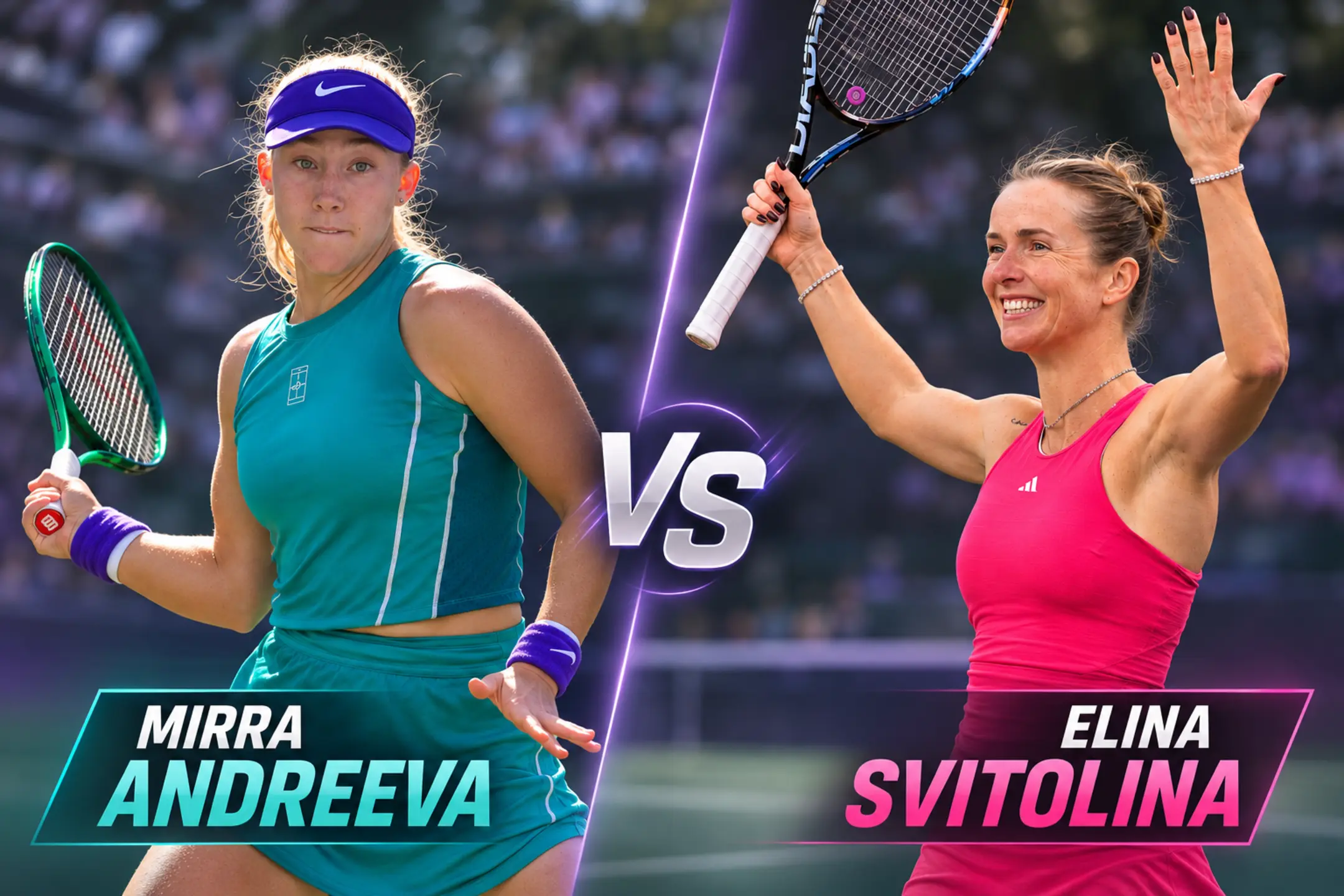
Sergiy Stakhovsky spent his playing career on the side of the net where things happen. At the WTA Finals in Indian Wells he sat in the box instead, standing in as Elina Svitolina’s coach. Her regular coach, Andrew Bettles, stayed at home because his wife was expecting a baby.
The temporary arrangement went rather well. Svitolina reached the final, where Mirra Andreeva beat her 7-5, 6-3 on November 15. Ten days later, Stakhovsky looked back on the week in comments to Sport.ua, published by the Tennis Portal of Ukraine.
He found the coaching easy and the watching hard, and he still has no time for Andreeva’s trophy speech.
The Hardest Part Was Doing Nothing
For a former world No. 31, the box turned out to be the uncomfortable seat.
“The emotions are heavy, because when you can’t control what happens on court, and you are used to being part of the game yourself, it is harder to stand aside and just watch.”
Svitolina, by his account, made the rest of the job simple. He describes a player who takes advice, weighs it and then decides for herself.
“But on the other hand, with Elina it is incredibly easy. Elina is a professional who knows how to make her own decisions. She listens to other people’s opinions, analyses them and makes the choice she thinks is right. The main thing is that she is ready to take responsibility for those decisions.”
That is a modest definition of coaching, and probably an accurate one for a 32-year-old with her experience. Stakhovsky saw his role as setting the direction and leaving the execution to her. A stand-in who arrives for one tournament has little business rebuilding anyone’s game, and he did not pretend otherwise.
Why He Picked Muchova Over Sabalenka
The obvious highlight of Svitolina’s week was her 6-3, 3-6, 6-1 win over Aryna Sabalenka. Stakhovsky chose a less glamorous match as the one that mattered.
“The most stressful was probably the match against Muchova, both psychologically and in terms of tennis. It was the second match: the first didn’t work out, and the second was also proving difficult. The fact that Elina managed to turn the match in her favour became the turning point.”
The results support him. Andreeva had dismissed Svitolina 6-4, 6-0 in the opener, and Svitolina failed to convert any of her six break points. Against Karolina Muchova she dropped the first set 6-3 and trailed 2-1 in the second, facing another break point.
She held, and the match turned. Svitolina won 3-6, 6-2, 6-2, taking 11 of the last 13 games. Stakhovsky argues that the win over Sabalenka and the 6-2, 6-1 semifinal against Linda Noskova grew out of that one hold. Without it, he says, the Sabalenka match would hardly have gone so well.
It is a coach’s reading, and a fair one. A second defeat would have left her playing for pride rather than a semifinal.
A Familiar Place, With a Catch
Stakhovsky called the week a return to an environment where he felt at home. The women’s tour, he added, comes with a complication.
“There are many ‘neutral’ players there. Former ‘neutral’ players work with them, and because of that it’s hard to feel completely comfortable, for obvious reasons. These people have never shown sympathy for what is happening in Ukraine.”
By “neutral” he means the Russian and Belarusian players who compete without a flag. He said no Ukrainian player talks to that group, and that the group knows it.
The Speech He Has Not Forgiven
That brings him back to the final. During the trophy ceremony, Andreeva congratulated Svitolina and praised her return to the top after the birth of her daughter. The players did not shake hands, in line with the stance Ukrainian players have taken since Russia’s invasion in February 2022.
Stakhovsky had already called the tribute “an act of deliberate manipulation” in a post on X after the final. The American journalist Dave Thomas defended Andreeva in reply. Stakhovsky has not softened.
“Andreeva’s speech after the final about congratulating Elina looks like hypocrisy. Elina never once greeted her during four years, including at the tournament itself, and then suddenly such words appear.”
Thomas saw a 19-year-old behaving like the adult in the room. Stakhovsky sees warm words that come at no cost. Neither side looks likely to move.
What the Week Leaves Behind
The tennis case for the week is stronger than the row that followed it. Svitolina lost her first match without breaking serve once, then won three in a row and reached the final. In that final, she landed only 45% of her first serves to Andreeva’s 67%, and the teenager converted six of 16 break points.
Stakhovsky expects “many more wins” from her next year. On the evidence of Indian Wells, his most useful contribution was knowing when to stay out of the way.
For a man who found sitting still the hard part, that was some discipline.