
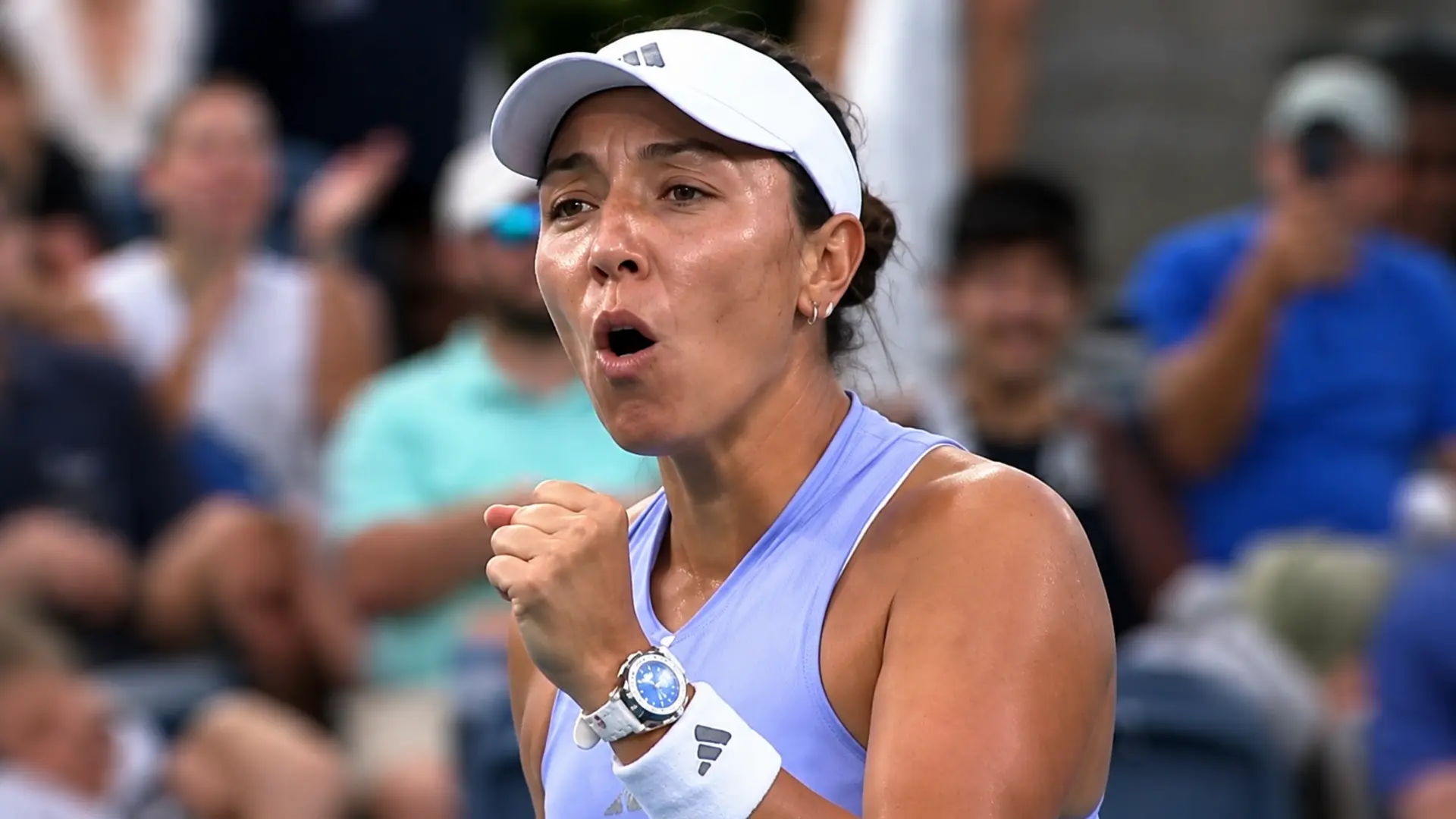
Jessica Pegula called Mirra Andreeva a diva. That is the sentence travelling around the tennis world.
Here is the sentence that should trouble the sport more: Jessica Pegula did not know we were listening.
Neither, apparently, did her coach Mark Knowles. Nor were players and their teams properly informed that microphones placed around the practice courts at the WTA Finals in Indian Wells were capable of broadcasting their conversations to the public.
This was not Pegula sitting in a press conference, leaning toward a microphone and deciding to take a public swing at a rival. It was a conversation during practice that she believed was private.
The WTA turned it into content.
And for an organization entrusted with the players at its flagship season-ending tournament, that is an enormous blunder.
The WTA Created a Story That Never Needed to Exist
During Wednesday’s practice livestream, microphones picked up Pegula discussing Mirra Andreeva with Knowles.
The American described the 19-year-old as a “diva” and said she “needs to be humbled.” She also criticized Andreeva’s behavior toward coach Conchita Martinez and questioned why the former Wimbledon champion appeared willing to tolerate it.
Those are Pegula’s words. There is no reason to pretend otherwise.
But context matters.
The same conversation also contained substantial praise for Andreeva. Pegula described her as smart, praised her movement and serve, and suggested her tennis ceiling was extraordinarily high.
Reporting of the full exchange makes it considerably more nuanced than the isolated “diva” clips now circulating online.
It sounded like what it was: two tennis professionals talking candidly about another player when they believed they were talking among themselves.
People do that.
Players do that.
Coaches certainly do that.
What they normally do not expect is for the governing body of their sport to provide the microphone.
Pegula Should Never Have Been Put in This Position
Pegula’s representative, Chris McCormack, said she was “completely unaware” that the courtside microphones could pick up the conversation, let alone that it was being livestreamed publicly.
Another account quoted her representative as saying she had “absolutely no idea” it was being broadcast.
Pegula has since contacted those involved personally to apologize.
That is the Jessica Pegula we all know: smart and very level-headed.
She did not issue the comments through social media. Pegula did not walk into an interview and attack Mirra Andreeva. She did not deliberately put Martinez in the firing line.
The WTA did that for her.
It is perfectly reasonable for Andreeva or Martinez to dislike what Pegula said. A private conversation does not somehow make every word admirable.
But there is a huge difference between being responsible for your words and consenting to their publication.
The WTA erased that difference.
Mirra Andreeva Is a Victim of This Too
There is another person who deserves more consideration than she has received in the rush toward the hot-mic headline: Mirra Andreeva.
She never asked for any of this either.
A private opinion about her behavior has now been clipped, quoted, translated, debated and distributed around the world days before she is due to play one of the biggest tournaments of her season.
Andreeva should have been preparing for Aryna Sabalenka, Elina Svitolina and Karolina Muchova in her WTA Finals group.
Instead, she has become the subject of a controversy she did not create.
That is why reducing this story to Pegula versus Andreeva misses the point.
Both players lost control of something that should never have been made public.
One lost control over her private words. The other lost control over whether private criticism of her became international news.
The organization responsible for protecting both of them was the one holding the microphone.
The WTA Admits It Got This Wrong
To its credit, the WTA has not attempted to hide behind technical language.
Its response was unusually clear.
The tour said it took “full responsibility” for failing to tell players and their teams that microphones used for the practice livestream were active. It also apologized for failing to ensure that players and coaches had been properly informed.
A tour source told Front Office Sports that the microphones were intended to capture ambient practice sounds rather than conversations.
That explanation may tell us how this happened.
It does not make it acceptable.
If microphones are powerful enough to record coaches and players talking, then someone must establish where they are, what they capture and whether everybody using that space understands the consequences.
That is not some sophisticated privacy challenge that nobody could possibly have anticipated.
It is the first question you ask before turning the microphone on.
The practice recordings were subsequently removed and the WTA said livestreams would continue without audio.
That solution also tells us something rather clearly.
The audio was never essential.
Tennis Has Already Been Warned About This
What makes the episode worse is that player privacy has already been an issue throughout the season.
At the Australian Open, Coco Gauff was filmed smashing her racket after believing she had moved somewhere away from the cameras.
Pegula defended her then. Serena Williams agreed.
Her words now look painfully relevant.
She said she was “not a fan of the cameras” and described the feeling that someone was constantly recording players as they went about their day. She even referred to footage in which people zoomed in on players’ phones.
Iga Swiatek went further during the same debate, complaining that players risked being treated like “animals in the zoo.”
Those comments were not complaints about being filmed while competing.
Professional athletes understand that the match court is public.
They were asking for something far less unreasonable: somewhere to stop performing.
A player cannot be expected to behave as though every conversation with a coach, physiotherapist, friend or fellow player is a potential global broadcast.
Women’s tennis becomes absurd if the only safe private conversation is one held behind a locked bathroom door.
Access Cannot Mean Surveillance
There is an understandable commercial temptation here.
Fans love behind-the-scenes footage. Tournaments want more digital content. Broadcasters want access. Social media rewards anything spontaneous, emotional or controversial.
But there is a line between access and surveillance.
Practice footage can be excellent content without turning the players’ private conversations into entertainment.
Show Rybakina hitting forehands. Put Pegula serving. Show Mirra Andreeva working on returns. Let supporters see the speed and precision of elite practice up close.
Nobody needs to hear what a player whispers to her coach during a practice session.
And if a tournament wants that level of access, then obtain explicit consent.
It really is that simple.
Pegula Owns Her Words and the WTA Owns the Microphone
Whether Pegula was fair in her assessment of Mirra Andreeva is totally beside the point now.
The WTA allowed a private conversation between a player and her coach to become public content without making sure either of them knew they were being heard.
That is not a minor production error. It is a monumental blunder at the tour’s flagship event.
The damage is already done. Pegula has been dragged into a controversy she never chose to make public, while Mirra Andreeva has been forced into one she never created at all.
The WTA has accepted responsibility. That is necessary, but it does not make the mistake any smaller.
At an event built around the best players in the world, the organization entrusted with protecting them failed at something remarkably basic: knowing when the microphone was on.
Pegula owns what she said.
The WTA owns the monumental blunder that allowed the rest of us to hear it.