
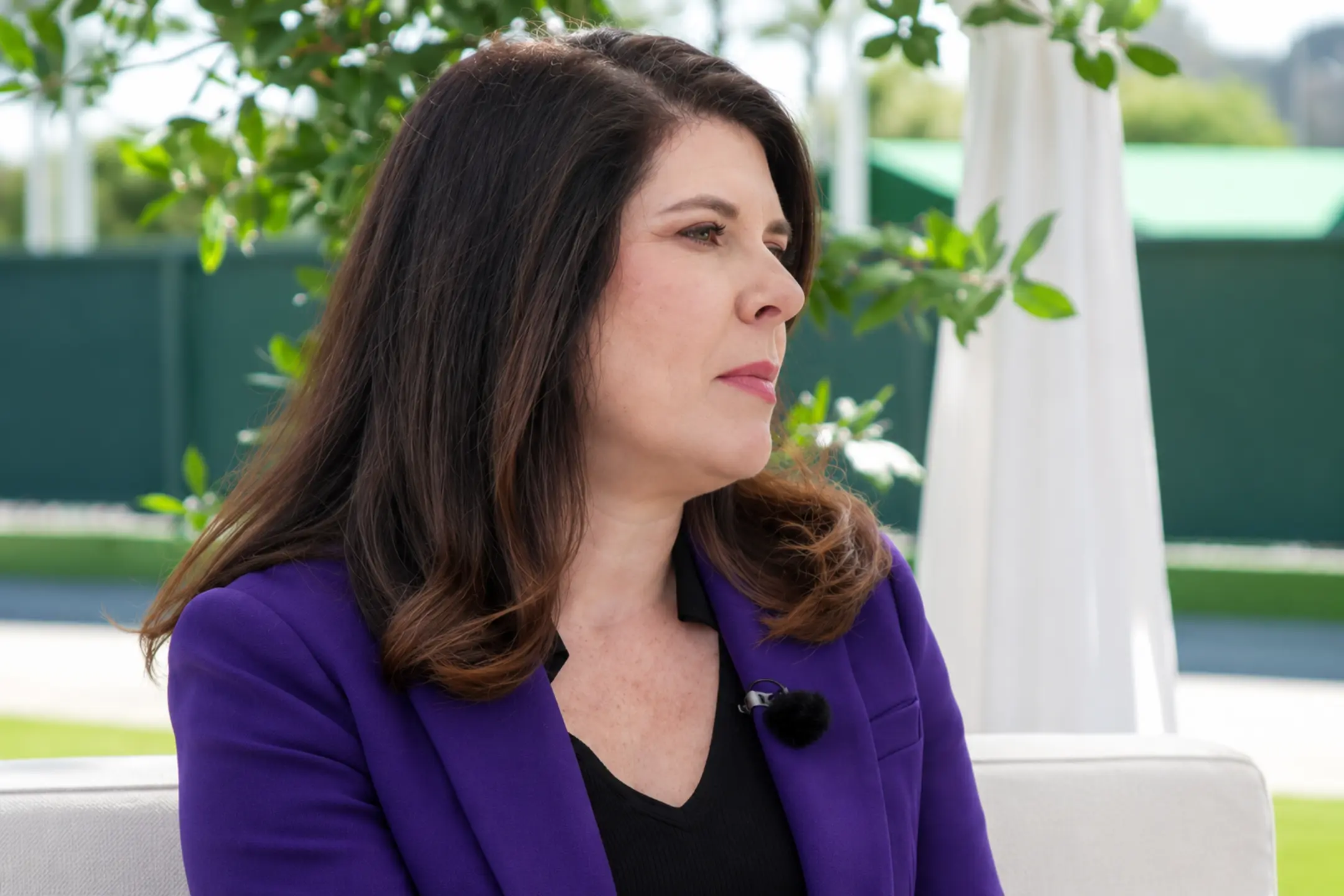
The WTA will be financially stable again in 2027. That is the message Chair Valerie Camillo wants players, fans and commercial partners to hear. But when Sky Sports pressed her on whether women’s tennis would actually become profitable next year, her answer revealed an important distinction.
Speaking to Sky during the WTA Finals in Indian Wells, Camillo outlined an ambitious recovery plan based on commercial partnerships, tighter spending controls and greater ownership of the association’s most valuable assets.
She was confident, occasionally defiant and keen to reassure those worried about the WTA’s finances.
But confidence and profitability are two different things.
A Profit Question Receives a Different Answer
Sky’s interviewer asked Camillo directly whether the WTA expected to make a profit in 2027.
Her response was precise:
“We intend to have cash flow neutral operations, yes.”
Cash-flow neutrality is not the same as profitability. It means an organization expects incoming and outgoing cash to balance over the relevant period. That does not necessarily establish an accounting profit.
When the interviewer suggested her target was ambitious, Camillo responded:
“I’m an ambitious woman.”
She described 2026 as a transitional year, complicated by the unexpected relocation of the WTA Finals from Riyadh to Indian Wells.
The association assumed operational responsibility for the event under a compressed timetable, creating additional financial pressure.
Camillo insisted those circumstances were exceptional rather than a recurring business model.
Why the WTA Finals Have Become Central to the Recovery Plan
The WTA is changing how it earns money from its most important properties.
Rather than relying primarily on outside event operators, the association is taking greater control of the Finals, its media rights and television production.
That involves additional financial risk, but it also allows the WTA to retain more of the revenue generated.
Camillo believes the Finals moving to Charleston will become more profitable than at any previous point in the event’s history.
She also revealed that a three-year plan beginning in 2027 would provide greater stability.
The strategy represents a significant shift: instead of simply selling the rights to its biggest commercial assets, the WTA wants to make more money by operating them itself.
Whether the anticipated profits materialize will depend on revenues exceeding the additional costs and risks.
Mercedes, Accenture and the Search for New Revenue
Commercial partnerships form another major part of Camillo’s strategy.
She highlighted the Mercedes-Benz agreement (50 million a year), describing it as the largest sponsorship deal in women’s sports history.
Accenture has also joined the WTA’s commercial portfolio, while a new title sponsor for the WTA Finals was secured within three weeks of the announcement.
Camillo referred to approximately $50 million annually while discussing the sponsorship agreements, although she did not provide a detailed breakdown of individual contract values.
Jonathan Overend also confronted her with the financial figures for 2024: approximately $142 million in WTA revenue against $221 million in total prize money alone.
Those figures illustrate the scale of the women’s professional game, although they are not directly comparable measures of WTA income and expenditure. Tournament organizers also fund prize money.
Camillo’s broader argument was that growing sponsorship revenue, stronger media income and disciplined spending would restore financial stability.
Players and Tennis Legends Are Asking Questions
Perhaps the most revealing moment came when Camillo acknowledged that prominent figures within tennis had approached her privately about the organization’s financial position.
She said former champions had asked whether the WTA was on firm footing and whether they should be worried.
Her answer was unequivocal.
“No.”
Camillo rejected suggestions that the organization was running dangerously low on money, arguing that publicly reported figures reflected an unusually difficult period.
She maintained that the WTA could continue investing in its commercial development while exercising greater control over expenditure.
That balance will be crucial.
Cutting costs might improve short-term finances, but sustainable growth requires the association to keep developing the sport and delivering value to players, tournaments and partners.
The WTA’s Financial Promises Will Be Tested in 2027
Camillo deserves credit for facing difficult financial questions directly and outlining where she expects the additional revenue to come from.
Taking control of the Finals and expanding commercial partnerships could represent important steps toward a stronger organization.
But the distinction at the heart of the Sky interview remains.
The WTA Chair has expressed confidence in financial recovery. She has specifically committed to cash-flow-neutral operations, not an accounting profit.
There is nothing inherently disappointing about that target. For an organization emerging from an expensive transitional year, restoring sustainable cash flow would be meaningful progress.
The important question is whether the WTA can deliver it.
In 2026, Valerie Camillo is asking the tennis world to trust her financial plan. In 2027, the numbers will have to justify that trust.