
Alexandra Eala vs. Diana Shnaider — Pan Pacific Open 2026 Quarterfinal Match Report
Alexandra Eala and Diana Shnaider played 232 points in their Tokyo quarterfinal. They won exactly 116 each. But when the contest ended, only one player had a place in the semifinals.
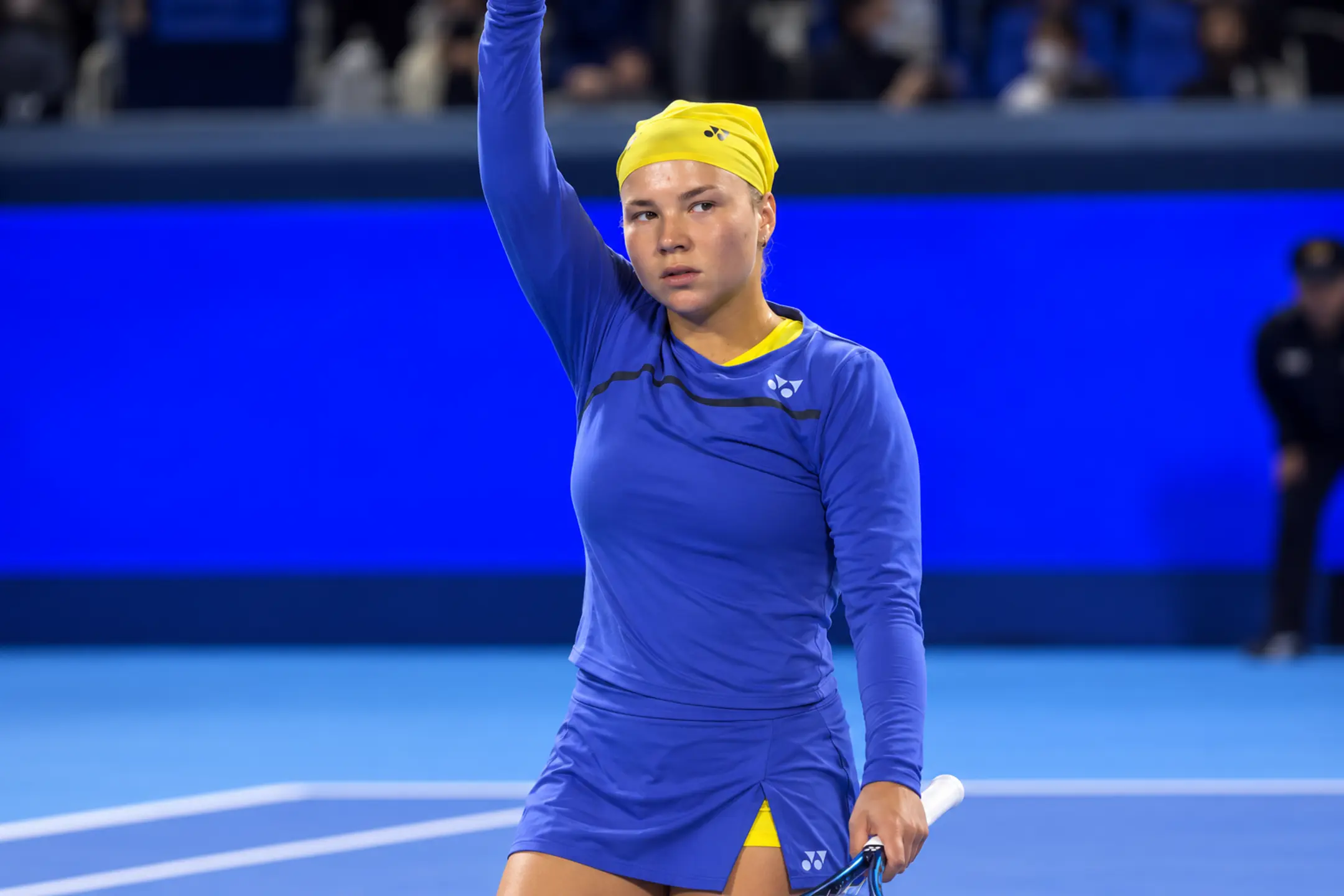
Diana Shnaider defeated Alexandra Eala 2-6, 7-6(5), 6-4 on Friday, October 30, extending her impressive Asian swing with another hard-fought victory.
There was also a familiar element to Friday’s quarterfinal.
Shnaider had defeated Eala 7-5, 6-4 in Ningbo just nine days earlier.
The Filipino came considerably closer to reversing that result in Tokyo.
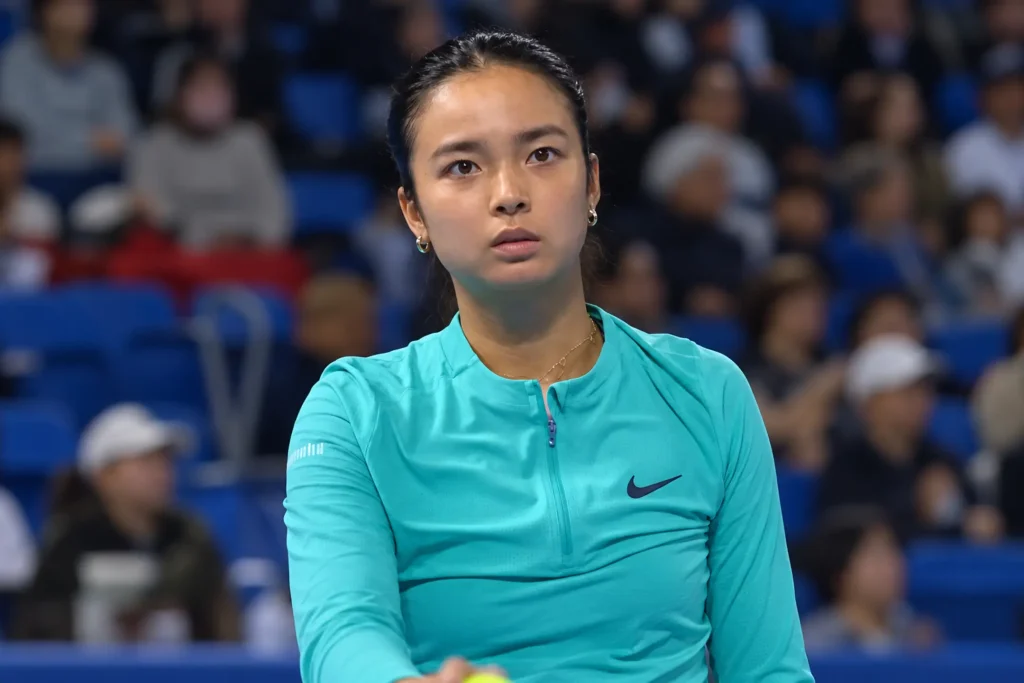
Yet, for the Filipino world No. 19, it was a frustrating conclusion to a match she had every chance of winning. She dominated the opening set, pushed the second into a tiebreak and remained within touching distance throughout the decider.
But one lost service game early in the third set proved decisive.
Shnaider, ranked No. 13, needed only that opening. Once she had it, the Russian kept the door firmly shut.
Mind you, this was a fascinating battle from start to finish.
Eala Takes the Opening Set With Authority
Eala started the quarterfinal looking every bit the player who had demolished Talia Gibson 6-2, 6-0 after dropping the opening set in the previous round.
The first two games went with serve before the Filipino made her move.
At 1-1, Eala broke Shnaider to establish a 2-1 lead, then consolidated for 3-1.
The Russian was struggling to make much progress on return, while Eala continued to find opportunities against her delivery.
Another break followed for 4-1.
Shnaider held her next service game to reduce the deficit to 5-2, but the Filipino comfortably closed out the opener 6-2.
It was an encouraging start for Eala, particularly against an opponent who had enjoyed considerable success in recent weeks.
Shnaider, however, had already demonstrated throughout the Asian swing that she was capable of recovering from difficult positions.
And Tokyo would provide another example.
Shnaider Holds Her Nerve in a Tense Second Set
The second set was a very different contest.
Neither player managed to break serve, although the scoreline hardly reflects the pressure both faced.
Shnaider was forced to defend several break opportunities, while Eala continued to compete confidently behind her own delivery.
At 4-4, the players were still inseparable.
Eala held for 5-4, leaving the Russian serving to stay in the match.
Shnaider responded.
Another exchange of holds brought the score to 6-6 and sent the set into a tiebreak.
This was where the Russian finally found the advantage she had been searching for.
Shnaider established an early minibreak, but Eala responded to keep herself in contention.
Neither player could escape completely.
At 5-5 in the tiebreak, there was still nothing to separate them.
Both players were producing some of their best tennis when the match suddenly took a dramatic turn. Alexandra Eala committed a double fault. Diana Shnaider followed with an ace.
Just like that, Shnaider had leveled the match after a fascinating second set in which neither player had surrendered a single service game.
Eala had been just two points away from reaching the semifinals.
Instead, she now faced a deciding set against an opponent whose confidence was growing with every rally.
One Break Is All Shnaider Needs
Eala opened the third set with a hold, but Shnaider answered to level at 1-1.
Then came the game that would ultimately settle the match.
Serving at 1-1, Eala came under sustained pressure.
The Filipina saw a 40-0 lead slip away and found herself battling through a lengthy service game, saving break points and repeatedly fighting her way back to deuce.
But Shnaider refused to let up, attacking at every opportunity.
Eventually, the Russian broke through to take a 2-1 lead.
It was the first break she had secured since the match began.
And it would be her only break of the afternoon.
Shnaider consolidated for 3-1, before Eala held to reduce the deficit to 3-2.
The Filipina was still playing well enough to trouble her opponent, but the Russian’s service games had become increasingly difficult to penetrate.
Shnaider held for 4-2.
Eala answered for 4-3.
Another hold brought Shnaider within one game of victory at 5-3.
Eala refused to go quietly, holding for 5-4 and forcing Shnaider to serve out the match.
The Filipina wasn’t finished. A brilliant return put her ahead 0-15, but Shnaider answered with a superb inside-out forehand. Eala then forced an error with an aggressive approach to the net, moving ahead 15-30.
Another fierce return missed by barely half an inch, bringing the score to 30-30. But Eala kept attacking, earning a break point with yet another ferocious return.
Shnaider saved it, and when Eala’s next shot caught the net cord and flew wide, the Russian suddenly had match point.
One more ace down the T settled it. Just as she had done in the second-set tiebreak, Shnaider found her best serve when she needed it most, closing out a fascinating contest 6-4 in the deciding set.
After three closely contested sets, Eala’s lost service game at 1-1 had made the difference.
A Statistical Dead Heat With One Clear Winner
Few statistics illustrate the closeness of this exciting match better than the total points won.
Eala: 116. Shnaider: 116.
Both players finished with exactly 50% of the 232 points contested.
Their service performances were remarkably similar.
Eala won 68% of her first-serve points and 53% behind her second delivery.
Shnaider recorded precisely the same percentages.
The Filipino actually protected her service games slightly more effectively, holding 14 of 15 compared with Shnaider’s 13 of 15.
But the Russian was more reliable in another important department.
Shnaider struck five aces against just one double fault.
Eala managed two aces but committed seven double faults, a difference that added pressure to several already difficult service games.
Both players also faced numerous break opportunities.
Eala converted two of 10 and saved eight of the nine she faced.
Shnaider converted just one of nine but saved eight of Eala’s 10 opportunities.
That single successful break, achieved in the third game of the decider, was enough to determine the winner.
Even the pressure points were almost perfectly balanced, with Shnaider winning 22 of 43 and Eala claiming 21.
The dominance ratios told much the same story: 1.01 for Shnaider and 0.99 for Eala.
There was barely anything between them.
Except the result.
Full Match Stats Eala vs Shnaider
| Eala | Statistic | Shnaider |
|---|---|---|
| Full Match Duration: 2h53m | ||
| 0.99 | Dominance Ratio | 1.01 |
| 0 | Winners | 5 |
| 35 | Unforced Errors | 27 |
| 271 | Serve Rating | 279 |
| 2 | Aces | 5 |
| 7 | Double Faults | 1 |
| 62% (72/117) | 1st Serve % | 67% (77/115) |
| 68% (49/72) | 1st Serve Points Won | 68% (52/77) |
| 53% (24/45) | 2nd Serve Points Won | 53% (20/38) |
| 89% (8/9) | Break Points Saved | 80% (8/10) |
| 112 | Return Rating | 97 |
| 32% (25/77) | 1st Return Points Won | 32% (23/72) |
| 47% (18/38) | 2nd Return Points Won | 47% (21/45) |
| 2/10 | Break Points Won | 1/9 |
| 116 | Total Points Won | 116 |
 Created by rallyher.com
Shnaider’s Asian Swing Continues to Gather Momentum
Shnaider’s victory provides further evidence of the progress she has made during the Asian swing.
Her campaign began modestly, with an early defeat against Ekaterina Alexandrova in Beijing.
But Wuhan brought improvement.
The 22-year-old defeated Katie Boulter, Yulia Putintseva and Karolina Muchova before losing to Jelena Ostapenko in the quarterfinals.
She then went one round further in Ningbo, defeating Putintseva again before overcoming Iva Jovic in three sets.
Her run ended in the semifinals against Elena Rybakina, who prevailed 6-3, 7-5.
As RallyHer reported after their Ningbo semifinal, Shnaider had shown encouraging progress against the world’s top-ranked player, despite suffering another defeat.
Tokyo has now given her another opportunity to reach a final.
She won the opening set convincingly and remained competitive until the final game.
But Shnaider found a way through again.
Mia Pohankova Awaits in the Semifinals
Shnaider’s next opponent will be 18-year-old Slovak wildcard Mia Pohankova, whose own remarkable Tokyo campaign continues.
After eliminating four-time Grand Slam champion Naomi Osaka in the round of 16, Pohankova defeated American qualifier Alycia Parks 7-6(3), 6-3 to reach the semifinals.
That sets up an intriguing contest between one of the tour’s increasingly established young players and a teenager experiencing the biggest week of her professional career.
Shnaider will enter with the advantage of recent experience at the latter stages of WTA tournaments.
Pohankova, however, has already demonstrated that rankings and reputations do not particularly trouble her.
For Eala, the disappointment will take some time to digest.
She had the upper hand for much of the opening set and came close to taking the second. Even after falling behind in the decider, she continued to compete.
But Shnaider’s recent progress is built on exactly this sort of result.
She does not always need to dominate an opponent to defeat her.
Eala matched Shnaider point for point in Tokyo. Unfortunately, she couldn’t match her when it came to the only service break of the deciding set.
And that is why Shnaider has another semifinal to play.