
Beijing, Qinwen Zheng vs. Mirra Andreeva — China Open 2026 Final Match Report
Mirra Andreeva looked almost unable to believe what had happened.
For most of the China Open final, the teenager had stayed right alongside Qinwen Zheng. Her serve was there. The shot-making was there. Both wings held up. She repeatedly climbed back onto level terms and gave the home favorite very little separation.
Yet twice, Mirra Andreeva walked into essentially the same trap.
She accepted Zheng’s invitation to keep hitting harder.
Zheng was happy to oblige.
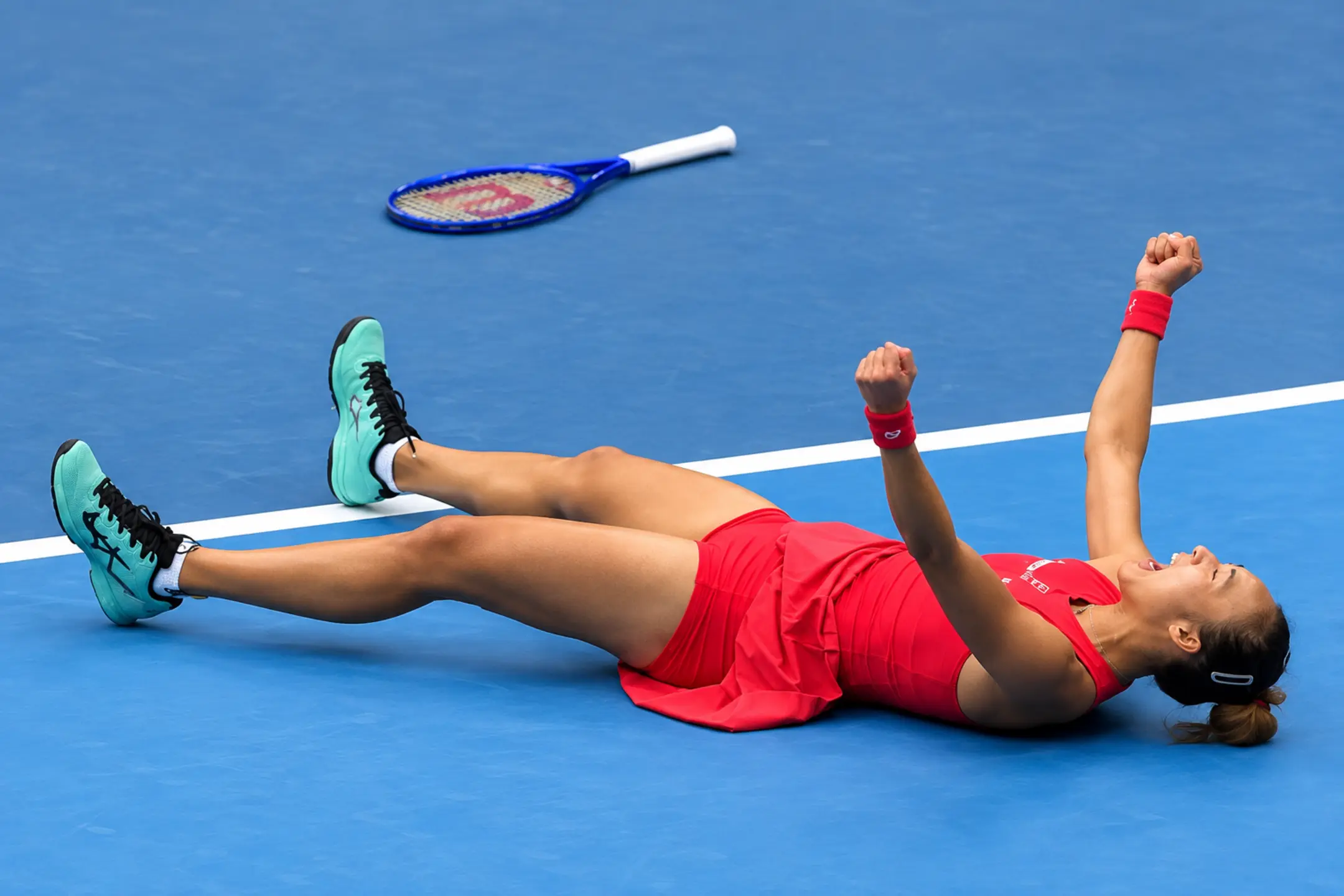
The Chinese star defeated Andreeva 7-5, 6-4 to win the 2026 China Open, becoming champion on home soil with a performance built on relentless depth, tremendous self-belief and the conviction that if this final became a test of who could keep hitting through the other, she would eventually win it.
Andreeva came remarkably close to proving otherwise.
Mirra Andreeva Strikes First but Zheng Refuses to Change Course
Andreeva made the stronger start.
She held the opening game and then broke Zheng for 2-0, immediately putting the Chinese favorite under pressure.
Zheng answered just as quickly.
She broke back for 1-2 and held for 2-2, resetting a final that had threatened to get away from her before it had properly started.
From there, neither woman gave much ground.
Andreeva moved ahead 3-2. Zheng answered.
The Russian went to 4-3. Zheng answered again.
Andreeva held for 5-4, leaving Zheng serving to stay in the set.
That game became a test in itself. Zheng survived set points and eventually dragged the score to 5-5.
It was not merely survival. It changed the feel of the set.
The First Trap Closes at 5-5
Andreeva had spent almost the entire set matching Zheng’s pace.
That was both impressive and dangerous.
There was nothing obviously wrong with her tennis. Quite the opposite. She was striking cleanly, serving well and showing why she had reached the world’s top three during this tournament.
What she rarely did was take speed away when she could have.
Zheng kept receiving balls at a rhythm she liked. Once the rallies settled into those gears, China’s Olympic champion could plant herself and drive through both wings with enormous conviction.
At 5-5, that dynamic finally caught Andreeva.
Zheng attacked the Russian’s serve and broke for 6-5.
This time there was no immediate response.
The Chinese star served out the set 7-5, completing a comeback from 0-2 and winning a first set in which Andreeva had spent long stretches looking every bit her equal.
Zheng had simply been braver when the set finally demanded someone take it.
Set 1 at a Glance
- Zheng won the big points. She converted both of her break points and saved four of the five she faced. On pressure points she was ahead 7–3, and that decided the set.
- Zheng’s second serve held up. She put only 39% of first serves in, but still won 69% of those.
- Andreeva won just 50% behind her own second serve.
- Andreeva was cleaner but got less from it. She had four aces to Zheng’s one and fewer unforced errors (7 to 11), yet Zheng won 37 of the 66 points (56%) across the 51 minutes.
Full Set 1 Stats
| Zheng | Statistic | Andreeva |
|---|---|---|
| Set 1 Duration: 0h51m | ||
| 1.40 | Dominance Ratio | 0.71 |
| 10 | Winners | 8 |
| 11 | Unforced Errors | 7 |
| 262 | Serve Rating | 252 |
| 1 | Aces | 4 |
| 0 | Double Faults | 0 |
| 39% (13/33) | 1st Serve % | 70% (23/33) |
| 69% (9/13) | 1st Serve Points Won | 61% (14/23) |
| 70% (14/20) | 2nd Serve Points Won | 50% (5/10) |
| 80% (4/5) | Break Points Saved | 0% (0/2) |
| 222 | Return Rating | 98 |
| 39% (9/23) | 1st Return Points Won | 31% (4/13) |
| 50% (5/10) | 2nd Return Points Won | 30% (6/20) |
| 2/2 | Break Points Won | 1/5 |
| 37 | Total Points Won | 29 |
The Same Pattern Returns in the Second Set
Zheng carried that momentum straight into the second.
Andreeva served first in the second set, but Zheng broke her immediately for 1-0.
Andreeva responded at once, breaking Zheng back for 1-1.
The Russian then held serve to move ahead 2-1, before Zheng answered with a hold of her own for 2-2.
Andreeva moved ahead 3-2. Zheng answered again.
The same happened at 4-3 and 4-4.
It was high-level tennis from both.
Andreeva had not disappeared. She had not lost control of her groundstrokes. There was no collapse to explain.
She simply continued accepting the same contest.
Hit hard. Receive hard. Hit harder.
Against Zheng, on this afternoon, that became increasingly dangerous.
Zheng Finds Another Gear at 4-4
At 4-4, in a long, gruelling game, the trap closed for a second time.
Zheng’s stamina was now as important as her power.
She had spent the afternoon taking Andreeva’s best shots and sending them back deep, often with additional weight. Balls that might have opened the court against most opponents simply returned into uncomfortable territory.
Andreeva kept trying to punch through.
Zheng kept refusing to move.
The Chinese star finally broke for 5-4, earning the chance to serve for the biggest title of her run through Beijing.
There would be no final twist.
Zheng held for 6-4.
China had its champion.
Set 2 at a Glance
- Zheng kept attacking Andreeva’s serve. She created six break points and converted two, against the single chance she gave up. Andreeva had to play 42 points on serve, while Zheng needed only 25.
- Zheng’s serve was efficient on few first serves. She again put just over a third of first serves in (36%), but won 78% of the points when she did. She held in four of her five service games.
- Zheng went for her shots. She hit 16 winners to Andreeva’s 10, with one fewer unforced error (7 to 8). She also won 58% of points against Andreeva’s second serve. Andreeva led on pressure points (8–6) and converted her only break point, but she won fewer points overall (32 to 35).
Full Set 2 Stats
| Zheng | Statistic | Andreeva |
|---|---|---|
| Set 2 Duration: 0h52m | ||
| 1.26 | Dominance Ratio | 0.80 |
| 16 | Winners | 10 |
| 7 | Unforced Errors | 8 |
| 251 | Serve Rating | 236 |
| 3 | Aces | 3 |
| 2 | Double Faults | 0 |
| 36% (9/25) | 1st Serve % | 71% (30/42) |
| 78% (7/9) | 1st Serve Points Won | 60% (18/30) |
| 56% (9/16) | 2nd Serve Points Won | 42% (5/12) |
| 0% (0/1) | Break Points Saved | 67% (4/6) |
| 171 | Return Rating | 186 |
| 40% (12/30) | 1st Return Points Won | 22% (2/9) |
| 58% (7/12) | 2nd Return Points Won | 44% (7/16) |
| 2/6 | Break Points Won | 1/1 |
| 35 | Total Points Won | 32 |
Mirra Andreeva Could Hit With Zheng but Not Through Her
The statistics show why the match felt considerably tighter than a straight-sets final normally would.
Zheng finished with 26 winners to Andreeva’s 18, while the unforced-error difference was small, 18 to 15.
Andreeva even struck more aces, seven to four, and landed 71 percent of her first serves compared with only 38 percent for Zheng.
But once Zheng did land that first serve, she won 73 percent of those points.
The more revealing difference came when rallies developed.
Zheng won 55 percent of points against Andreeva’s second serve and converted four of eight break points. Andreeva managed two breaks from six opportunities.
Overall, Zheng won 72 of 133 points, 54 percent, and finished with a 1.34 dominance ratio against Andreeva’s 0.74.
Not overwhelming.
Decisive.
And most importantly, the biggest separation appeared exactly where Zheng wanted it: late in both sets.
Full Match Stats Zheng vs Andreeva
| Zheng | Statistic | Andreeva |
|---|---|---|
| Full Match Duration: 1h43m | ||
| 1.34 | Dominance Ratio | 0.74 |
| 26 | Winners | 18 |
| 18 | Unforced Errors | 15 |
| 259 | Serve Rating | 247 |
| 4 | Aces | 7 |
| 2 | Double Faults | 0 |
| 38% (22/58) | 1st Serve % | 71% (53/75) |
| 73% (16/22) | 1st Serve Points Won | 60% (32/53) |
| 64% (23/36) | 2nd Serve Points Won | 45% (10/22) |
| 67% (4/6) | Break Points Saved | 50% (4/8) |
| 181 | Return Rating | 114 |
| 40% (21/53) | 1st Return Points Won | 27% (6/22) |
| 55% (12/22) | 2nd Return Points Won | 36% (13/36) |
| 4/8 | Break Points Won | 2/6 |
| 72 | Total Points Won | 61 |
Two Different Sets, the Same Answer
The first required incredible bravery from Zheng.
Zheng had fallen 0-2 behind, had to survive difficult service games and then needed to attack when Andreeva still appeared completely settled.
The second demanded something different.
Stamina.
By then the rallies had accumulated, the pace had barely dropped and Andreeva was still standing across the net producing top-level tennis.
Zheng simply kept going.
That may be what left Andreeva looking so dejected afterward.
She had not played badly.
She had stayed with Zheng for almost the entire final.
But she had repeatedly tried to beat the Chinese star at the very thing Zheng was doing best.
More variation in speed might have changed the questions being asked.
Instead, Zheng kept receiving the question she wanted.
Can you keep hitting this hard?
Her answer all afternoon was yes.
Zheng Is Back, and Beijing Belongs to Her
Two years after winning Tokyo, Qinwen Zheng has another major title in Asia, this time in front of her own crowd.
Her Beijing run had already made history when she became the first Chinese woman to reach the China Open final.
Now she has won it.
Even the aftermath captured the mood, with Zheng singing as the celebrations unfolded alongside Andreeva after a final that had demanded far more from both women than the straight-sets score suggests.
Andreeva will have other days like this. At her age, with the level she already owns, WTA 1000 and Grand Slam titles will continue to sit within reach.
Zheng will be around for those battles too.
That may have been the best part of this final.
Two champions, both still young enough to shape the next decade of women’s tennis, played one of the year’s most compelling two-set finals.
Zheng won the China Open title.
Again, women’s tennis won something too.