
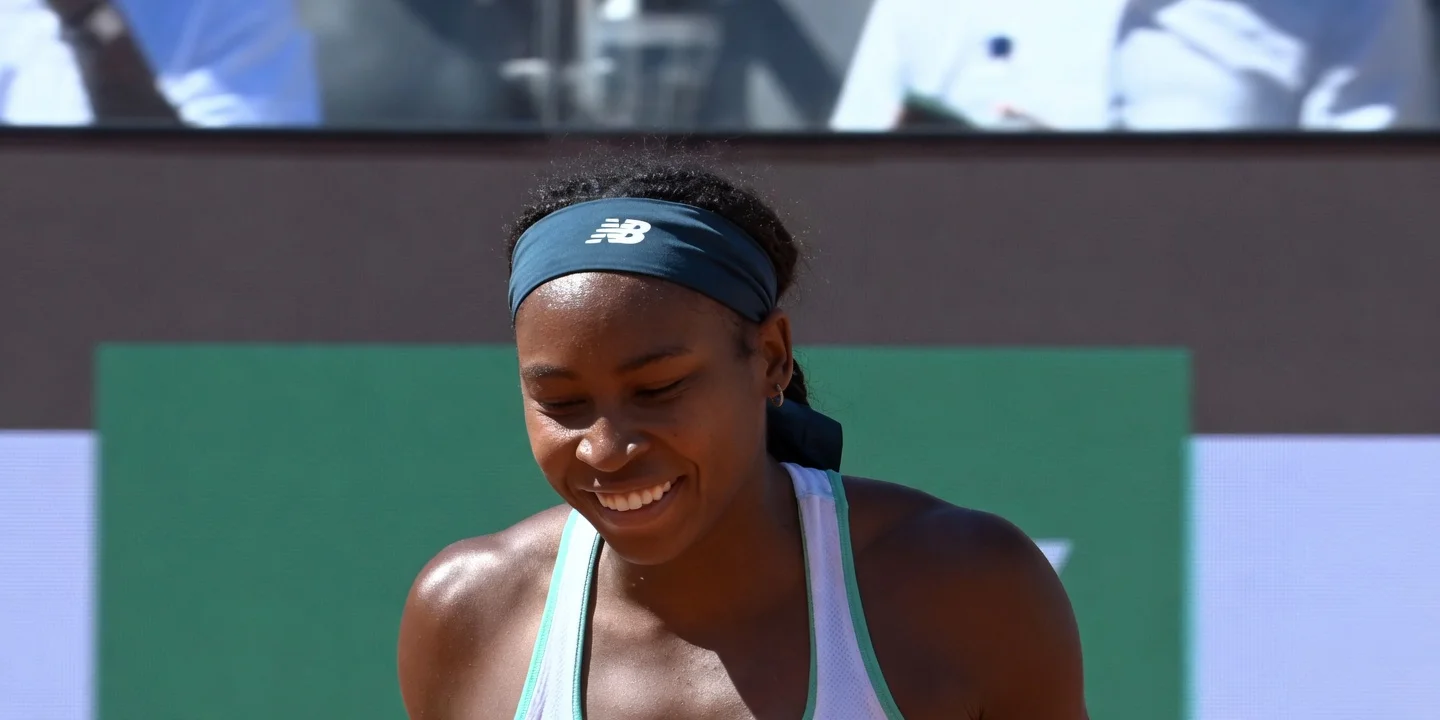
Coco Gauff must have a guardian angel on her shoulder when it comes to Grand Slam draws.
That is the first reaction to this Wimbledon quarter. The No. 7 seed sits in the lower half of the section, and while no Grand Slam path is ever empty, her early route looks far kinder than the one Jessica Pegula has been handed at the top.
Pegula, the No. 4 seed, opens against Darja Vidmanova, but her section quickly gathers danger. Dayana Yastremska, Anastasia Potapova, Ekaterina Alexandrova, Tatjana Maria and Iva Jovic are all nearby. That is a lot of awkward grass tennis before the quarter-final line even comes into view.
Gauff, by contrast, opens against Tamara Korpatsch. Around her are Solana Sierra, Anna Bondar, Claire Liu, Hanne Vandewinkel, Ann Li and Zeynep Sonmez. There are players there who can make matches uncomfortable, but none should frighten Gauff if she is serving with enough control and keeping her forehand from leaking errors.
If the seedings hold, Pegula and Gauff would meet in the quarter-finals. But from the first look at the draw, Pegula has the heavier lifting to do.
Pegula Opens With a Manageable Match, but the Section Gets Busy Fast
Jessica Pegula starts against Darja Vidmanova, a match she will be expected to control with her timing, return game and clean baseline direction.
The next step could be Sara Sorribes Tormo or Victoria Jimenez Kasintseva. That is not a brutal second round, but it could be physically annoying. Sorribes Tormo can turn matches into long, uncomfortable exchanges, and on grass that contrast of pace can sometimes disturb rhythm.
The more dangerous names sit just below.
Dayana Yastremska opens against Aoi Ito, while Jessica Bouzas Maneiro faces Anastasia Potapova, the No. 27 seed. Yastremska can be streaky, but her power makes her dangerous on grass if she starts landing first strikes. Potapova is another player who can take time away and punish a short ball.
That block gives Pegula a possible third-round match with genuine edge.
She should still like her chances, but this is not a silent section.
Alexandrova, Maria and Jovic Make the Bottom of Pegula’s Half Tricky
The lower part of Pegula’s half is even more interesting.
Ekaterina Alexandrova, seeded No. 18, opens against Panna Udvardy. She has the flat hitting and first-strike game to be dangerous on grass, and she is not the kind of player anyone wants to face if she gets a clean rhythm early.
Below that, Lanlana Tararudee faces Lilli Tagger, while Yulia Putintseva meets Tatjana Maria. That last match is one to circle. Maria has been one of the smartest grass-court stories of the summer, using slice, height changes and old-school craft to make bigger hitters deeply uncomfortable.
Then comes Jaqueline Cristian against Iva Jovic, the No. 16 seed.
Jovic is one of the most interesting young players in the draw, and her seeding tells its own story. She has the kind of aggressive base game that can travel quickly on grass if she handles the movement and the low bounce.
For Pegula, this is the danger: even if she avoids one problem, another may appear. Alexandrova can hit through the court. Maria can slow the match into awkward corners. Jovic can bring youth, pace and fearlessness.
Pegula has the experience and the form to manage it, but her quarter is not soft.
Gauff’s Path Looks Much Cleaner
Gauff opens against Tamara Korpatsch, and that is the sort of first-round draw a top-eight seed should welcome.
Korpatsch is experienced, but she does not have the obvious grass-court weaponry to rush Gauff unless the American’s serve and forehand become unstable. Gauff’s movement, defense and athletic coverage should give her a strong base from the first ball.
The second round would bring Solana Sierra or Anna Bondar. Again, manageable.
The third-round area is led by Ann Li, the No. 28 seed, who opens against Zeynep Sonmez. Claire Liu, a qualifier, faces Hanne Vandewinkel in the same block. There is American depth there, and Li or Liu could make an all-American match interesting, but Gauff should still be the clear favourite if she plays close to her normal level.
That is why the “guardian angel” line fits.
Other players have had more difficult Grand Slam sections than this. Much more difficult. Ask Swiatek or Rybakina.
Bencic and Kalinskaya Are the Real Names to Watch Near Gauff
The bigger danger in Gauff’s half may come from the upper part of her side of the quarter.
Belinda Bencic, seeded No. 11, opens against British wildcard Mika Stojsavljevic. Bencic’s ball-striking, timing and ability to take the ball early can be very effective on grass, and she has the experience to move through this section if sharp.
Wang Xinyu meets Elisabetta Cocciaretto nearby, while Francesca Jones faces Diane Parry. Magdalena Frech faces Anna Kalinskaya, the No. 19 seed, in another solid first-round match.
Still, compared with Pegula’s side, Gauff’s route looks cleaner.
Bencic is a serious name, Kalinskaya is dangerous, and Parry can be awkward. But this does not feel like a quarter loaded with landmines around Gauff. It feels like a section she should control.
The Projected Quarter-Final Is Pegula Against Gauff
If the seedings hold, the quarter-final would be Jessica Pegula against Coco Gauff.
That would be a major all-American Wimbledon match and a fascinating contrast. Pegula brings clean timing, calm patterns and a return game that can rush opponents before they settle. Gauff brings athleticism, defense, improved aggression and the ability to turn points around from difficult positions.
On grass, Pegula may like the quicker exchanges. Gauff may like the movement advantage if rallies stretch. The serve could decide plenty, especially for Gauff, because her draw only stays comfortable if she avoids giving opponents too many looks at second serves.
But the routes to that match are not equal.
Pegula’s path has sharper early edges. Gauff’s has more space.
That does not guarantee anything. Wimbledon has a way of turning simple-looking draws into trouble. But from the first read, Gauff has been handed one of the kinder top-eight sections, while Pegula will probably have to solve more problems before any American quarter-final can happen.