
Good wine does not shout.
It settles. Deepens. Becomes calmer, richer and somehow more dangerous with time.
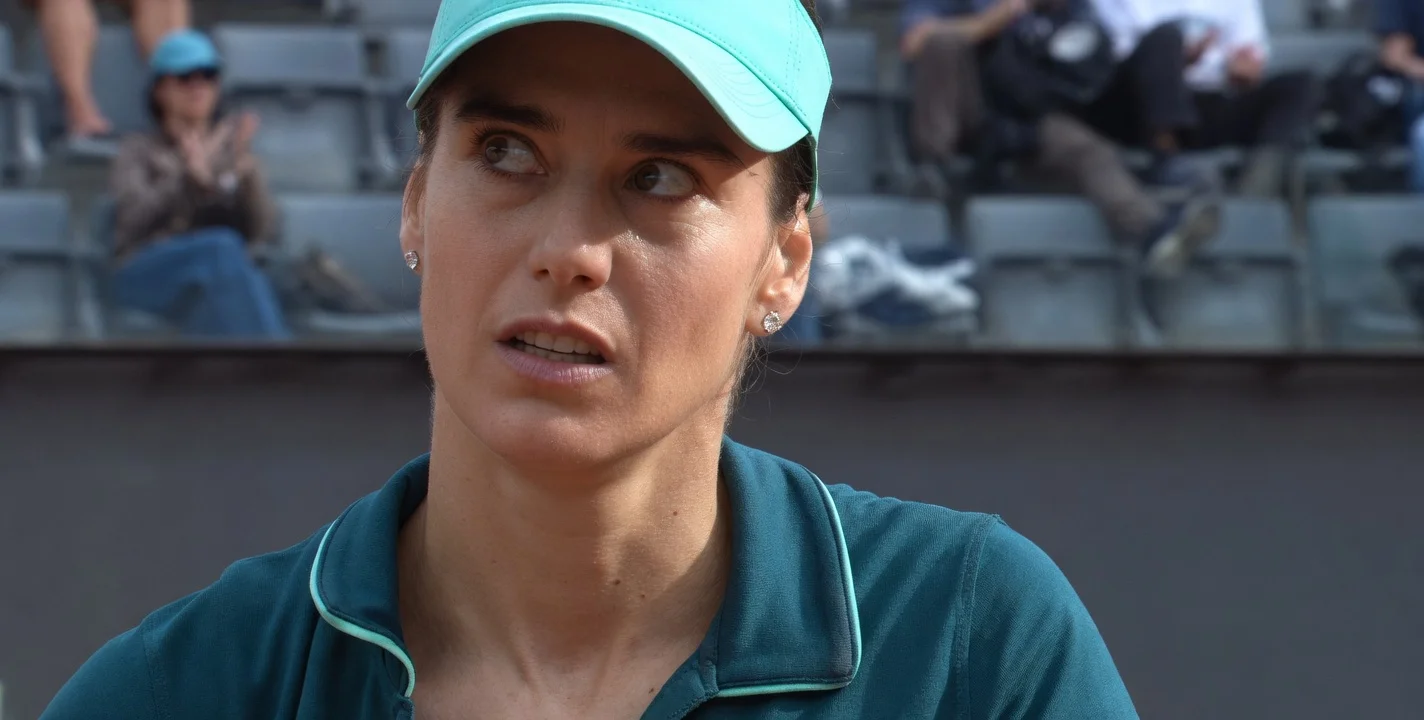
Sorana Cirstea’s tennis currently feels much the same.
At 36, in the final season of her career and playing a tournament she has always openly adored, the Romanian is producing some of the cleanest and most emotionally balanced tennis of her life. Rome has looked like a late masterpiece.
And on Tuesday afternoon, Jelena Ostapenko became the latest player swept aside by it.
Cirstea defeated the Latvian 6-1, 7-6(0) to reach the Rome semi-finals for the first time in her career, extending a remarkable fortnight that has already included victories over world No. 1 Aryna Sabalenka and Czechia’s Linda Noskova.
The scoreline alone barely captured how composed she looked.
The tiebreak did.
Seven points. Seven won. No hesitation anywhere.
Cirstea slowly took control — then refused to let go
The opening minutes initially suggested something messier might unfold.
Ostapenko created the first break opportunity of the match and briefly looked sharper through the middle of the court, but the momentum turned violently once Cirstea settled behind her serve.
From 1-1 onwards, the Romanian completely absorbed the Latvian’s aggression and redirected it back with startling precision. She held to love twice in quick succession, repeatedly forcing Ostapenko into rushed shot selection while controlling the rhythm of rallies far more intelligently.
Then came the avalanche.
Cirstea won 12 of the next 13 points during one devastating stretch, breaking twice and racing through the opening set 6-1 with barely a flicker of emotional noise. Ostapenko, meanwhile, had already started leaking frustration alongside errors.
A lot of errors.
Sorana Cirstea vs Jelena Ostapenko – Set One Stats
| Statistic | Sorana Cirstea | Jelena Ostapenko |
|---|---|---|
| Dominance Ratio | 2.00 | 0.50 |
| Winners | 6 | 8 |
| Unforced Errors | 4 | 14 |
| Serve Rating | 334 | 177 |
| Aces | 1 | 0 |
| Double Faults | 0 | 1 |
| 1st Serve % | 75% (18/24) | 38% (6/16) |
| 1st Serve Points Won | 72% (13/18) | 67% (4/6) |
| 2nd Serve Points Won | 86% (6/7) | 40% (4/10) |
| Break Points Saved | 100% (1/1) | 60% (3/5) |
| Service Games | 100% (4/4) | 33% (1/3) |
| Ace % | 4.2% | 0% |
| Double Fault % | 0% | 6.3% |
| Return Rating | 200 | 42 |
| 1st Return Points Won | 33% (2/6) | 28% (5/18) |
| 2nd Return Points Won | 60% (6/10) | 14% (1/7) |
| Break Points Won | 40% (2/5) | 0% (0/1) |
| Return Games | 67% (2/3) | 0% (0/4) |
| Pressure Points | 50% (4/8) | 50% (4/8) |
| Service Points | 75% (18/24) | 50% (8/16) |
| Return Points | 50% (8/16) | 25% (6/24) |
| Total Points | 65% (26/40) | 35% (14/40) |
| Match Set Duration | 0h26m | |
Ostapenko briefly resisted before the match closed brutally
The second set finally became more complicated.
For several games, both players settled into cleaner service patterns and the chaos briefly disappeared from the contest. Ostapenko eventually carved out a break advantage at 4-2 after surviving pressure on her own serve and finally capitalising on a slight dip from the Romanian.
For a moment, the match threatened to tilt.
But this version of Cirstea no longer panics.
She immediately broke back, stayed calm as Ostapenko later served for the set at 5-4 and again refused to let the Latvian fully seize control. Even when Ostapenko earned a set point, Cirstea absorbed it without drama and dragged the match toward a tiebreak that rapidly became a demolition.
Because once the breaker started, only one player remained mentally present.
Cirstea whitewashed Ostapenko 7-0.
No loose points. No emotional swings. No opening whatsoever.
The match ended exactly how her tournament has increasingly looked: controlled, mature and quietly ruthless.
Sorana Cirstea vs Jelena Ostapenko – Set Two Stats
| Statistic | Sorana Cirstea | Jelena Ostapenko |
|---|---|---|
| Dominance Ratio | 1.42 | 0.70 |
| Winners | 11 | 17 |
| Unforced Errors | 14 | 26 |
| Serve Rating | 254 | 222 |
| Aces | 0 | 1 |
| Double Faults | 1 | 3 |
| 1st Serve % | 59% (22/37) | 59% (26/44) |
| 1st Serve Points Won | 73% (16/22) | 54% (14/26) |
| 2nd Serve Points Won | 56% (9/16) | 44% (7/16) |
| Break Points Saved | 50% (2/4) | 33% (1/3) |
| Service Games | 67% (4/6) | 67% (4/6) |
| Ace % | 0% | 2.3% |
| Double Fault % | 2.7% | 6.8% |
| Return Rating | 202 | 154 |
| 1st Return Points Won | 46% (12/26) | 27% (6/22) |
| 2nd Return Points Won | 56% (9/16) | 44% (7/16) |
| Break Points Won | 67% (2/3) | 50% (2/4) |
| Return Games | 33% (2/6) | 33% (2/6) |
| Pressure Points | 60% (6/10) | 40% (4/10) |
| Service Points | 65% (24/37) | 50% (22/44) |
| Return Points | 50% (22/44) | 35% (13/37) |
| Total Points | 57% (46/81) | 43% (35/81) |
| Set 2 Duration | 1h07m | |
The numbers behind Cirstea’s control
The statistics perfectly reflected the contrast between the two players’ afternoons.
Ostapenko actually struck more winners — 25 to Cirstea’s 17 — but the Latvian’s aggression came attached to overwhelming volatility. She finished with 40 unforced errors, more than double Cirstea’s total of 18.
That gap shaped the match.
The Romanian was also vastly superior behind serve, winning 71 percent of first-serve points and an exceptional 65 percent behind her second delivery. Ostapenko won just 42 percent of second-serve points while also committing four double faults.
Most strikingly, Cirstea won 60 percent of all points played in the match and dominated service games throughout, holding in 80 percent of her service games compared to Ostapenko’s 56 percent.
This was a controlled dismantling of one of the most dangerous shot-makers left in the draw.
Rome keeps giving Cirstea one more chapter
The victory sends Cirstea into her fourth career WTA 1000 semi-final and her first at this level in more than a year, after reaching the Dubai semi-finals in 2025.
More importantly, it continues a run that increasingly feels emotionally larger than the tournament itself.
Eight wins from her last ten matches.
Victories over two Grand Slam champions in Rome alone.
And now a semi-final against either Coco Gauff or Mirra Andreeva.
At 36, during the final season of her career, Sorana Cirstea keeps producing tennis that feels less nostalgic than startlingly alive.
Like fine wine, perhaps.
Still getting better at the end.