
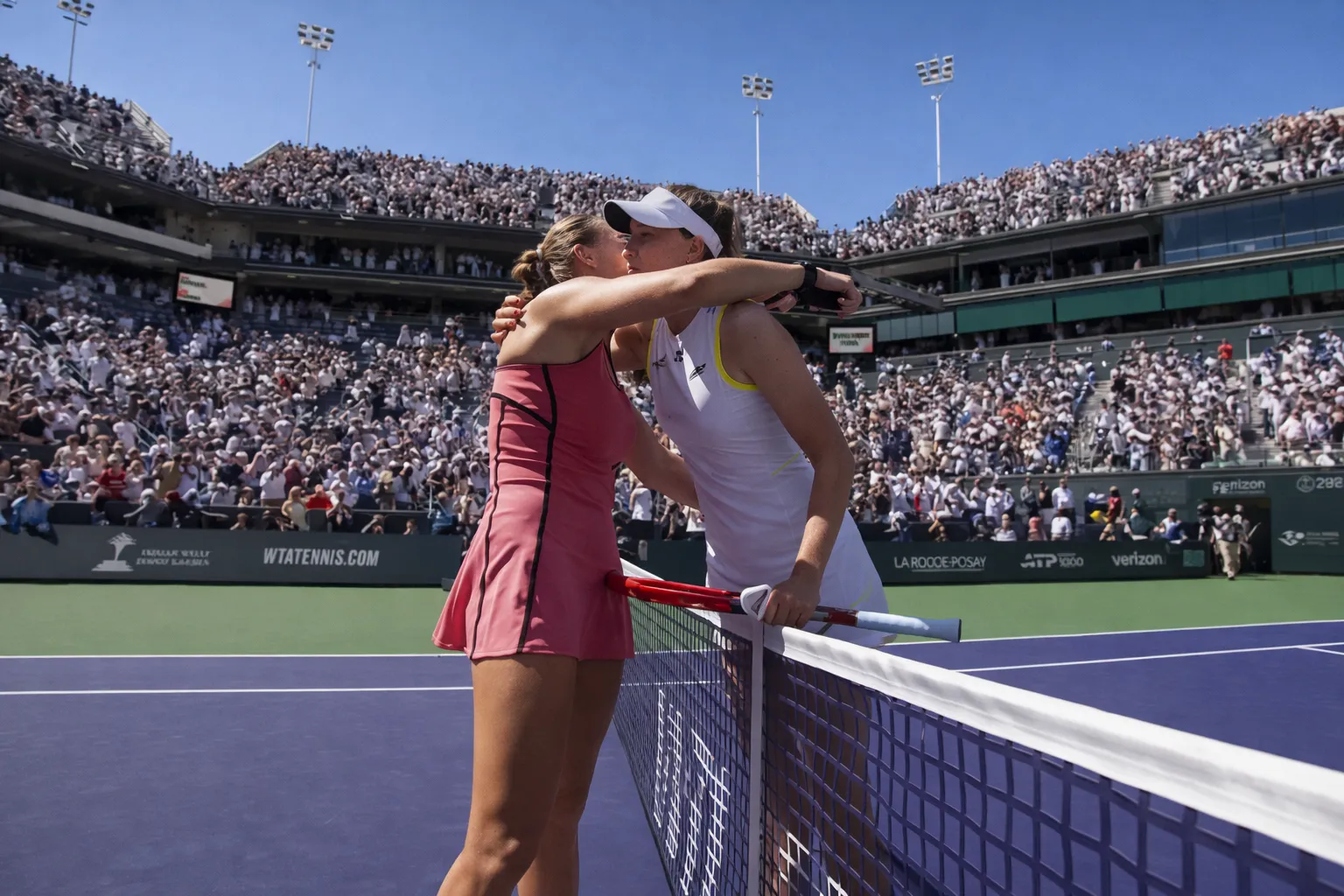

Some matches leave players searching for explanations long after the last ball is struck.
The 2026 Indian Wells final between Aryna Sabalenka and Elena Rybakina was one of those matches.
Hours after Sabalenka saved championship point to win 3-6, 6-3, 7-6(6) and capture her first title at Tennis Paradise, both players were still processing what had just unfolded under the brutal Californian sun. The contest had been relentless — physically draining, tactically complex and emotionally exhausting.
And in the end, it came down to a single point.
“In the important moments the difference is this extra energy, extra push,” Rybakina said afterwards.
“I had the one match point and she returned pretty well, so it’s tough to say.”
For the Kazakh, the loss was particularly painful because of how close she came. She had controlled large stretches of the match and even stood one point away from lifting the trophy before Sabalenka turned the tide in the deciding-set tiebreak.
Yet if the final showed anything, it was how little separates the two players currently shaping the top of the WTA Tour.
“The Kindest One on Tour” — Respect Behind a Fierce Rivalry
Sabalenka and Rybakina have become familiar opponents in the biggest matches of the sport.
Indian Wells was already their 16th meeting, and many of those encounters have taken place in finals. Rybakina had entered the match with a psychological edge as well, having won four consecutive finals against Sabalenka, including the 2025 WTA Finals and this year’s Australian Open.
Despite the competitive intensity, Sabalenka spoke with clear admiration for her rival.
“She’s a nice one. I would say that she’s the kindest one on tour,” Sabalenka said.
That respect, however, does nothing to soften their battles once the match begins.
“Still I enjoy it because it means that the final is going to be a show, it’s going to be great tennis, great level, and it’s going to be a fight.”
Sunday’s match proved exactly that — almost three hours of high-risk tennis played in punishing desert heat.
The Heat Became the Third Opponent
Indian Wells finals are often decided by endurance as much as tactics, and this year’s edition was no different.
Rybakina admitted the physical conditions began to wear on her as the match progressed. After taking the opening set, she felt her energy begin to fade.
“I think I started the match well. Then my level of energy dropped a lot,” she explained.
The heat in the Californian desert added another layer of difficulty.
“The third set was a fight with the conditions, with the opponent, and with yourself at some point. It wasn’t easy with such heat.”
At one stage, the sun itself seemed to become a factor.
“I think the sun was pretty strong, and I would say that it hit me in the second set quite a lot. I really couldn’t push much.”
Sabalenka felt it too.
By the final tiebreak, the world No.1 admitted she was running on fumes.
“I have no idea how I did it,” she said.
“It was super hot. I was dying there in the tiebreak.”
When Sabalenka’s Game Plan Fell Apart
The match also forced Sabalenka to rethink her approach.
Rybakina’s aggressive baseline play disrupted the Belarusian’s rhythm early, leaving Sabalenka scrambling for answers after losing the first set.
“A, B, C definitely didn’t work,” she admitted.
Instead of forcing the issue, Sabalenka simplified her approach.
“I had to just basically run there and put as much ball back at her as possible.”
Only after stabilizing rallies did she return to her natural attacking style.
“Then when I felt more confident, I went back to my usual game, which is aggressive and dominating.”
Experience also played a role. Sabalenka has endured painful defeats in big finals before — many of them against the very opponent across the net.
“With so many finals that I have lost, they also teach me a lot of things that basically the game is never done till it’s done.”
That belief ultimately kept her alive when the title seemed lost.
The Championship Point That Changed Everything
Late in the deciding tiebreak, Rybakina stood one point from victory.
Sabalenka knew exactly what was coming.
“Probably I have seen that match point at the Australian Open that she had… I remember I was standing there thinking, okay, I’ve got to cover a wide serve,” she said.
When the serve came, it was exactly where Sabalenka expected.
“Lucky me, she served again wide serve, and I just covered that side.”
From there, instinct took over.
“Doesn’t matter how fast the serve is, I know that I can block it and I can return.”
Two aggressive shots later, the momentum had flipped completely.
“I pulled out really great two shots, and I feel like that was the moment that gave me so much mental power.”
Moments later, Sabalenka completed the comeback.
One Point, One Classic
Rybakina walked away disappointed, but also realistic about the nature of matches played at this level.
“If you have this little difference — and I had a match point — I could have done better in the end,” she said.
Sabalenka, meanwhile, left Indian Wells with her 23rd career WTA title and her 10th WTA 1000 trophy.
But the legacy of the match may extend far beyond the trophy itself.
Because when Sabalenka and Rybakina meet in a final, the sport’s biggest stages tend to follow.
And if Indian Wells proved anything, it is that their rivalry may define the WTA Tour for years to come.