
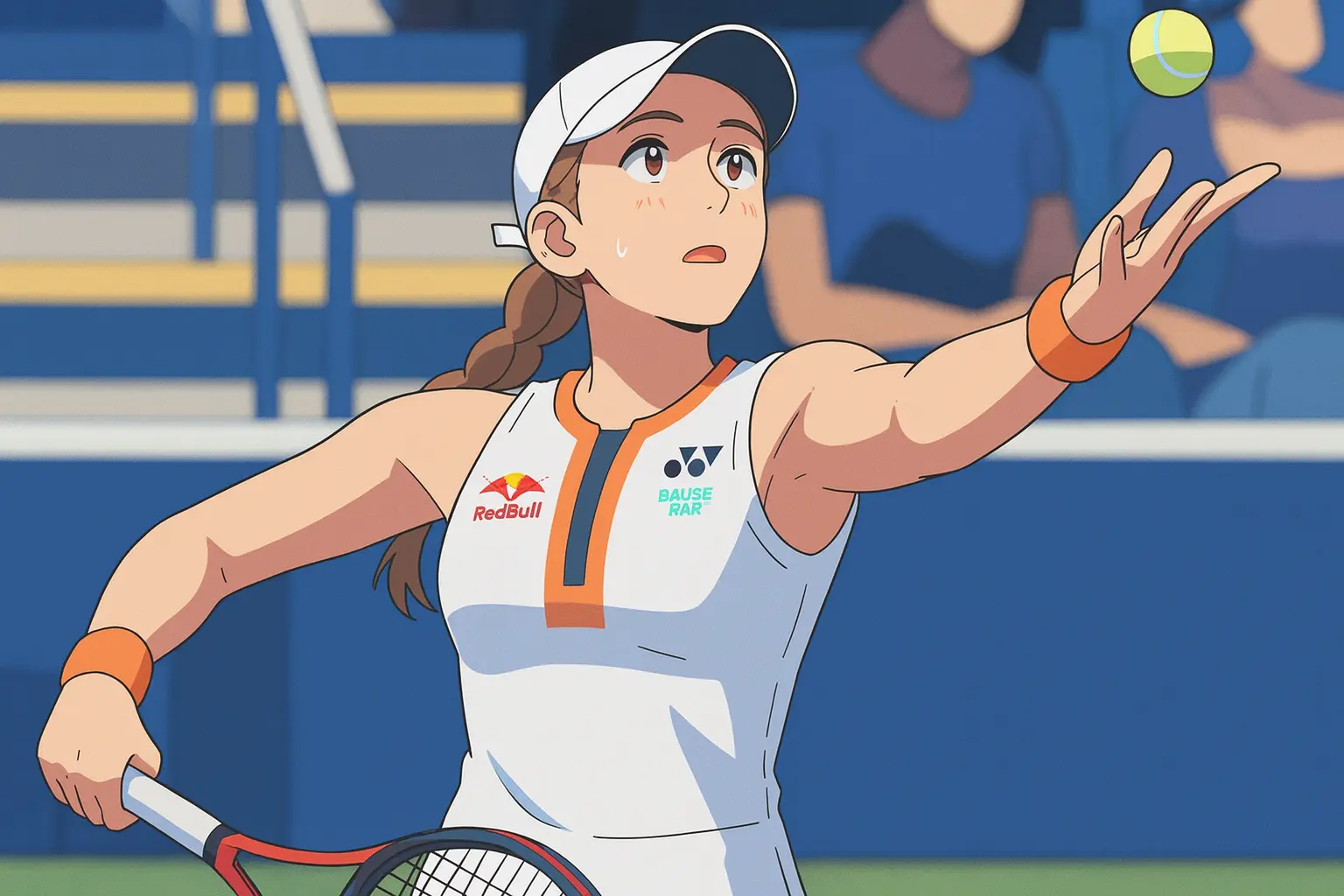

Few voices carry more authority when it comes to serving than John Isner — and when the former ATP ace speaks, the tennis world listens. On the latest episode of the Nothing Major Podcast, Isner delivered perhaps the strongest endorsement yet of Elena Rybakina’s serve, placing it firmly among the greatest the women’s game has ever seen.
Coming off her Australian Open 2026 title, sealed fittingly with an ace on championship point, Rybakina’s serve has moved from elite weapon to historical conversation. And according to Isner, that conversation will only grow louder.
Australian Open dominance puts Rybakina’s serve in rare air
Rybakina fired 47 aces during her Melbourne title run and closed the final against Aryna Sabalenka — her closest peer in raw power — with a clean, fearless first serve. Now the new world No.3, the Kazakh has turned what was once a key strength into a defining identity.
Her numbers back it up. Since late 2025, Rybakina is 20–1 in her last 21 tour-level matches and 10–0 against Top-10 opponents, a stretch of form that prompted Steve Johnson to call her “the best player in the Top 10 right now.”
“She’s clearly sorted things out,” Johnson said. “Whatever happened last year — on court, off court — she looks settled. And when she’s settled, this is the level.”
Isner: “If you’re talking serve, it’s her and Sabalenka — nobody else”
When the discussion turned specifically to serving, Isner was unequivocal.
“Right now, she and Sabalenka have the two best serves in the entire game,” he said. “I don’t think anyone could argue otherwise.”
Coming from a man who owns:
- the ATP record for aces (14,470)
- the fastest serve ever recorded at an ATP event (253 km/h)
- the most aces in a single match (113)
— the praise carries unusual weight.
Isner went further still:
“When her career is over, we’ll absolutely be talking about her serve as one of the best in tennis history — right alongside Serena. Her technique is flawless.”
Sabalenka vs Rybakina: power equals, serve edge?
The podcast debate naturally drifted toward comparison. Sam Querrey placed Serena Williams alone at the top historically — for now — but acknowledged Rybakina is closing fast.
“If she keeps this up for a few more years, her serve becomes dominant in that all-time sense.”
Jack Sock took the argument one step further, suggesting Rybakina holds a subtle advantage over Sabalenka when both are playing at full throttle.
“They’re very similar,” Sock said. “But if both are at 100 percent? I give Rybakina the edge — because of the serve.”
Steve Johnson echoed the sentiment, framing the rivalry as consistency versus peak level.
“Sabalenka is better over a full season. But at their best? Rybakina’s game is smoother, more effortless. The power just flows.”
More than aces: why Rybakina’s serve stands out
What separates Rybakina is not just speed or height, but repeatability under pressure. Her serve doesn’t spike — it endures. Even when her first-serve percentage dips, she remains aggressive, composed, and willing to trust the motion.
As she herself admitted after Melbourne:
“Sometimes the serve doesn’t work how I want. I’ve learned to stay calm and find other ways. But when it’s there — it helps everything.”
At 26, with one Wimbledon title and now a second Grand Slam crown, Rybakina’s serve is no longer just a weapon of the present. It is shaping her legacy.
Related WTA Articles You Might Enjoy
WTA Career Earnings 2025: Full List of All-Time Prize Money Leaders
Sabalenka Rules the Year Again as WTA Awards Crown Anisimova, Mboko and Bencic