
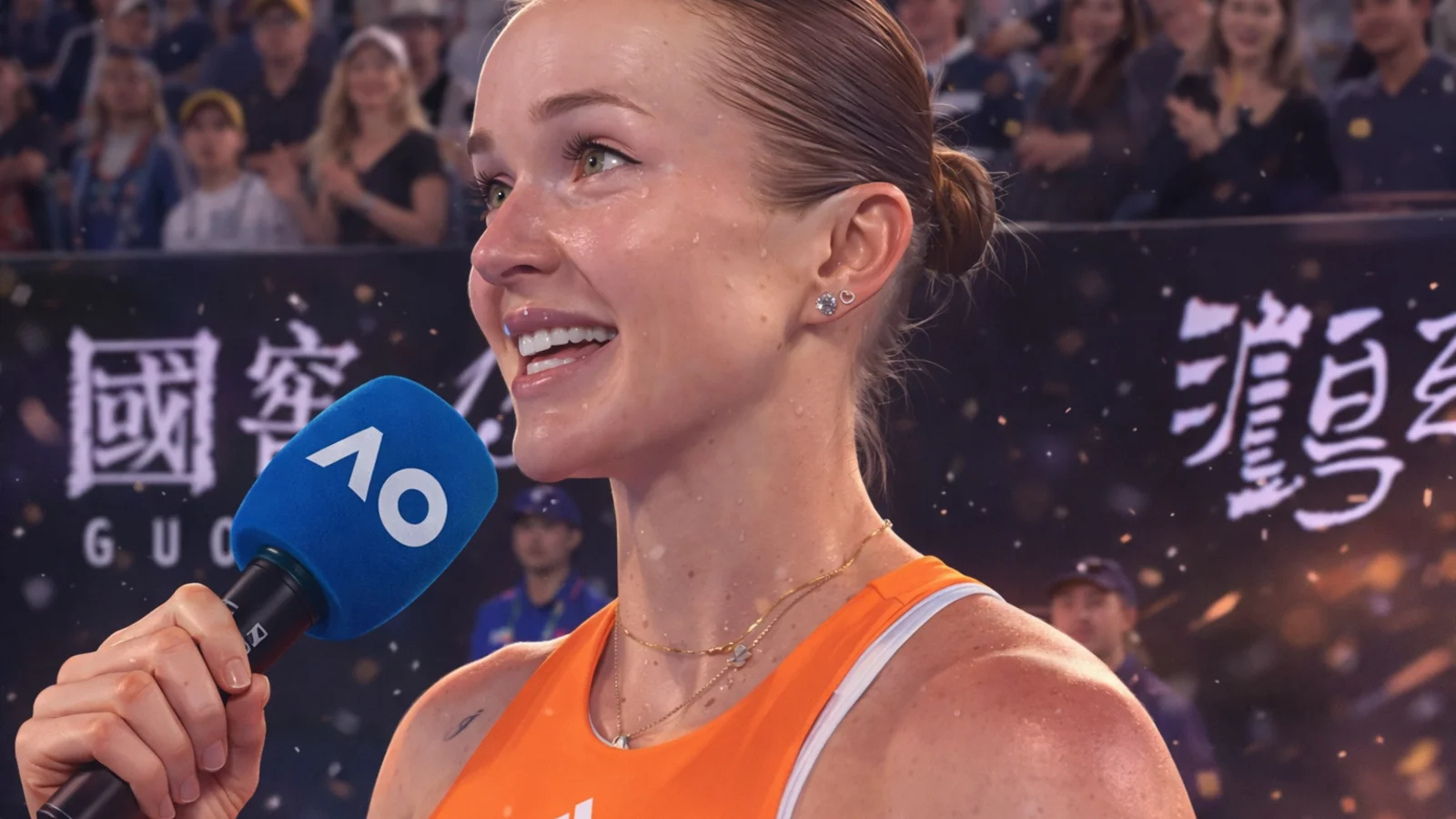

There was a time when the absence of a Grand Slam title defined the conversation around Elina Svitolina. Now, it no longer defines her.
Back inside the WTA Top 10 and competing with renewed clarity, the Ukrainian star has reached a point in her career where ambition and acceptance coexist. At 31, a mother, and once again a contender, Svitolina is chasing excellence — but no longer chasing validation.
“I think after giving birth and with different perspectives, I’ve accepted that I can live well with my life after tennis without having won a Grand Slam,” Svitolina said recently in an interview with Tennis. “I still have a very solid career and have given my best. If it happens at the end of my career, okay, great. But if not, it’s still a great career.”
That statement is not resignation. It is evolution.
A Champion’s Resume — Even Without a Major
Svitolina’s résumé hardly needs defending. A former World No. 3, four-time Grand Slam semifinalist, and winner of four WTA 1000 titles, she has spent the better part of a decade inside the elite tier of women’s tennis.
Most recently, she reached the semifinals of the Australian Open — her first in Melbourne — falling to World No. 1 Aryna Sabalenka. It marked her fourth major semifinal after previous runs at Wimbledon (2019, 2023) and the US Open (2019).
For years, those near-misses felt heavy.
“Before, it was a very sensitive topic,” Svitolina admitted. “When you are very young and spend a few years in the Top 3 and go into a Grand Slam as a favorite and never achieve it, it’s very tough. It’s hard when you’re close, you play a few semifinals and have chances, you think you can do it — and then you don’t.”
But motherhood shifted the lens.
Perspective Beyond the Baseline
At the Qatar Open, Svitolina began her campaign with a commanding 6–1, 6–4 victory over compatriot Dayana Yastremska — her first match since Melbourne and a performance that secured her return to the Top 10.
Yet her day did not begin on the practice court.
It began with breakfast.
“We had a nice breakfast outside on the promenade,” she said, referring to time spent with her daughter Skaï. “When you’re constantly in the same routine, it’s nice to have something different. We’re not home often, but we can bring our family with us. That makes us feel at home inside, and those moments really warm my heart.”
Motherhood has not softened her competitiveness — it has reframed it.
“I think being a mother gives you a different view of what you can achieve. I had a baby in my belly for nine months and didn’t know if I would come back. If I didn’t feel I could return at a decent level, I wouldn’t have tried to push those limits. I’m still only 31 and I want to have a healthy life after this.”
There is strength in that clarity. No desperation. No fear of legacy debates. Just tennis — and life — on her own terms.
Competing Without Fear
Despite her acceptance, Svitolina’s belief remains intact.
“I feel like I have a chance,” she said. “I feel every player in the main draw has a chance — whether small or as a big favorite. We’ve seen so many surprise finalists and winners, players who play two outstanding weeks and even surprise themselves.”
Her experience, she believes, has made her stronger.
“I see how through all these matches over the years I’ve become a more solid player. I feel my game has really improved and I can win matches and challenge big players. If I’m fit, if I’m mentally good, I have a chance. I believe that — and then whatever comes, comes.”
That mentality — ambition without obsession — may be her most dangerous weapon yet.
Leading Ukraine’s Next Generation
Svitolina’s influence extends beyond the court. She has taken a close interest in the development of younger Ukrainian players, including Oleksandra Oliynykova, who has emerged as a prominent voice for her country.
“Our lockers were actually next to each other, so I saw her quite often,” Svitolina said. “It’s inspiring for many Ukrainians to see how she pushed herself to become a professional player, especially with little money — pushing, pushing, winning matches.
Then she won tournaments and before we knew it she was on Centre Court in Australia. That’s great for young girls and for Ukraine — a big inspiration.”
In a country enduring unimaginable hardship, sport carries meaning beyond trophies. Svitolina understands that deeply.
A Vision Beyond Tennis
The former World No. 3 has begun exploring initiatives to expand access to sport in Ukraine, including plans for a tennis academy and a padel club.
“You’re actually the first to hear this,” she said. “I think through sport people can find new ways to release bad energy. With the war, they need different outlets.”
“That’s why I’m excited not only to focus on tennis, but on sport in general. There’s a gap there, and together with other top athletes in Ukraine, I can lead by example.”
It is a broader mission — one that speaks to legacy in a deeper sense.
Doha and the Road Ahead
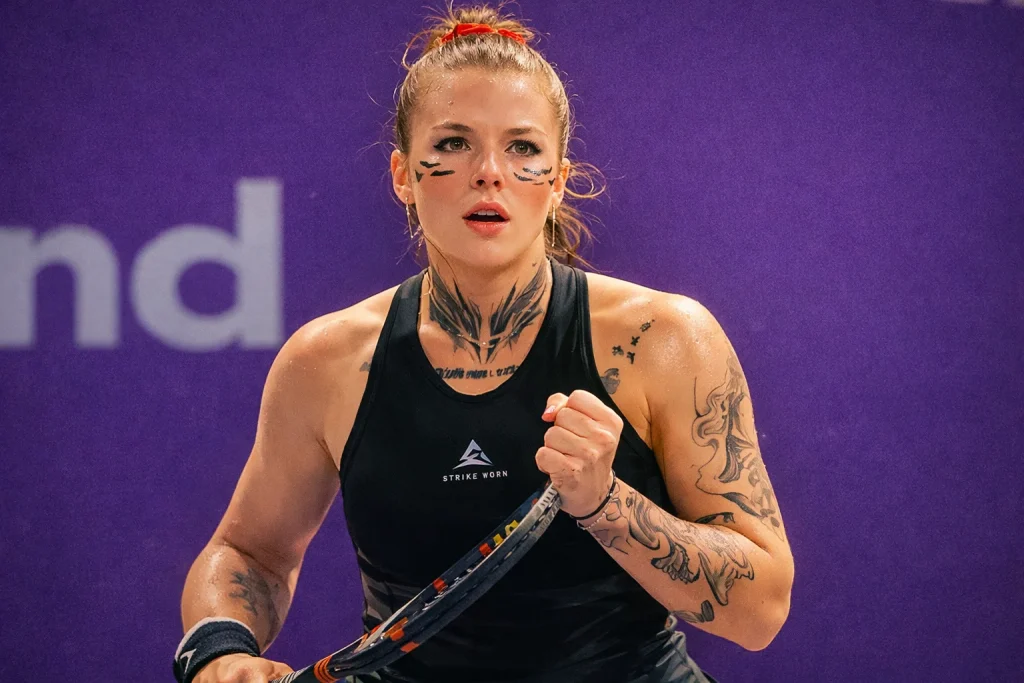
Svitolina continued her Qatar Open campaign with a Round of 16 clash against Anna Kalinskaya. A victory would have set up a quarterfinal meeting with Karolina Muchova. That did not materialize.
Each win now though strengthens her Top 10 foothold. Each tournament reinforces her renewed balance.
She may never lift a Grand Slam trophy. Or she may.
But that uncertainty no longer burdens her.
Svitolina has already won something perhaps more enduring: peace with her own journey.
And with that peace, she might just be more dangerous than ever — the best tennis version of herself.