
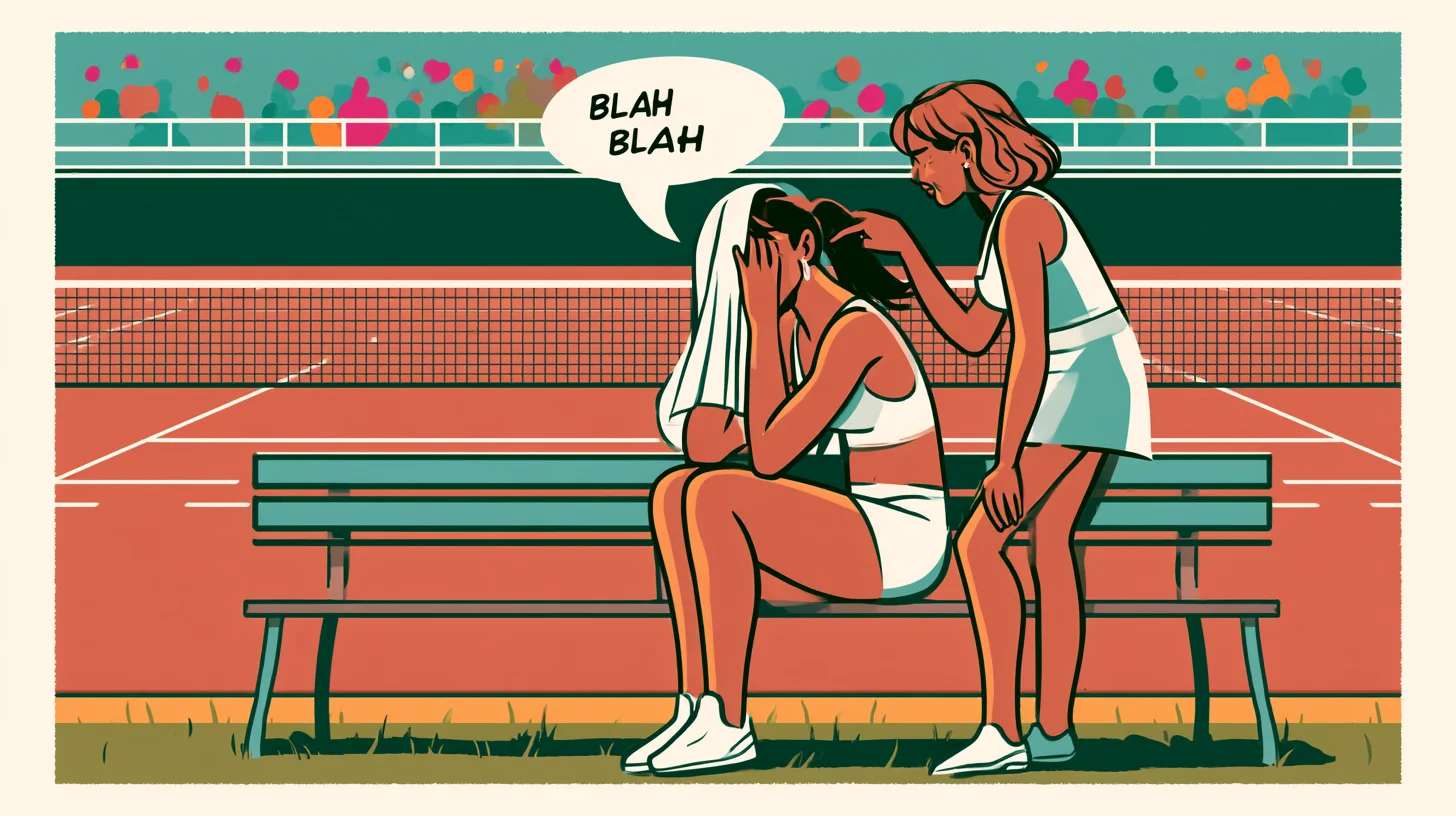
The match had barely ended when the moment turned uncomfortable.
Mirra Andreeva, still wrapped in a towel and trying to process a painful 2026 Madrid Open final defeat, found herself immediately approached and briefed on post-match formalities. It was a scene that did not sit well with former doubles world No.1 Rennae Stubbs, who took to social media to voice her frustration.
“Blah blah blah while she’s crying in her towel one minute after she lost,” Stubbs wrote, reacting to the interaction. “Omg honey, please give her a minute! My god!”
The timing, more than the act itself, was the issue.
A final that took its toll
Andreeva had just fallen 6-3, 7-5 to Marta Kostyuk in a tightly contested final. It was a match that turned on fine margins, particularly late in the second set, where the 19-year-old held two set points but could not convert.
Moments later, the title was gone.
For a player who has openly described losing as feeling like “the end of the world,” the emotional impact was visible. She remained composed through the handshake and the immediate aftermath, but the strain showed as the ceremony approached.
“Take a beat and let her have her time”
Stubbs’ criticism focused on the lack of space given in that immediate window after defeat.
“The WTA comms person going up to Mirra and trying to tell her stuff about the presentation… please give her a minute,” she added.
In follow-up responses, the Australian argued that players should be afforded at least a short buffer before being required to engage with organisational demands.
“We all know the presentation in Madrid takes 30 minutes to get organised. Take a beat and chill out and let the woman have her time.”
It was not a broad attack on the event, but a pointed observation about timing and sensitivity.
Composure on stage, emotion underneath
Despite the circumstances, Andreeva handled the ceremony with notable composure.
She congratulated Kostyuk, acknowledged the tournament, and thanked the crowd before turning to her team—where the emotions finally surfaced.
“I’m sorry… I promised myself I wasn’t going to cry,” she said, pausing as the crowd responded with support. “I’m just not going to look at you because it’s easier like this.”
The moment landed precisely because it was unguarded.
A week that still confirms her rise
The defeat does little to diminish Mirra Andreeva’s position in the game.
This was her third WTA 1000 final, achieved just days after celebrating her 19th birthday. Across the Madrid fortnight, she navigated a draw that had already shed most of its top seeds, maintaining a level of control that others could not.
Even in defeat, the trajectory is clear.
Her tournament was not over at that point either. She remained in contention for the doubles title alongside Diana Shnaider, but fell to the Siniakova–Townsend pair 6-7(2), 2-6.
Where the line sits
Stubbs’ comments tap into a broader tension in modern tennis—the balance between structure and sensitivity.
The sport moves quickly. Schedules, ceremonies and obligations leave little room for pause. But moments like this, particularly after finals, carry a different weight.
What happened in Madrid was not extraordinary.
But Stubbs’ suggestion is spot on. And while at it, let the winners enjoy their moment of joy too. Handle it all better.