

The semifinals of the WTA Dubai Duty Free Tennis Championships delivered exactly what WTA elite tennis promises: pressure, precision, and the fall of favorites.
Dubai Delivers Chaos — And Clarity
Both the top seed and the No.2 seed were eliminated on Friday, leaving behind a final shaped not by ranking, but by resilience. Jessica Pegula and Elina Svitolina stood tallest — two players who adjusted mid-match, absorbed momentum swings, and executed when margins tightened.
Dubai has been unpredictable all week. Friday only confirmed it.
Pegula Overturns Anisimova Again — Experience Wins the Long Game
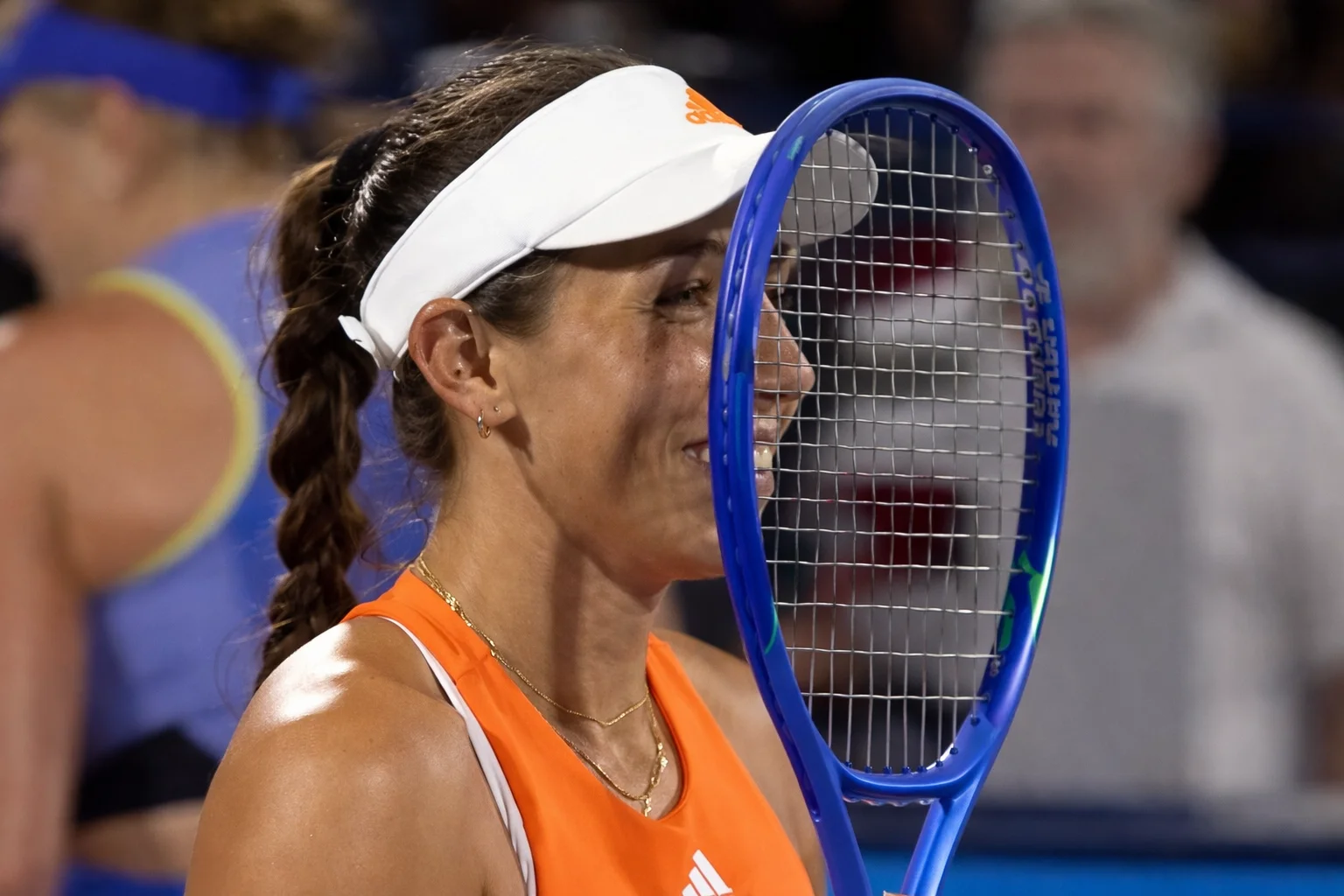
Jessica Pegula reached her eighth WTA 1000 final — and her first in Dubai — by defeating Amanda Anisimova 1–6, 6–4, 6–3 in a semifinal that mirrored their Australian Open battle weeks earlier.
The opening set belonged entirely to Anisimova. She fired one ace, landed 73% of her first serves, and broke twice to race through the set 6–1. Pegula struggled to find rhythm despite posting a solid 75% first-serve percentage herself.
But the match turned in the details.
Pegula improved her first-serve efficiency, winning 64% of those points (37/58) overall, and began applying greater return pressure. She captured 41% of Anisimova’s first-serve points and 54% on second serve returns — small statistical edges that grew larger as rallies extended.
Pegula Shows Tactical Awareness
In the second set, Pegula’s tactical patience showed. Though Anisimova saved 5 of 8 break points, Pegula persisted and leveled the match 6–4.
She had fought back from 0–2 and 1–3 down. It was all on Anisimova’s racquet and there for the taking, but she couldn’t deliver the decisive blow.
Jessica Pegula vs Amanda Anisimova – Set Two Stats
| Statistic | Jessica Pegula | Amanda Anisimova |
|---|---|---|
| Dominance Ratio | 1.26 | 0.80 |
| Serve Rating | 226 | 201 |
| Aces | 1 | 2 |
| Double Faults | 1 | 1 |
| 1st Serve % | 68% (26/38) | 69% (22/32) |
| 1st Serve Points Won | 65% (17/26) | 41% (9/22) |
| 2nd Serve Points Won | 33% (4/12) | 50% (5/10) |
| Break Points Saved | 71% (5/7) | 63% (5/8) |
| Service Games | 60% (3/5) | 40% (2/5) |
| Ace % | 2.6% | 6.3% |
| Double Fault % | 2.6% | 3.1% |
| Return Rating | 207 | 171 |
| 1st Return Points Won | 59% (13/22) | 35% (9/26) |
| 2nd Return Points Won | 50% (5/10) | 67% (8/12) |
| Break Points Won | 38% (3/8) | 29% (2/7) |
| Return Games | 60% (3/5) | 40% (2/5) |
| Pressure Points | 53% (8/15) | 47% (7/15) |
| Service Points | 55% (21/38) | 44% (14/32) |
| Return Points | 56% (18/32) | 45% (17/38) |
| Total Points | 56% (39/70) | 44% (31/70) |
| Set 2 Duration | 0h50m | |
The decider became a test of nerve. Both players held 69% of their service games overall, but Pegula’s composure in longer exchanges and improved shot selection tilted the momentum. She saved 56% of break points faced (5/9) and closed out the third set 6–3.
Jessica Pegula vs Amanda Anisimova – Set Three Stats
| Statistic | Jessica Pegula | Amanda Anisimova |
|---|---|---|
| Dominance Ratio | 1.27 | 0.79 |
| Serve Rating | 294 | 263 |
| Aces | 1 | 4 |
| Double Faults | 1 | 1 |
| 1st Serve % | 57% (20/35) | 77% (23/30) |
| 1st Serve Points Won | 70% (14/20) | 65% (15/23) |
| 2nd Serve Points Won | 67% (10/15) | 43% (3/7) |
| Break Points Saved | – (0/0) | 0% (0/1) |
| Service Games | 100% (5/5) | 75% (3/4) |
| Ace % | 2.9% | 13.3% |
| Double Fault % | 2.9% | 3.3% |
| Return Rating | 217 | 63 |
| 1st Return Points Won | 35% (8/23) | 30% (6/20) |
| 2nd Return Points Won | 57% (4/7) | 33% (5/15) |
| Break Points Won | 100% (1/1) | – (0/0) |
| Return Games | 25% (1/4) | 0% (0/5) |
| Pressure Points | 100% (1/1) | 0% (0/1) |
| Service Points | 69% (24/35) | 60% (18/30) |
| Return Points | 40% (12/30) | 31% (11/35) |
| Total Points | 55% (36/65) | 45% (29/65) |
| Set 3 Duration | 0h44m | |
It was not about overpowering Anisimova.
It was about outlasting her.
Svitolina Outduels Gauff in Three-Hour Tactical War
If Pegula’s win was about recalibration, Elina Svitolina’s victory was about believing in miracles.
The Ukrainian defeated Coco Gauff 4–6, 7–6(13), 6–4 in a grueling three-hour semifinal that showcased both physical resilience and mental clarity.
The numbers reveal the difference.
While both players won 64% of first-serve points, Svitolina dominated second-serve exchanges — capturing 53% compared to Gauff’s 43%. Over a three-set match, that gap matters.
Gauff’s serve betrayed her at key moments. She committed 12 double faults, compared to just two from Svitolina. Even though Gauff landed 62% of first serves, the instability behind the second delivery created opportunities Svitolina patiently exploited.
Svitolina held 12 of her 16 service games, significantly stronger than Gauff’s 63%. On return, she won 57% of second-serve return points, constantly applying pressure without overreaching.
Let’s call it what it is. It’s the new Svitolina.
The second-set tiebreak — a marathon 15–13 battle — drained both players emotionally.
The Fascinating Tiebreak
Coco Gauff and Elina Svitolina turned the second-set breaker into a full-blown endurance test, and Gauff survived it, 15–13, by winning the mini-break battle.
It started with immediate chaos: Gauff dropped the opening point on serve (mini-break), then immediately snapped it back when Svitolina served the next point to level at 1–1.
From there, neither player could keep the door shut for long—mini-breaks traded again at 3–2 / 3–3, and the lead kept flipping in single-point bursts.
The finishing stretch was pure nerve. Gauff generated repeated closing chances, but Svitolina repeatedly pulled herself back level—most notably from 6–7 and again later from 7–8.
At 8–8, both players charged forward and hammered volleys and reflex blocks from barely 12 feet apart. Neither blinked. Gauff finally ripped the last reply to seize 9–8, a momentum punch that electrified the finish.
Svitolina then moved ahead late in the tiebreak.
She had a chance at 10–9 when Coco Gauff half-missed a smash, but Gauff showed no nerves on her second overhead attempt at the net.
Ukraine’s No. 1 then had opportunities at 12–11 and 13–12 to close out the match but failed to convert.
Gauff’s return pressure proved decisive: she earned a crucial mini-break at 13–13, won another point on Svitolina’s serve showing of her net skills to edge ahead 14–13, then closed it out on her own serve for 15–13. She screamed and screamed. Was this a case of déjà vu—the Mertens scenario all over again, saving three match points and going on to win?
Tiebreak Roll-up: 28 points, 9 mini-breaks total (Gauff 5, Svitolina 4). The swing points all came on serve—and Gauff won one more of those than Svitolina, which was the difference.
Elina Turns Into… Coco in the Third Set
What Svitolina managed to pull off in the third set was amazing. Fysically surely, but above all mentally after having lost that fabulous tiebreak.
Apart from the first 2 games both women held onto their serve until it was 4-all marvelously.
The ninth game felt like a replay of their second-set tiebreak:
15–0, 15–15, 15–30, 30–30, 30–40 (BP), 40–40, Ad–40, 40–40, Ad–40, 40–40, Ad–40, 40–40, 40–Ad (BP), 40–40, Ad–40, 40–40, Ad–40, 40–40, Ad–40, game Svitolina.
Coco Gauff saved five game points but couldn’t convert either of her two break points. In the end, Svitolina took her sixth game point to make it 5–4. But the Ukrainian still had to break serve.
Gauff fended off a fourth match point in exceptional fashion at the net, but on the fifth the American drove Svitolina’s return straight into the tape.
Svitolina could hardly believe it was over. But what belief she showed throughout. One of the best wins of her career was her reward.
And another WTA 1000 final.
A Final Built on Adaptation
Pegula enters her eighth WTA 1000 final with experience and momentum. Svitolina reaches her first at this level in years, reaffirming her resurgence on tour.
Both players eliminated higher seeds.
Both survived three-set battles.
Both proved that execution follows mindset.
Dubai has been a week of withdrawals, fatigue debates and shifting narratives. But on court, clarity emerged: those who adapt fastest remain standing.
Now, one more match remains.
Pegula’s calculated precision versus Svitolina’s composed resilience.
The desert will decide.