
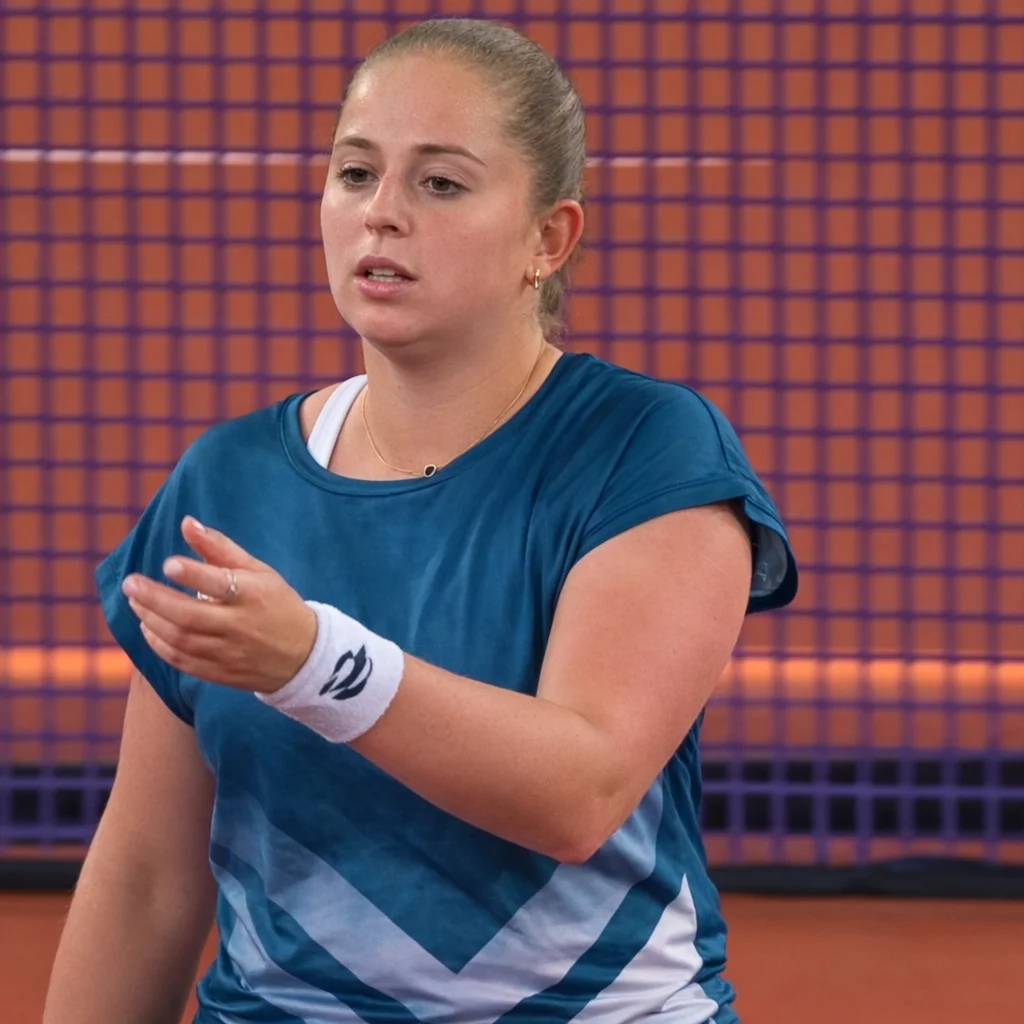

Jelena Ostapenko did not so much win this match as wrestle it away from the edge. Down 1–5 in the second set and staring at a decider, she instead pieced together a run that turned the contest entirely on its head, defeating Alexandra Eala 6–4, 7–5 at the Upper Austria Ladies Linz.
For long stretches, the match belonged to Eala. The Filipina led 4–2 in the opening set and surged ahead 4–0, then 5–1, in the second, repeatedly placing herself in positions of control. What she could not do was close.
Ostapenko, erratic early, found just enough clarity at the right time. The errors tightened, the groundstrokes landed deeper, and the rallies began to tilt. From 1–5 down, she won six consecutive games to complete a turnaround that felt as abrupt as it was decisive.
Momentum swings, but only one finish
The pattern was consistent across both sets: Eala building, Ostapenko absorbing, then shifting.
In the opener, Eala’s early lead slipped once Ostapenko began to impose more weight through the court. The Latvian edged ahead late, taking the set 6–4 without ever fully dominating.
The second set looked set to follow a different script. Eala raced into a double-break lead, dictating with confidence and variation. At 5–1, the match appeared headed for a third.
Instead, Ostapenko reset.
Rather than forcing winners, she extended exchanges and trusted her patterns. The shift was subtle but telling—less rush, more structure. Eala’s margin narrowed, and with it, her control.
A mental adjustment, not a technical overhaul
Ostapenko was clear about the turning point afterwards. It was not about changing her game, but her approach to the moment.
“I told myself I’m going to fight, I will do everything possible,” she said. “If there’s a third set, it’s fine.”
That acceptance seemed to free her. From that point, the match tightened around Eala instead.
The Latvian also reversed a recent trend. She had lost both previous meetings with Eala—at Miami and Eastbourne in 2025—but this time found a way through persistence rather than outright shot-making.
Clay courts, familiar territory
The switch to clay in Linz has altered the tone of the event, and it suits Ostapenko.
A former Roland Garros champion, she welcomed the slower conditions, which reward her heavy hitting when controlled.
“I was like, ‘wow, clay.’ I love it,” she said. “It’s great before Stuttgart.”
That context matters. With the clay swing approaching, matches like this—messy, pressured, but ultimately resolved—carry weight beyond the result itself.
What it means for both players
Ostapenko moves into the quarter-finals, where Elena-Gabriela Ruse awaits in a first career meeting. The manner of this win—imperfect but resilient—may prove more valuable than a straightforward victory.
Eala, meanwhile, leaves with a familiar frustration. The patterns are encouraging; the scorelines less so. Leading in both sets against a Grand Slam champion is no small marker, even if the outcome slipped.
Her attention now turns to Stuttgart, where another opportunity awaits.