
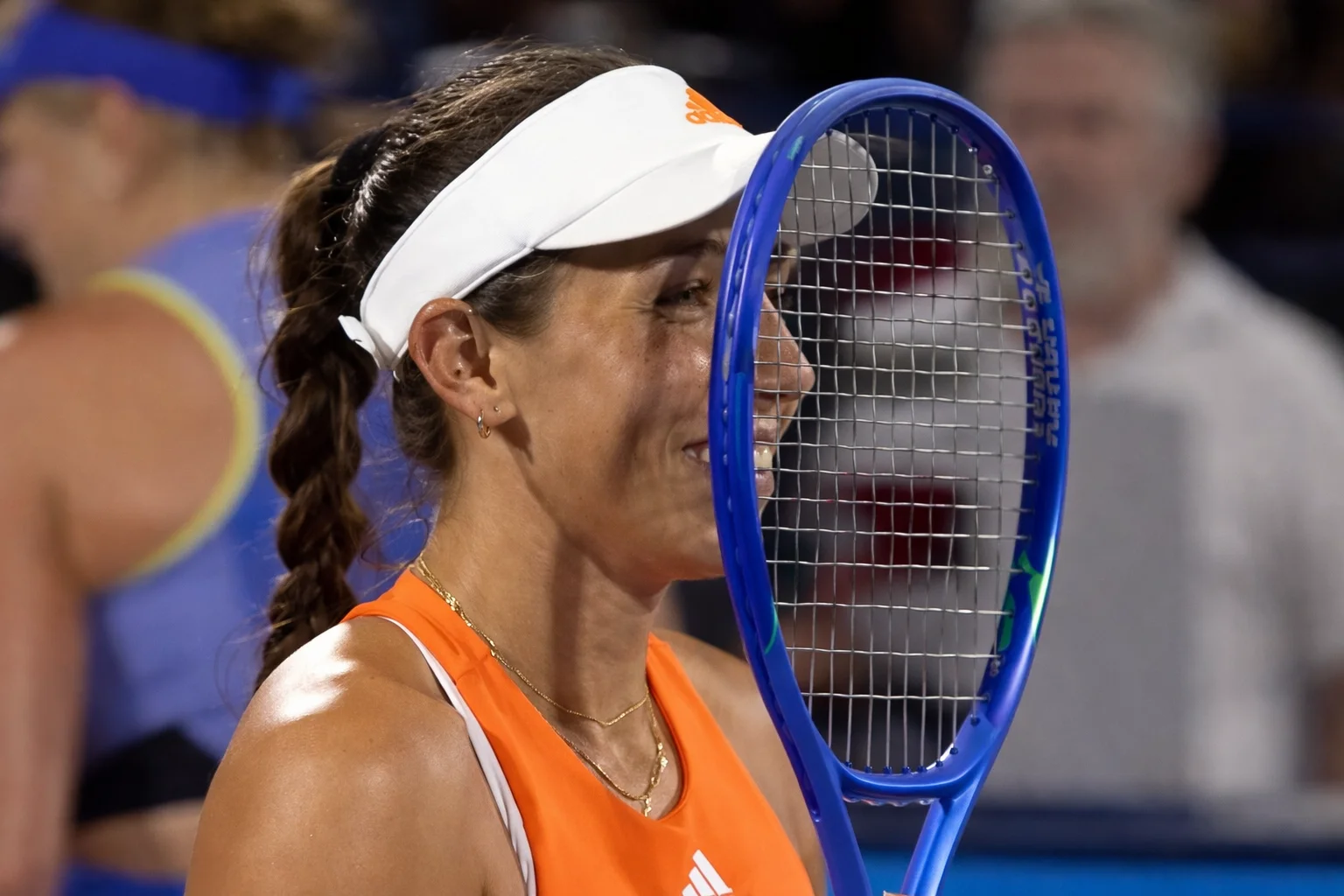
Jessica Pegula had every reason to feel robbed by the weather.
She was leading Aryna Sabalenka 3-1 in a second-set tie-break, two points from reaching the Berlin final in straight sets, when the rain arrived. The covers came on. The players left. The momentum vanished into the grey.
For plenty of players, that would have been the story.
For Pegula, it became the setup.
She lost the tie-break when play resumed. She watched Sabalenka force a deciding set. She had to absorb the emotional irritation of seeing a match she had nearly finished suddenly become dangerous again.
Then she walked into the third set and made the world No. 1 disappear.
Pegula beat Sabalenka 6-4, 6-7(4), 6-0 in the Berlin Ladies Open semi-finals, turning a weather-interrupted fight into one of the sharpest final sets of her season. The defending Berlin champion is now one win from another title in the German capital, and this was not just another good result.
This was a statement win over a player who had dominated their rivalry for years.
Pegula Takes the First Set by Surviving the First Storm
The match started with Sabalenka trying to impose herself immediately.
She held for 1-0, then created two break points on Pegula’s first service game. That could have shaped the whole match. Sabalenka had the chance to push Pegula into chase mode before the American had settled.
Pegula did not let her.
She saved both break points, won the final four points of the game and levelled at 1-1. A few minutes later, Sabalenka’s own service game cracked. A double fault helped Pegula break for 2-1, and suddenly the match had a very different shape.
Pegula consolidated for 3-1, then stayed just far enough ahead.
There was one huge escape for Sabalenka at 3-4. She fell behind 0-40 on serve, then faced two more break points after reaching deuce. Pegula had a chance to make the set feel almost finished, but Sabalenka survived with a big ace and eventually held for 3-4.
It looked like a possible turning point.
It was not.
Pegula held for 5-3, then served out the set at 5-4. One set point was all she needed. Against a player who had beaten her nine times in 12 previous meetings, Pegula had taken the lead with calm, depth and enough first-strike discipline to stop Sabalenka from turning the match into a hitting contest on her terms.
Sabalenka vs Pegula – Set One Stats
| Statistic | Sabalenka | Pegula |
|---|---|---|
| Dominance Ratio | 0.55 | 1.83 |
| Winners | 11 | 11 |
| Unforced Errors | 19 | 12 |
| Serve Rating | 274 | 367 |
| Aces | 5 | 2 |
| Double Faults | 3 | 0 |
| 1st Serve % | 96% (44/46) | 100% (28/28) |
| 1st Serve Points Won | 57% (25/44) | 75% (21/28) |
| 2nd Serve Points Won | 39% (7/18) | 90% (9/10) |
| Break Points Saved | 83% (5/6) | 100% (2/2) |
| Service Games | 80% (4/5) | 100% (5/5) |
| Ace % | 10.9% | 7.1% |
| Double Fault % | 6.5% | 0% |
| Return Rating | 35 | 141 |
| 1st Return Points Won | 25% (7/28) | 43% (19/44) |
| 2nd Return Points Won | 10% (1/10) | 61% (11/18) |
| Break Points Won | 0% (0/2) | 17% (1/6) |
| Return Games | 0% (0/5) | 20% (1/5) |
| Pressure Points | 63% (10/16) | 38% (6/16) |
| Service Points | 54% (25/46) | 75% (21/28) |
| Return Points | 25% (7/28) | 46% (21/46) |
| Total Points | 43% (32/74) | 57% (42/74) |
| Set 1 Duration | 0h46m | |
Sabalenka Leads 5-2, but Pegula Refuses to Leave
The second set should have belonged to Sabalenka much earlier.
The world No. 1 reset well. She held to start, broke for 2-0 after a long Pegula service game, then held to love for 3-0. By 4-1, she had won 10 straight points on serve and looked as if she had finally found the rhythm missing from the first set.
Pegula was under real pressure.
At 5-2, Sabalenka created two set points on Pegula’s serve. She could have ended the set there. She did not. Pegula saved both, held for 5-3, and then hit the return that changed the set.
At 5-3, with Sabalenka serving for the set, Pegula broke back with a thumping return down the line. Suddenly, the set that had been firmly in Sabalenka’s hands was back on serve.
Pegula then held for 5-5.
Sabalenka steadied for 6-5, Pegula held again, and the set went to a tie-break. Pegula began brilliantly, moving 3-1 ahead. She was two points from the final.
Then the rain came.
Rain Stops Pegula, but Only for a While
The timing could hardly have been worse for Pegula.
At 3-1 in the tie-break, she had control, scoreboard pressure and the finish line in view. The delay interrupted all of that. When play resumed, Sabalenka came out much faster.
The Belarusian won the tie-break 7-4, dropping only one point after the restart and forcing a deciding set.
Sabalenka vs Pegula – Set Two Stats
| Statistic | Sabalenka | Pegula |
|---|---|---|
| Dominance Ratio | 1.21 | 0.83 |
| Winners | 22 | 12 |
| Unforced Errors | 14 | 11 |
| Serve Rating | 303 | 275 |
| Aces | 3 | 1 |
| Double Faults | 2 | 1 |
| 1st Serve % | 100% (37/37) | 100% (47/47) |
| 1st Serve Points Won | 65% (24/37) | 57% (27/47) |
| 2nd Serve Points Won | 54% (7/13) | 35% (6/17) |
| Break Points Saved | 50% (1/2) | 80% (4/5) |
| Service Games | 83% (5/6) | 83% (5/6) |
| Ace % | 8.1% | 2.1% |
| Double Fault % | 5.4% | 2.1% |
| Return Rating | 145 | 148 |
| 1st Return Points Won | 43% (20/47) | 35% (13/37) |
| 2nd Return Points Won | 65% (11/17) | 46% (6/13) |
| Break Points Won | 20% (1/5) | 50% (1/2) |
| Return Games | 17% (1/6) | 17% (1/6) |
| Pressure Points | 27% (3/11) | 73% (8/11) |
| Service Points | 65% (24/37) | 57% (27/47) |
| Return Points | 43% (20/47) | 35% (13/37) |
| Total Points | 52% (44/84) | 48% (40/84) |
| Set 2 Duration | 1h01m | |
That could have been crushing for Pegula.
A match she had nearly closed had suddenly become a third-set test against the world No. 1. Sabalenka had escaped a 5-2 to 5-5 problem, survived the tie-break danger and stolen back the emotional flow of the match.
But Pegula’s response was the entire story.
She did not carry the frustration into the decider. She used the reset better than Sabalenka did. Once the third set began, Pegula looked like the player with the clearer plan, cleaner feet and better read of the conditions.
Pegula Turns the Third Set Into a One-Way Street
The final set was brutal.
Pegula broke immediately for 1-0. She then had four more break points in Sabalenka’s next service game before finally forcing the break for 2-0. That game felt decisive. Sabalenka had one chance to win it and could not take it. Pegula kept returning, kept extending, kept making the world No. 1 hit under pressure.
From there, Sabalenka unravelled.
Pegula held, broke again, held to love, then moved to 5-0. The bagel was no longer a possibility. It was the obvious ending.
Sabalenka did not create a single break point in the final set. Pegula won 16 of the last 20 points and closed the match on her third match point.
The decider lasted only 28 minutes.
A semi-final against Sabalenka had turned into a final-set demolition.
Sabalenka vs Pegula – Set Three Stats
| Statistic | Sabalenka | Pegula |
|---|---|---|
| Dominance Ratio | 0.38 | 2.62 |
| Winners | 6 | 14 |
| Unforced Errors | 9 | 2 |
| Serve Rating | 154 | 328 |
| Aces | 2 | 2 |
| Double Faults | 1 | 0 |
| 1st Serve % | 100% (25/25) | 100% (17/17) |
| 1st Serve Points Won | 40% (10/25) | 76% (13/17) |
| 2nd Serve Points Won | 13% (1/8) | 50% (2/4) |
| Break Points Saved | 63% (5/8) | – (0/0) |
| Service Games | 0% (0/3) | 100% (3/3) |
| Ace % | 7.7% | 11.8% |
| Double Fault % | 3.8% | 0% |
| Return Rating | 74 | 286 |
| 1st Return Points Won | 24% (4/17) | 60% (15/25) |
| 2nd Return Points Won | 50% (2/4) | 88% (7/8) |
| Break Points Won | – (0/0) | 38% (3/8) |
| Return Games | 0% (0/3) | 100% (3/3) |
| Pressure Points | 46% (6/13) | 54% (7/13) |
| Service Points | 40% (10/25) | 76% (13/17) |
| Return Points | 24% (4/17) | 64% (16/25) |
| Total Points | 33% (14/42) | 69% (29/42) |
| Set 3 Duration | 0h29m | |
The Numbers Show Why Pegula Deserved More Than a Narrow Win
This was not a lucky escape. The statistics say Pegula was the better player across the match, even with the second-set tie-break slipping away.
Pegula won 111 points to Sabalenka’s 89. Her dominance ratio was 1.37 to Sabalenka’s 0.73. That is a major gap for a three-set match against the world No. 1.
The serving difference was just as clear.
Pegula won 66 percent of her service points. Sabalenka won 54 percent. Sabalenka held only nine of her 14 service games. The American saved six of seven break points, while Sabalenka had to save 11 of 16.
Sabalenka did hit more aces, nine to five, and slightly more winners, 39 to 37. But the price was too high. She made 42 unforced errors. Pegula made 25. Sabalenka also hit five double faults to Pegula’s one.
The second-serve numbers explain much of the match.
Pegula won 55 percent behind her second serve. Sabalenka won only 38 percent. On return, Pegula won 62 percent of points against Sabalenka’s second serve.
That was where the American kept gaining control.
Pegula Changes the Feel of a Tough Rivalry
Before this semi-final, Sabalenka had owned the rivalry.
The two had met 12 times, with Sabalenka winning nine. Pegula had beaten her before, including at Wuhan, but the overall pattern was clear. Sabalenka had usually found a way to hit through her, rush her or overpower enough of the key exchanges.
Berlin felt different.
Pegula did not try to out-Sabalenka Sabalenka. She did not need to. She used depth, return discipline and clean direction changes to keep the rallies from becoming one-dimensional. When Sabalenka began swinging harder, Pegula made enough balls come back with purpose.
That was especially visible in the final set.
Sabalenka’s game became louder but looser. Pegula’s became sharper and more certain. Every hold gave her more room. Every return game tightened the pressure.
By the end, the rivalry numbers felt less relevant than the match in front of them.
Pegula had taken one of Sabalenka’s strongest assets, her ability to bully a match back in her direction, and turned it against her.
Berlin Still Looks Like Pegula’s Place
Pegula is now back in the Berlin final, chasing another title at a tournament that clearly suits her.
She won this title in 2024, and she has built another deep run here with the kind of grass-court tennis that does not always look spectacular until the scoreboard tells the truth. She is not the biggest hitter in this draw. She is not the most dramatic player. But on grass, her compact swings, clean return position and calm point management become dangerous very quickly.
That showed against Sabalenka.
It also fits the shape of Pegula’s season. This is her third final of the year, and reaching it by beating the world No. 1 gives the run a different weight. She did not slide through the draw. She had to take out the player most people measure the field against.
Now Linda Noskova waits in the final.
Noskova brings a different problem: less volatility than Sabalenka, more straight-line efficiency, and a game that can take time away quickly when she is timing the ball well. But Pegula will enter the final with something powerful behind her.
She has already survived the biggest name in the draw.