
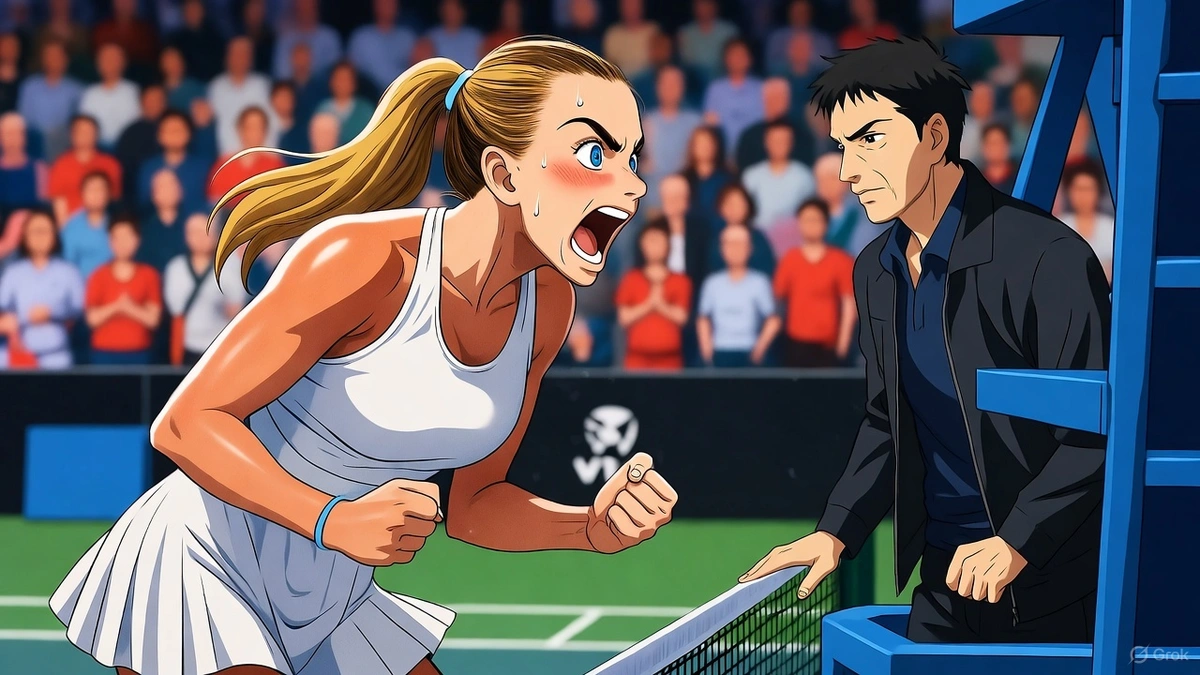

As Aryna Sabalenka prepares to walk onto Rod Laver Arena for yet another Australian Open final, the world No.1 does so backed by one of the tightest and most unconventional support teams in women’s tennis.
At the heart of that group stands Jason Stacy, Sabalenka’s performance coach — a figure as central to her rise as head coach Anton Dubrov, and one whose background stretches far beyond tennis.
Speaking on the Pod Laver Arena podcast, Stacy offered a rare glimpse into the mechanics, mentality, and controlled chaos that define Sabalenka’s camp ahead of Saturday’s blockbuster final against Elena Rybakina, a rematch of the 2023 Australian Open title match.
From Combat Sports to Centre Court
Stacy’s route into elite tennis was anything but traditional.
“Jiu-jitsu, judo, wrestling, grappling — that’s basically my background,” he explained.
“I’ve been throwing people and choking people since I could walk.”
Professionally, Stacy worked across multiple disciplines in allied health, including massage therapy, physiotherapy, strength and conditioning, while also studying neuroscience. That hybrid skillset now underpins Sabalenka’s physical and mental preparation — helping her channel chaos into controlled aggression.
“My sport? Throwing and choking people is more interesting,” he joked.
The Infamous Signature — and Controlled Chaos
Stacy has become something of a cult figure among fans, not least because Sabalenka has, on occasion, signed his head after big wins — a moment emblematic of the trust and humour within the team.
Asked whether he had taught Sabalenka any combat techniques, Stacy laughed:
“You don’t want to teach your potential opponents too much,” he said.
“She might turn around and use it on us.”
Instead, elements of grappling are adapted for body awareness, core strength, and coordination. Even Sabalenka’s now-famous on-court screams are embraced rather than suppressed.
“Sometimes it makes sense, sometimes it’s irrational. Sometimes we scream back — just to fire her up.”
Why the On-Court Box Matters
Sabalenka’s team chemistry is one of the most visible on tour — from playful banter to viral TikTok videos. That closeness is now reinforced by the on-court coaching box, introduced more prominently over the past year.
Stacy explained that last season, the team chose not to sit courtside.
“It felt too exposed. We want the team together.”
This year, positioning and structure were carefully refined.
“Aryna needs a focal point. A voice.
This year we clarified it — Anton and me, George (her partner), and Max helping with coaching. That core had to be there to manage the energy.”
The Hindrance Call — and Turning Friction into Fuel
One of the talking points of Sabalenka’s semi-final win over Elina Svitolina was a hindrance call, issued after the umpire ruled that an extra vocalisation disrupted play.
Stacy was unfazed.
“She makes noises all the time — it’s how you can tell how she feels,” he said.
“It happened, we moved on, and she used it as fuel.”
Rather than distracting Sabalenka, moments like these are often deliberately harnessed.
“Sometimes we even poke her a bit. If that’s what brings out the best version of her, so be it.”
Eyes on the Final: Sabalenka vs Rybakina, Reloaded
Sabalenka now stands just hours away from another major moment — her fourth consecutive Australian Open final and a second title clash with Rybakina in Melbourne.
Stacy expects fireworks.
“Is that even a question?” he said.
“It’s going to be fantastic. High energy. If one player gets into rhythm, it’s hard to stop.
Their 2023 final was a classic — and this one has all the ingredients again.”
Related WTA Articles You Might Enjoy
Inside Sabalenka’s 2025 Formula: The Team, the Truths and the Discipline Behind World No.1