
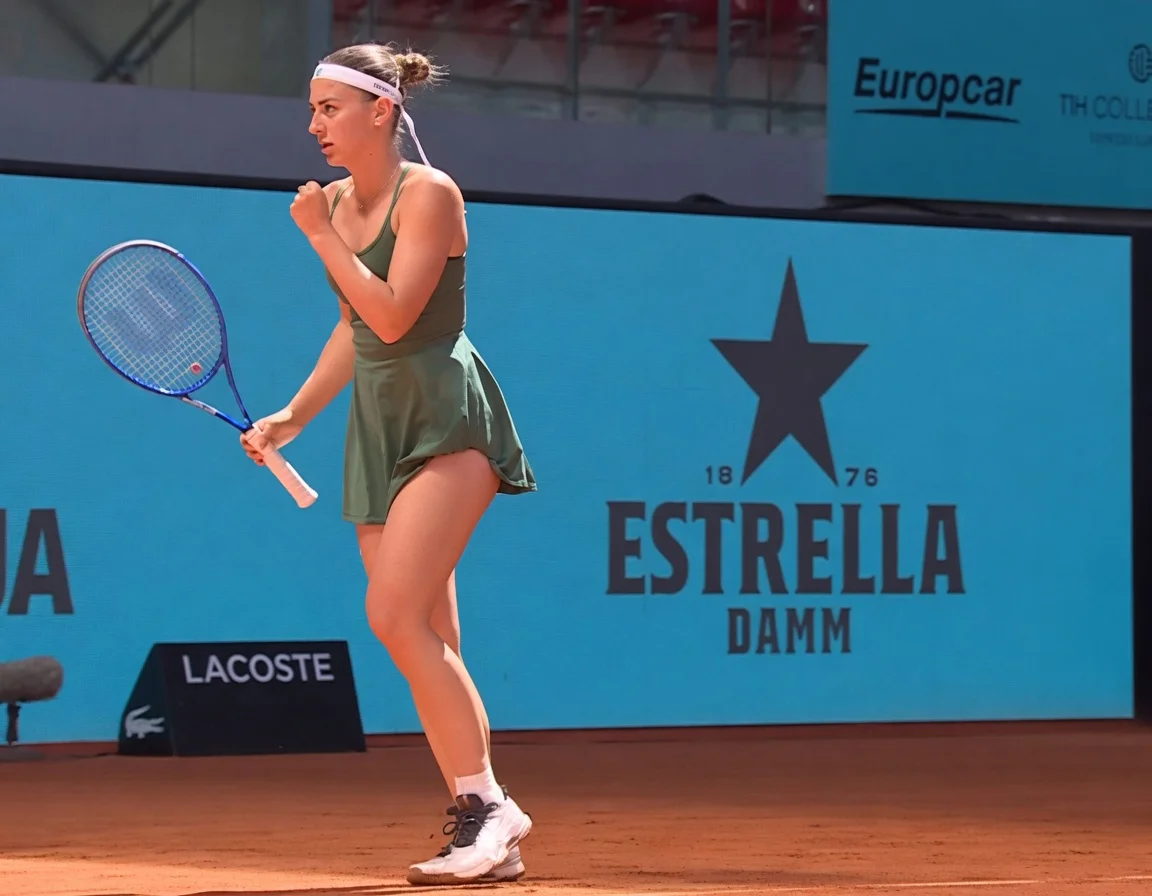
Jessica Pegula arrived in Madrid as one of the steadiest forces on the WTA Tour. She left it outplayed, outmanoeuvred, and ultimately overrun by a Marta Kostyuk performance that carried both clarity and conviction.
The Ukrainian advanced 6-1, 6-4, but the scoreline only hints at the underlying control she exerted throughout.
Kostyuk punishes wasteful Pegula from the outset
The opening set was as lopsided as it was peculiar. Pegula was not entirely outplayed in construction—she created more break opportunities—but repeatedly failed to convert, and that proved decisive. Kostyuk, by contrast, needed far fewer chances and took them cleanly.
From 0-3 down, Pegula had openings to reset the pattern, but each one slipped. Kostyuk saved break points in clusters—six in one stretch alone—before immediately turning defence into attack. The Ukrainian broke twice more, one of them gifted by a double fault at 0-40, and suddenly the set was gone at 6-1.
It was not relentless dominance. It was far more surgical: fewer chances, better execution.
Pegula cannot turn pressure into momentum
The second set followed a similar, if tighter, script. Pegula continued to generate looks on return, even breaking late to delay the inevitable when Kostyuk first served for the match at 5-2.
But again, the key moments told the story.
Kostyuk absorbed pressure without drifting. She held from difficult positions, reset quickly after setbacks, and when given a second opportunity to close, she did so without hesitation. Pegula, for all her persistence, never quite managed to string those moments together.
There were glimpses of a shift, but no sustained change. Kostyuk remained the more decisive player throughout, and that difference held to the end.
Full match numbers reflect the balance of play
The broader statistics reinforce what the eye suggested throughout the match. Kostyuk finished with a dominance ratio of 1.44 to Pegula’s 0.69, winning 59 percent of total points.
Her advantage extended across all key areas. She struck 22 winners to Pegula’s 10 and was consistently more effective behind both first and second serve. On return, she applied sustained pressure, winning over half of Pegula’s service points and converting four of seven break opportunities.
The contrast was most evident under pressure. Kostyuk won 14 of 18 pressure points, while Pegula converted just four of 18. Despite earning 11 break points, the American managed to take only one, a reflection of how often Kostyuk held firm at decisive moments.
A run gathering real weight
This result extends Kostyuk’s winning streak to seven matches following her title in Rouen and marks her 13th career Top 10 victory. More than that, it signals a player operating with increasing authority.
Pegula rarely produces matches like this—where structure gives way and control slips early. That it happened here speaks as much to Kostyuk’s level as it does to Pegula’s struggles.
Madrid, at this stage, is not lacking contenders. But Kostyuk is no longer just part of the draw.