
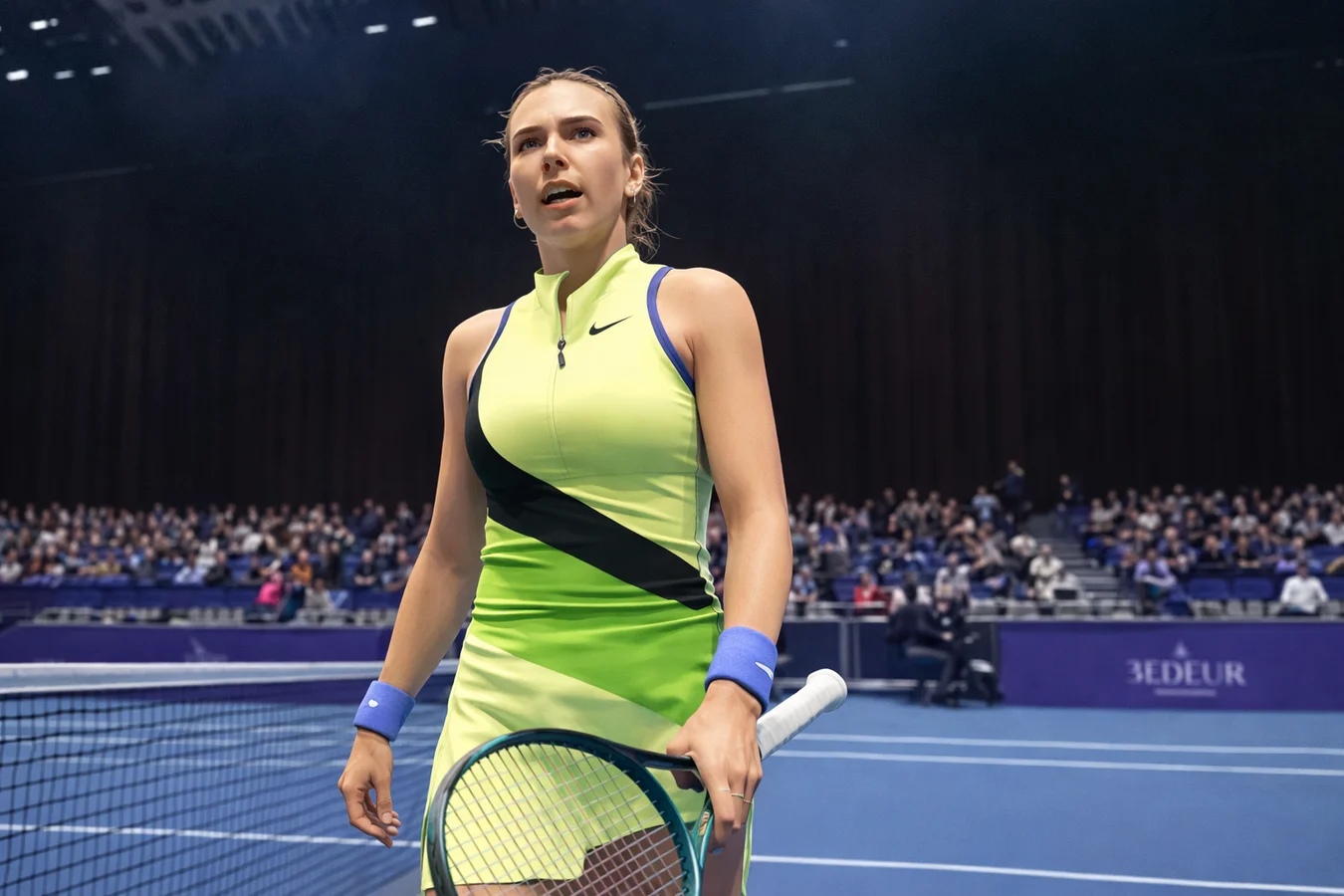

Katie Boulter’s last twelve months have been anything but straightforward. Injuries, ranking pressure and outside noise repeatedly interrupted her momentum. On Saturday night in Ostrava, however, the British No.1 delivered a clear statement of intent. Under new coach Michael Joyce, Boulter fought back from a set down to defeat Tamara Korpatsch 5–7, 6–2, 6–1 and lift the Ostrava Open trophy.
It was not just a title — it was a turning point.
A Final of Shifts and Fine Margins
Tamara Korpatsch arrived in the final with confidence and rhythm, having built her week on patience, depth and baseline consistency. The German executed that plan effectively early on, edging a tight opening set as Boulter struggled to turn pressure into breaks. Leading 5–4, the Brit then dropped three games in succession, surrendering the first set.
Boulter vs Korpatsch – Set One Stats
| Statistic | Boulter | Korpatsch |
|---|---|---|
| Dominance Ratio | 0.97 | 1.03 |
| Serve Rating | 274 | 288 |
| Aces | 3 | 3 |
| Double Faults | 0 | 0 |
| 1st Serve % | 70% (21/30) | 68% (23/34) |
| 1st Serve Points Won | 67% (14/21) | 70% (16/23) |
| 2nd Serve Points Won | 67% (6/9) | 64% (7/11) |
| Break Points Saved | 0% (0/2) | 50% (1/2) |
| Service Games | 67% (4/6) | 83% (5/6) |
| Ace % | 10% | 8.8% |
| Double Fault % | 0% | 0% |
| Return Rating | 133 | 199 |
| 1st Return Points Won | 30% (7/23) | 33% (7/21) |
| 2nd Return Points Won | 36% (4/11) | 33% (3/9) |
| Break Points Won | 50% (1/2) | 100% (2/2) |
| Return Games | 17% (1/6) | 33% (2/6) |
| Pressure Points | 25% (1/4) | 75% (3/4) |
| Service Points | 67% (20/30) | 68% (23/34) |
| Return Points | 32% (11/34) | 33% (10/30) |
| Total Points | 48% (31/64) | 52% (33/64) |
| Set 1 Duration | 0h49m | |
But the dynamic changed decisively once the Brit found her range.
Katie Boulter Shrugs Off the Nerves When It Matters
Boulter raised her intensity in the second set, serving with greater precision and stepping inside the court more frequently on returns. The numbers told the story: she won 85% of points behind her first serve and began forcing shorter replies, gradually pulling the match away from Korpatsch. At 6–2, it was suddenly all to play for.
Boulter vs Korpatsch – Set Two Stats
| Statistic | Boulter | Korpatsch |
|---|---|---|
| Dominance Ratio | 1.75 | 0.57 |
| Serve Rating | 310 | 224 |
| Aces | 0 | 0 |
| Double Faults | 0 | 1 |
| 1st Serve % | 62% (13/21) | 58% (14/24) |
| 1st Serve Points Won | 85% (11/13) | 57% (8/14) |
| 2nd Serve Points Won | 63% (5/8) | 60% (6/10) |
| Break Points Saved | – (0/0) | 33% (1/3) |
| Service Games | 100% (4/4) | 50% (2/4) |
| Ace % | 0% | 0% |
| Double Fault % | 0% | 4.2% |
| Return Rating | 200 | 53 |
| 1st Return Points Won | 43% (6/14) | 15% (2/13) |
| 2nd Return Points Won | 40% (4/10) | 38% (3/8) |
| Break Points Won | 67% (2/3) | – (0/0) |
| Return Games | 50% (2/4) | 0% (0/4) |
| Pressure Points | 67% (2/3) | 33% (1/3) |
| Service Points | 76% (16/21) | 58% (14/24) |
| Return Points | 42% (10/24) | 24% (5/21) |
| Total Points | 58% (26/45) | 42% (19/45) |
| Set 2 Duration | 0h36m | |
Korpatsch Falls Away in the Third Set
By the third set, the gap widened. Boulter raced through her service games and struck with confidence on key points, while Korpatsch — who had played several long matches earlier in the week — began to fade physically.
The closing stretch proved one-way traffic, with Katie Boulter wrapping up her fourth WTA title 6–1 in the decider.
Boulter vs Korpatsch – Set Three Stats
| Statistic | Boulter | Korpatsch |
|---|---|---|
| Dominance Ratio | 2.07 | 0.48 |
| Serve Rating | 286 | 162 |
| Aces | 0 | 2 |
| Double Faults | 0 | 1 |
| 1st Serve % | 76% (13/17) | 78% (18/23) |
| 1st Serve Points Won | 85% (11/13) | 44% (8/18) |
| 2nd Serve Points Won | 25% (1/4) | 14% (1/7) |
| Break Points Saved | – (0/0) | 25% (1/4) |
| Service Games | 100% (3/3) | 25% (1/4) |
| Ace % | 0% | 8.7% |
| Double Fault % | 0% | 4.3% |
| Return Rating | 292 | 90 |
| 1st Return Points Won | 56% (10/18) | 15% (2/13) |
| 2nd Return Points Won | 86% (6/7) | 75% (3/4) |
| Break Points Won | 75% (3/4) | – (0/0) |
| Return Games | 75% (3/4) | 0% (0/3) |
| Pressure Points | 75% (3/4) | 25% (1/4) |
| Service Points | 71% (12/17) | 39% (9/23) |
| Return Points | 61% (14/23) | 29% (5/17) |
| Total Points | 65% (26/40) | 35% (14/40) |
| Set 3 Duration | 0h35m | |
New Coach, New Direction
The title also marked a successful first chapter in Boulter’s partnership with Michael Joyce, who joined her team only weeks ago. After parting ways with her long-time coach at the start of the year, Boulter had spoken openly about the need for fresh ideas and renewed structure.
“We’ve only been working together a few weeks and already have a title — and in your birthday week,” Boulter joked after the match. “That’s a pretty good start. I hope we can keep building.”
Joyce’s influence was visible in Boulter’s calmer shot selection under pressure and her improved efficiency on serve, particularly in the deciding set.
A Long Road Back to Momentum
Just a year ago, Boulter appeared firmly established as Great Britain’s leading player, finishing the 2024 season strongly. But injuries — most notably persistent adductor issues — halted that progress, forcing her to make difficult decisions about scheduling and recovery.
Those choices did not always land well publicly. Skipping smaller tournaments and being seen at off-court events sparked criticism in some quarters, as did her wedding plans. Yet Ostrava provided the clearest response possible.
By opting for smaller tournaments to rebuild match fitness and confidence, Boulter has stabilised her ranking situation and is now moving swiftly back toward the Top 80 — with more upside ahead.
Korpatsch’s Run Still a Positive Sign
Despite the defeat, Korpatsch leaves Ostrava with plenty to take forward. Her run to the final showcased her defensive solidity and mental resilience, qualities that repeatedly carried her through tight moments earlier in the week.
The final asked a lot physically, and when the tempo rose, the margin became harder to bridge. Still, this week served as a reminder that Korpatsch can compete deep into tournaments at this level when her game clicks.
Korpatsch’s Special Words for Boulter
In her runner-up speech, the German turned toward Katie Boulter with words that cut through the noise of defeat.
She spoke of a moment years earlier, when Boulter had quietly come to her in the locker room at the lowest point of her career — a gesture that had stayed with her ever since. Boulter seemed taken aback, offering only a soft nod in reply, but the message had landed.
These are the speeches that linger — the ones delivered by players who do not stand on this stage often. For the first minute after the loss, Tamara Korpatsch could barely speak at all, emotion tightening her throat.
The tennis was over, but the meaning of the moment was still settling in.
Looking Ahead
For British tennis, it was a timely boost. And for Boulter personally, it marked something Emma Raducanu missed elsewhere: a tangible step forward at the right moment.
With the Middle East swing approaching, Boulter now carries confidence, clarity and a title into the next phase of her comeback.
The reset is real — and it’s working.