
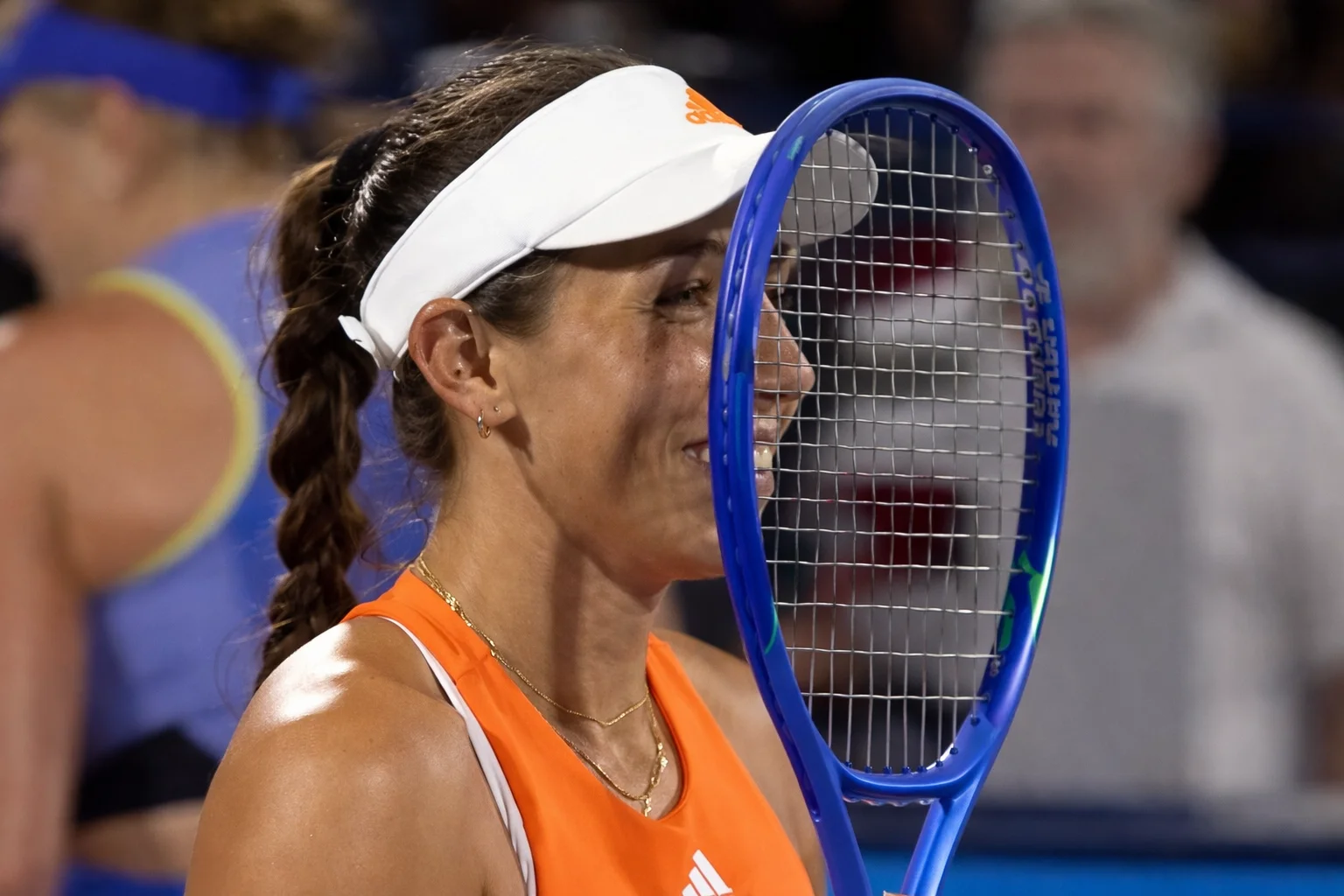

Jessica Pegula did not dress it up. The win was there on paper, but the performance told a different story.
The world No. 4 edged past Yulia Putintseva in a bruising 3-hour, 10-minute contest at the Charleston Open, yet her post-match reflections revealed a player grappling less with her opponent than with her own uncertainty — searching for solutions in real time rather than imposing them.
That distinction defined the match.
Pegula’s victory extended a quietly impressive trend: she improved to 7–1 in three-set matches this season and 16–4 since the US Open. Still, this was her longest tour-level win to date, and one that reinforced a recurring theme — matches that drift out of her control before she finds a way back in.
A match-up that refused to settle
Facing Putintseva on clay for the first time added layers of discomfort. Pegula described it bluntly as a “terrible match-up”, largely due to the Kazakh’s ability to disrupt rhythm with looping, high balls and constant variation.
Conditions only deepened the problem. Wind and uneven shadows turned already awkward trajectories into guesswork, forcing Pegula into a series of split-second decisions — step in or stay back, attack or absorb.
Execution, in that sense, became secondary. This was about adaptation under strain.
Rather than controlling the narrative of the match, Pegula found herself reacting — missing familiar patterns, second-guessing choices in longer rallies, and drifting away from the clarity that typically underpins her game.
“I had a panic moment”
The tension surfaced early in the second set.
Pegula pinpointed what she called a “panic moment”, when recognition outpaced execution — she knew what was coming, but could not translate it into effective responses.
“I had a little panic moment at the start of the second set. I was frustrated because it felt like nothing I was doing was working,” she admitted. “I knew the patterns she was playing against me, but I couldn’t really solve it. I was missing a lot of balls trying to force my own patterns.”
It was not just tactical. It was physical and environmental.
Putintseva’s heavy, high-bouncing balls — combined with shifting wind and shadows — disrupted Pegula’s timing to the point where even basic judgement became unreliable.
“You start doubting yourself and feel out of position,” she said, capturing the broader unease that settled into her game.
Finding structure without control
The turnaround did not come through wholesale change, but through intent.
Pegula leaned into more decisive shot-making, particularly on return, where she stepped forward and reduced the reactive nature of rallies. It was a subtle shift, but enough to stabilise the exchanges.
“I returned better and got more aggressive on the returns, which put me in a much better position in the rally,” she explained.
Her serve, by contrast, offered little refuge. She described it as “the worst serving performance of my year”, yet found marginal gains through improved placement — enough to avoid immediate pressure and construct points more deliberately.
The adjustments were incremental rather than transformative, but in a match shaped by instability, that was sufficient.
Clay, but on her own terms
Beyond the match itself, Pegula framed the contest within her broader transition to clay.
There will be no stylistic overhaul. Instead, she intends to carry over the strengths honed on hard courts — early ball striking, directional control — and layer in only what is necessary.
“I want to bring the things I’ve improved on hard court onto clay,” she said. “At the end of the day, I’m not going to play like a traditional clay-court player.”
It is a pragmatic stance, and one that aligns with the nature of this win.
Not clean. Not commanding. But instructive.
In Charleston, Pegula did not so much solve the match as survive it — and, in doing so, offered a rare glimpse into the uncertainty that even the most consistent players must occasionally navigate.