
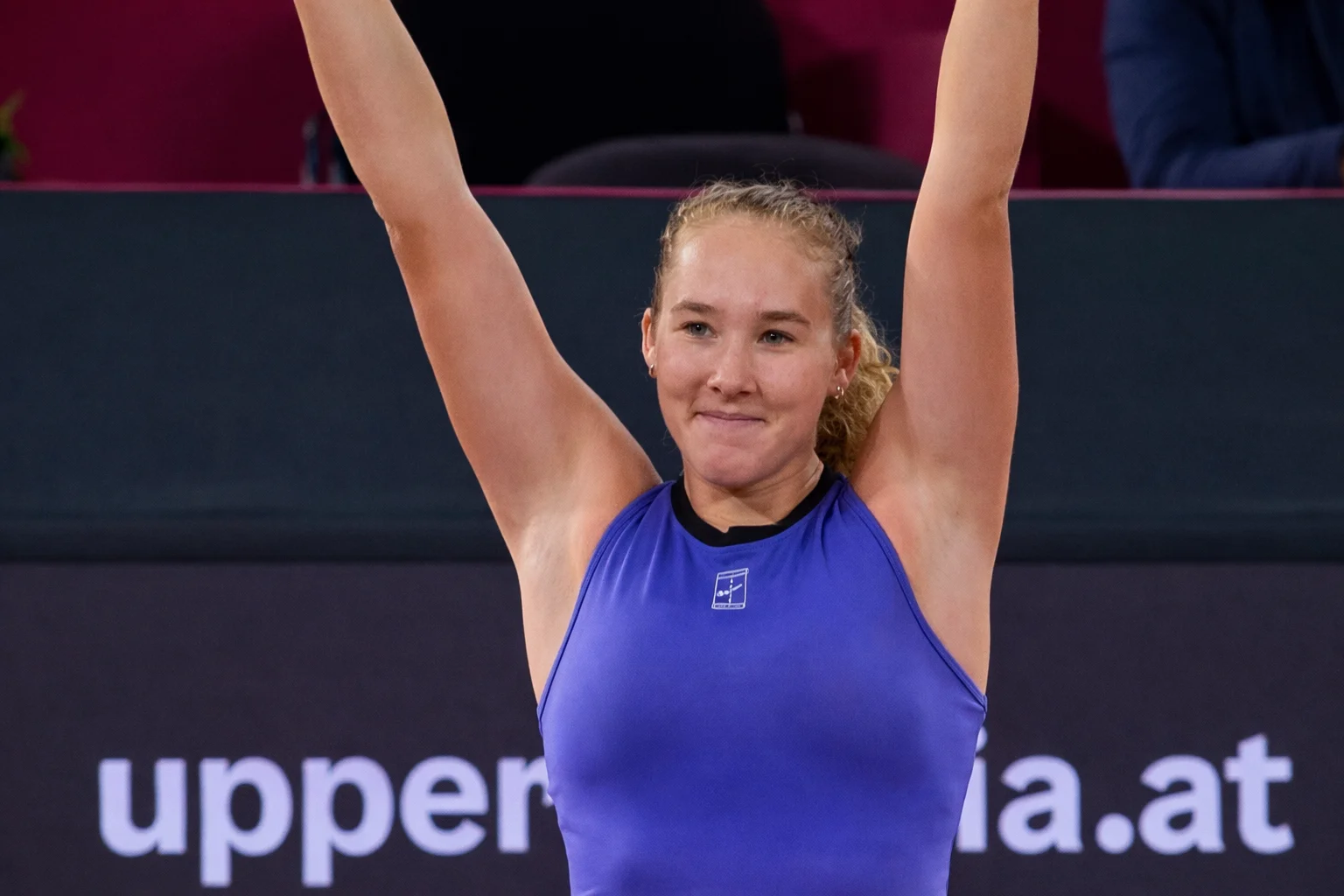

Mirra Andreeva’s path to the Linz final was not straightforward—but it was controlled when it mattered. The world No. 10 recovered from a shaky opening to defeat Elena-Gabriela Ruse 6:4, 6:1, securing her place in a WTA-500 final in what has been an uneven 2026 campaign.
For a set and a half, the match resisted structure. Then Andreeva imposed one.
From instability to control
The opening phase belonged to fluctuation. Andreeva broke early but quickly lost her grip, dropping four consecutive games as Ruse extended rallies and exposed discomfort in longer exchanges.
At 2–4, the match tilted away from her.
What followed was not a sudden surge, but a measured correction. Andreeva shortened points, increased first-strike intent on return, and gradually removed the patterns that had allowed Ruse to dictate.
A run of three games flipped the set. At 6–4, the scoreboard reflected the shift—but the real change was tactical.
The missed window
Ruse’s opportunity came early in the second set. Four consecutive break points offered a route back into the match.
None were taken.
That sequence defined what followed. Andreeva held, settled, and from there the gap widened quickly. She claimed five of the next six games, reducing errors and converting pressure with increasing clarity.
Where the first set had been unstable, the second was efficient.
Another final, a shift in momentum
The result sends Andreeva into a WTA-500 final despite a season that has often resisted rhythm.
But there are signs of something changing. Just like yesterday against Sorana Cirstea, the joy in her eyes spoke volumes. The struggling teenager seems to be back—and now finds herself one match away from a title against Anastasia Potapova.
Her route here—adjustment over impulse—adds a different layer to her game. Against Potapova, she will likely need both.